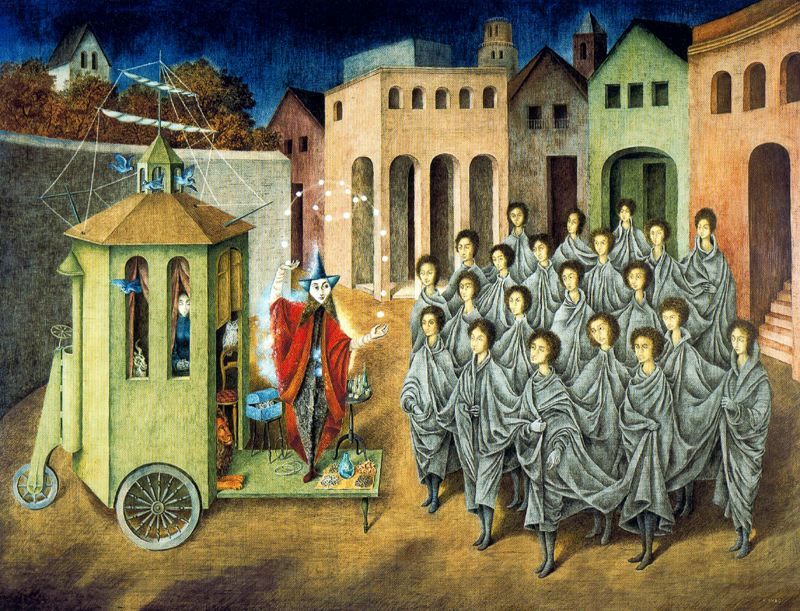
The present text is a slightly revised version of a skype conference commissioned by artist Luiza Crosman for the exhibition Open Skies, hosted at, the WIELS Contemporary art center, Brussels
“The exit from art is the crossing of a limit. But in the crossing of the limit the act is dissolved in empirical reality. To cross the limit, maintaining its dignity is the result of the autonomy of the act. Then, either it is a different act, mobilized for other ends, or it subsists as art and art repeats itself.” If late capitalism has taught us anything, it is that any intelligent or useful insight can be instantly coded, co-opted, and commodified according to the seemingly inexhaustible rhythms of exchange. Radical art is not an exception. The formal refusal of success and circulation in the mainstream by underground artists radicalizes itself as a response towards a desired invisibility – but one which has to be visible as an invisibility. This question has formal analogies to the necessity of the work-concept in the avant-garde. Peter Bürger describes the avant-gardist gesture, after the individuation of the art-institution as the pinnacle of the process of autonomy of artistic practice, as the attempt to destroy the art-institution by means of a disappearance of art into life. But the disappearance must take the shape of a something, a(n) (anti) work, otherwise it wouldn’t register as an idea either.
This abstract was initially written for a conference that did not accept it. The conference called for the abstracts to include some form of appropriation, falsity, falsification. An excerpt of the call for papers from the same conference is included in my abstract. I won’t say which part is not mine. This presentation wishes to address the issue of indeterminacy and anonymity, and their relationships to the work-concept, to the art institution, and to the avant-garde ideal. I would for now say about the avant-garde ideal that I am referring initially to what aforementioned author Peter Bürger called the “destruction of the art institution” and the “non-separation of art and life”. So, this presents the concepts of the avant-garde ideal and of the art institution as intimately intertwined- I would add- through the mediation of a proper concept of the work of art.
I wish to address the issues in three moments. Initially I propose a short summary of an approach in ontology / morphology of art and music that I have been building over the last years, particularly in the doctoral thesis defended at the University of Paris 8, L’indetermination à l’oeuvre: John Cage et l’identité de l’oeuvre musicale. The thesis proposed an approach to Cage’s ideas about indeterminacy and its consequences for the particular problem of the identity of the musical work. In a second moment I will try to observe some consequences of the suspension of the subjectivity of the author, in direct dialog with the Cagean ideal of elimination of the compositional ego. And in the third moment a sketched interpretation of the failure of the avant-garde ideal at least partially implied in such endeavors will be put forward.
I. An ontology of the frameworks-for-action
The identity of the musical work has been a widely discussed subject in analytic aesthetics and ontology of art, as it proposes a series of problematic options for the philosopher regarding the understanding of the type of object that could be a musical work: multiply instantiated, yet identifiable throughout its instances, graphically determined yet audibly realized or passed on by oral tradition, object or process, spatiotemporal instance or abstract object in the Platonist position, and so forth as branches grow forth in the arborescence of ontological classificatory alternatives. My approach in L’indetermination à l´oeuvre was to offer a transfer from the problems of ontology- the science of being qua being and of being qua totality- as first philosophy to the philosophy of action as the shaper of identities. So objects wouldn’t be thought of as “given”, but as made by certain forms of socially instituted actions. This philosophy of action is modeled, in turn, upon a philosophy of language that takes as its core Wittgenstein’s reflections on rule following, together with the contributions on the revisability of images of man in the world as presented by Wilfrid Sellars. In this approach, the composition and performance of works is seen as a case of applied normativity – it results from rules assumed as a condition of a determined activity – the creation, maintenance, continued existence of works of art, the identification of which as specific objects is the result of the norms of said practice. This seems to propose a vicious circle- and yet it is not vicious, but a virtuous one. Its import is to say that works of art have their existence by virtue of certain structured actions carried on by the institutions of a society- which in turn presupposes the existence of such “works”. They are thus ontologically dependent upon the adoption and maintenance of a set of norms of behavior that treat the result of certain activities as works of art. So the problem becomes to analyze further this set of norms and behaviors.
This transference is also a shift of perspective regarding language from the representationalist perspective, according to which its primary function is to represent the world and identify its constitutive elements, to one that displaces this function without eliminating it, which understands language as determined firstly by its pragmatics. According to this paradigm, the possibility of the identification of objects in the world is not suspended, but it is understood as derived in the order of explanations, although factually simultaneous, to the historical emergence of the ability to act according to rules. But the use of rules should not be seen here as some form of rigidity in the use of language. Quite the contrary. It is precisely for it’s constitution as a normative order that language is, in a very specific sense, free from natural determination. “We make up the rules as we go along” as Wittgenstein would say, and yet, at a specific moment in time there is always already an up and running set of rules that we follow for the time being that is both responsive to the way the world is and responsible for the determinability of the concepts we use.
This is not the space here to adequately fill in these ideas, but I leave them as an outline for a proper understanding of what follows. The problematizing view of the completed artwork put forward by Cage could, according to this approach, be itself problematized. Usually a piece like 4’33’’ is considered as an opening to whatever happens, a suspension of the composer’s intentionality, a relinquishing of the legislation of her personal tastes in order to pave the way for the appearance of phenomena unforeseen by author, performer and public. In our interpretation, in addition to performing the novel rules put forward by Cage in order to distance himself from its result, 4’33 ” exhibits the very ritual of giving a concert as material of the work. As it is emptied of actual content, the performer’s position of authority on the stage justifies the audience’s reverence for a ritual that follows a protocol that no longer serves its initial purposes: traditionally, listening to sounds that come from the stage.
This idea of protocol modification was proposed by philosopher, musician, and conceptual artist Henry Flynt under the name of Constitutive Dissociation.
“Consider a situation or configuration which is established by ordainments or stipulations of rules. The situation may belong to a genre which is standardized–a genre having a protocol which is standard or straightforwardly ascertainable. Moreover, the genre may have customary aims–although they do not have the force of requirements.
A constitutive dissociation (C/D for short) comes about because the instigator of a situation alters the aims of the genre from the customary aims. Since the traditional aims are foregone, the instigator can evade or replace standard protocol with an inscrutable protocol.”[1]
II. Normativity and depersonalization
Cage’s striving for blocking personal expression from the work goes hand in hand with a certain ideal of what constitutes the subjectivity of the composer as a slave to her own tastes and how to break free from it. For Cage, art’s function of “Imitating nature in its manner of operation” entails a rejection from the synthesizing functions of the Subject- which means the challenge to the identity of the work itself is in a sense mirrored by a challenge to the identity of the Subject.
One could find here a reference to what is usually called an eliminativist attitude regarding personal identity, our experiences as our own, and our sense of control of ourselves. The eliminativist hypothesis, as put forward by Paul Churchland asserts that our so-called folk-psychological concepts, such as words for feelings and psychological states shall be displaced by concepts provided by completed neuroscience. This amounts to a reductionist strategy wherein vocabularies that refer to anemic states shall be reduced to its neurophysiological correlates.
“This thesis states that our commonsense conception of psychological phenomena constitutes a radically false theory, a theory so fundamentally defective that both the principles and the ontology of that theory will eventually be displaced, rather than smoothly reduced, by completed neuroscience. Our mutual understanding and even our introspection may then be reconstituted within the conceptual framework of completed neuroscience, a theory we may expect to be more powerful by far than the commonsense psychology it displaces.”[2]
From this account one can conclude the irreality of the substantial Subject, in the sense of both its so-called phenomenal experiences and its protocols of ratiocination- in a sense akin to rule-following explained however briefly above- being not what they seem from a first person perspective, but of being identifiable to neurophysiological processes naturalistically described- causes not reasons.
But things ought not to be so simple. At the same time the paragraph above points to a thesis about the irreality of the Subject wherein the description proposed of that which is in the place of a Subject is itself predicated upon the descriptive powers of a language using agent- reasons, not causes.
And further, regarding the relationship to Cage, there’s a rupture between two Subjects there- one, that Cage is identifying with the empirical substantial person John Cage that ought to be eliminated, and another, the Subject that does the eliminating- a formal function “John Cage” (from here on: John Cage²) that is still the author of the work, even if all of the empirical experiential components of what was once substantial John Cage (from here on: John Cage ¹) are being suppressed.
One concurrent account of neurophysiological constitution, philosopher Thomas Metzinger’s, proposes that our own Self is in a sense an illusion created by our brains for the purposes of processing information. They generate what he calls a “phenomenal world model” wherein there is something to be gained to have a representation of the system itself that does the representing. These advantages amount to: 1-the amplification of the system’s sensitivity to context and capacity for discrimination. 2-the self-representation of the system adds context to the representation of the world model. 3-it permits differentiating what is the system’s own bodily movements and what is not the system’s actions while integrating those. He calls this sense of self-identity a Phenomenal Self Model- the first person impression of our own perspectival existence. The main issue with the PSM hypothesis is that it (the self-model) is epistemically transparent- that means, not visible as the model it is- while its effects are present. But, as Brassier rightly insists, Metzinger’s is not a straightforward reductionist strategy of identifying phenomenal items with neurophysiological ones. Rather, it presents an account of the constitution of the perspectival first person self-consciousness as supervening upon a complex of sub-personal processes.
“In Metzinger’s version of this Platonic allegory, the cave is the physical organism or information processing system as a whole and the fire its neurocomputational dynamics; the puppet-simulacra of objects its mental representations; and the shadows cast on the cave wall its phenomenal representatives. But according to Metzinger, there is no prisoner in the cave; indeed there is no one there at all. The conscious self is not an entity but a shadow – not an individual object, but rather the ongoing process of shading-through which a multidimensional neurocomputational representation is projected as a much lower dimensional phenomenal model onto the surface provided by the system’s world-model.” [3]
For Brassier, Metzinger’s account makes it possible to think of an agent as being different from a phenomenal subject instead of dispensing with agency altogether. And this in turn can illuminate our differentiation between John Cage¹´s phenomenal constituency and John Cage²´s reliance upon rules in order to not let the tastes and preferences of John Cage¹ to rule over the results that should reflect “Nature in its manner of operation”. But here a problem arises. The normative account of Cage² is not Cage´s own as reflected in his own texts. The dispensability of Cage¹ is required in order for an opening to an experience that is of No One. So how should we think of this elimination of experience from the subject qua agent in order to open it to an experience of the world qua not synthesised by any Subject? In Metzinger´s account it is possible still to maintain the reality of appearances within a specific level of analysis. So the Phenomenal Self Model is not strictly false – the experiences that it engenders are in fact present to the system. As Brassier says, they aren´t endowed with explanatory primacy anymore. So we can on this model construe a form of aesthetic action that generate phenomenal results taking as its material the normative infrastructure of the aesthetic action itself – the rules and protocols of action that result in the constitution of artworks – that continue tobe artworks as long as there is a normative infrastructure that recognizes things, bundles of sensible contents subsumed under concepts, as artworks.
III. The Art System
The last paragraph makes explicit a dimension of: 1) the interrelation between different systems (as in the normative-social system of the artworld and the causal-natural system of the individual), and 2) self-referentiality of the art system qua normative infrastructure that can take itself (or its components) as material, while integrating the phenomenal dimension. Our task at the moment is to speak a little more closely about the conditions under which a determined practice of art can in a sense reach out to its outside, or, more radically to cancel its separation from the surrounding environment – as both the Cagean and the thesis of the historical avant-garde wanted. In other words, this is the question of the non-separability of the work from what it is not and of the art system from what it is not.
An interesting lead is given by Peter Bürger’s account of the advent of the avant-garde. For him, the avant-garde was a different phenomenon from the early modernist artwork. Whereas early modernist production was still inside dictated by the then autonomous art practice, contributing to its progressive autonomization from heteronomous objectives, the avant-garde was characterized by a wholesale rejection of the art institution itself, and therefore, to its autonomy. This operation was only possible because of the previous individualization and autonomization of an artistic sphere of production. In a sense it is only when art attained its freedom from outside constraints – its religious function or social celebrative functions – that it became possible that: 1) the individualization of “art” became a specific something, 2) the critique of this something as a whole was separated from its outside. The critique proposed by the avant-garde was directed against the neutralization of the influence that art can have in the world by its subsumption within an autonomous sphere. Art’s recuperation of Life was predicated upon the destruction of the art institution as a separate sphere.
What interests us regarding the consequences we would like to draw from Post-Cagean aesthetics (mostly against their own proponents) is the passage from autonomy to the visibility of the said autonomous sphere, which replicates our opening paragraph concerning anonymity: how to make invisibility visible – as invisibility? So it can be registered as an idea, instead of “losing itself in the world” (N. Luhmann). The same form can be said to be visible in the Cagean apparatus itself: the non-separability of art and life is staged within individualized artworks, without which they would simply coincide with the arbitrary events that compose the ongoing tissue of the world. This is beautifully summarized by Harry Lehmann’s formula of an artifact that can “symbolically renounce art itself – a renunciation that symbolizes art”[4] That is- the medium is not transparent, but it accounts for a difference even if this difference does not register phenomenally. One may here recall Arthur Danto’s suggestion of indiscernibles, i.e. different objects that are phenomenologically identical even though differ in their non-perceptual properties. Their differences are perceptually opaque, as much as the functioning of the sub-personal processes over which the PSM hangs. But their differences become manifest once a functional differentiation comes into place.
The upshot of this brief account of functionalist artistic evaluation is that in order for a wholesale critique of the art system to be made the art system must be individualized. That is, one must pass from the role of first-order participant into second-order observer. By doing so, one is no longer in the confines of a contingent system. In the absence of systemic differentiation, instead of the dismantling of the art institution towards the proliferation of creative acts in life, what one gets is the enclosure of spaces in “life” wherein the logic of curatorial authorship is rampant. This amounts not to a de-aestheticization of art, but to a perverse aestheticization of life, and it is the result of trying to do away with the distinction Art/Life dichotomy without explicating each pole in its proper composition.
This brings us to our final thesis. A wholesale rejection of contemporary art does not mean to reject an open possibility beyond the simple relinquishing of art-making. Art should be revised component by component and this amounts to the labor of explication during which, perhaps, art can become an altogether different thing. So the trajectory to pursue would not be just to mend art with life (yet an unexplicated notion) but to coordinate that which is internal to art itself in a system in order, so as to conquer a space in which art can no longer be art. That is, the trajectory of its functional differentiation must be radicalized, not as an abrupt opening to its outside, but as a patient working of the concepts that organize the sensible and (now) the normative materials that compose the practice. The workings of the art system are also the workings of the Concept as a guide to action (as in our Wittgensteinian thesis regarding the ontology of the artwork). Normativity in this sense is not just that which conditions action, but that which is also conditioned in return: the transformative vector of practice is opened once the rules that guide our practices are not only themselves given proper Forms but also become Content. Thus, our rules themselves become the materials subjected to a structuring intervention.
The Cagean position would then be reinterpreted not as an opening to the Outside of the Subject´s synthetical powers, but as a Clearing that illuminates its inner workings as a logical Subject. This structural scaffolding is prone to revision under the thesis of the synthetic nature of the Self, in contradistinction to the synthesising activity of the Subject.
[1] FLYNT, H. “Studies in Constitutive Dissociations” In: http://www.henryflynt.org/meta_tech/condissociate.html (retrieved in 01/04/20)
[2] CHURCHLAND, P. “Eliminativist Materialism and the Propositional Attitudes” In: Journal of Philosophy, Vol. 78, No. 2, 76–90. Reprinted in The Philosophy of Science eds R. Boyd, P. Gaspar, J. D. Trout (Cambridge, MA: MIT Press, 1991) 615?30.” apud BRASSIER, R. Nihil Unbound: Enlightenment and Extinction (Palgrave Macmillan, 2007) p. 9
[3] BRASSIER, R. “The view from nowhere” In: Identities- Journal for Politics, Gender and Culture vol 8/ n. 2/Summer 2011, p. 16 online: https://uberty.org/wp-content/uploads/2015/03/brassier-view-from-nowhere.pdf retrieved in 04/01/20
[4] LEHMANN, H.- “Avant-Garde Today: A theoretical model of aesthetic modernity” in: Critical Composition Today, Hofheim, Wolke 2006, p. 9-42. http://www.harrylehmann.net/neu/wp-content/uploads/2011/04/Harry-Lehmann_Avant-garde-Today.pdf retrieved in 01/04/20.
A different and interesting formulation can be found by Graham Priest and Damon Young about the readymade: that it is art because it is not art – which yields an understanding of what Priest calls an inclosure schema at the borders of each system, wherein it is forced either to accept a true contradiction of to defer resolution of the conflict to an encompassing system – as in Russell’s theory of types. In: https://aeon.co/essays/how-can-duchamp-s-fountain-be-both-art-and-not-art retrieved in 01/04/20.