


















Luxury Activism: Art, Fashion & Capital

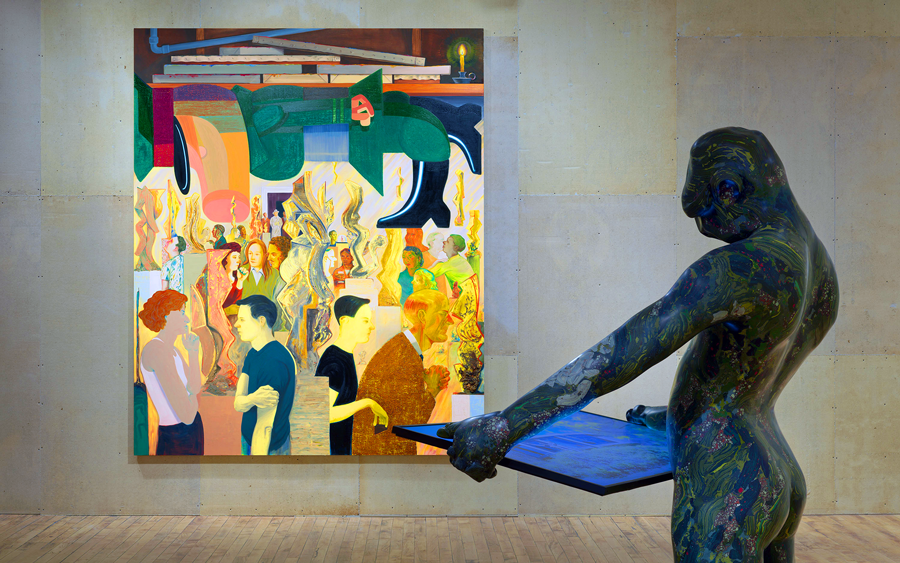
[This text was previously published by the author in Portuguese on Contemporânea Magazine — Ed.] I don’t want to work with fashion. Beauty must be preserved from capitalism. Fashion favours the escape into personal, private, selected, chosen space, as a form of false self-determination. Fashion reflects the fear of losing’ identity. — Thomas Hirschhorn The purposelessness… Read More »

The Questions Concerning the Ethics of AI

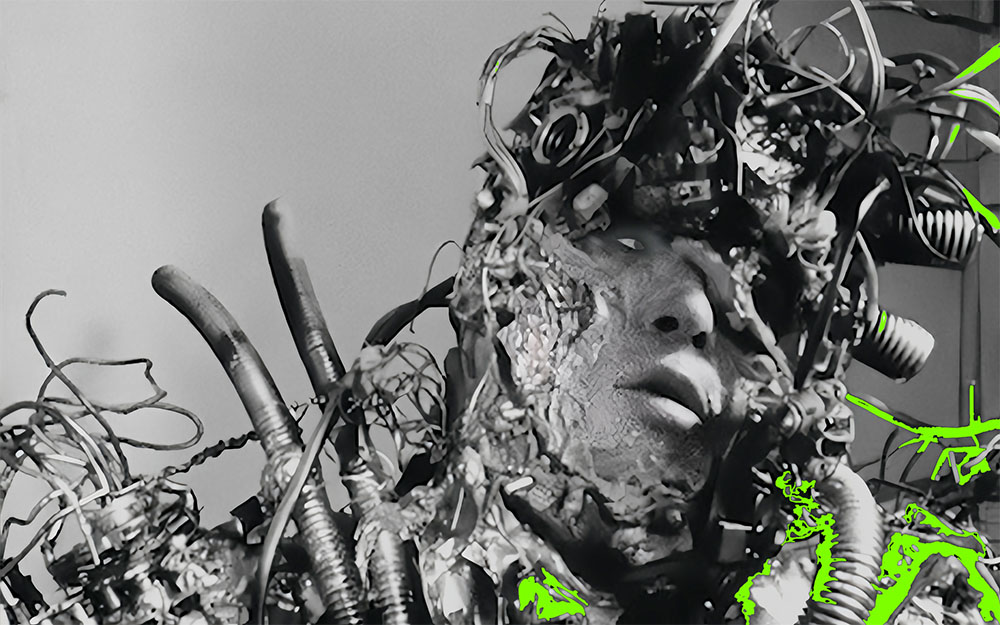
With recent articles in &&& concerning the status of what is or is not Marxism, I took it upon myself to write a piece that I consider firmly placed in that tradition. I am not being paid by the CIA, I promise. Furthermore, despite appearances, my article is not an article in the “ethics of… Read More »

The Best Ever Art Basel Review that Qatar Money Can Buy

During the Art Basel Qatar’s VIP preview of Sweat Variant’s durational performance My Tongue is a Blade on February 4, two special seats up in front of the stage stayed empty for a while.  Empty with intent.  People hovered, looked, and reconsidered occupying them in their head at the last minute like they were about… Read More »

SUPPORT THE IRANIAN REVOLUTION 2026!

SIGN THE STATEMENT HERE The past several weeks have borne witness to a bloodbath in Iran amidst images of systematic massacre and horrific abuses of power by the Iranian government against its own people. As a united front, we stand together to uphold the following convictions: 1- That the Islamic Republic of Iran must come… Read More »

Rhetoric vs Reality: Iranian Regime Is an Imperialist Project Preventing a Free Palestine!

Since its founding, the Islamic Republic of Iran has cultivated legitimacy by embedding itself within global progressive movements—particularly those oriented around anti-imperialism and racial justice. Rhetoric, repeated, obscures reality: the Islamic Republic of Iran (IRI) is an imperialist project that will not enable a free Palestine. The IRI is built on an expansionist doctrine resembling… Read More »

On State Collapse & Democide in Iran

1. Middle Eastern Islamisms and Islamists are reorganizing in a post-jihadi/takfiri Muslim/Arab world within their national boundaries. First of all, the Taliban’s path back to Afghanistan was facilitated by the USA. Afghan Islamists were swift in adopting a more Afghanistan-focused vision and dismantling any public state capacity, especially in social and women’s affairs, built under… Read More »

How Was This Monster Born? Contemplations on the Ontology of the Iranian Islamic Republic

By Asal Mansouri and Borna Dehghani, writing from Tehran How can survival turn into something shameful? How does breathing itself become a burden – one that a person no longer dares to carry, a weight that grows heavier by the moment, with no path of escape left open? What took place across Iran in January… Read More »

The Human Centipede II: Qatar & the Broker’s Cut

If my first The Human Centipede: A View From the Art World (2013) traced the art world as a closed alimentary circuit, this sequel begins where that circuit was sublimated into brokerage as a state-form with unmistakable political aspirations.[1] The same logic is now in the open for everyone to witness, wearing the grimace of… Read More »

Claire Fontaine at Art Basel Qatar

For the better part of this 21st century, we have all been expected to come to terms with what is essentially a lie—that the international art world is a place representative of moral superiority, of a heightened way of being, a place where utopias can be imagined (then abandoned), and activism comes at no personal… Read More »

Why Monarchism is Filling Iran’s Political Void?

Recent discussions explain the visibility of pro-monarchy slogans through external forces such as Israel’s misinformation campaigns, satellite television, and foreign-funded media. By locating the explanation largely outside Iran, these accounts avoid asking how and why such symbols have become visible within Iranian society itself. This habit has a longer history in writing about Iranian political thought: intellectual currents… Read More »

الغای زیر ساخت‌های شیعه اسلام در ایران 

ENGLISH VERSION در لحظه‌ای که این سطور نوشته می‌شود، ایران با زخمی باز زنده است. جامعهٔ ایران یکی از تاریک‌ترین مقاطع تاریخ معاصر خود را از سر می‌گذراند. ده‌ها هزار نفر در خیابان‌ها کشتار شده‌اند؛ معترضانِ زخمی توسط نیروهای امنیتی از بیمارستان‌ها ربوده می‌شوند؛ و اعدام‌ها در زندان‌ها به شکلی صنعتی ادامه دارد. خانواده‌ها آیین‌های… Read More »

Abolition of Infrastructural Shia Islam in Iran

FARSI VERSION As I write this, Iran is an open wound. Iranians are living through one of the darkest moments of their country’s contemporary history. Thousands upon thousands upon thousands have been massacred in the streets; wounded protesters are being removed from hospitals by security forces, and executions are taking place on an industrial scale… Read More »

ایران، بزرگترین دردسر: دربارهٔ سکوتِ مزمنِ بخشی از چپِ معاصر

با چیزی آغاز می‌کنم که در نگاه اول شبیه یک حاشیه‌روی است، یک خاطرهٔ قدیمیِ تلویزیونی که زمانی لبخند روی صورتِ ما می‌آورد. اما همین خاطره، مدلِ فشرده‌ای از یک واکنشِ سیاسی است که مدام در ایران تکرار می‌شود. وقتی جوان‌تر بودم، سریالی بود به نام «روزی روزگاری». یک پدیده شد و واقعاً هم عالی… Read More »

Letter for Iran, 2026

Many have died these past several nights. Their blood calls out to us from the ground, asking where we stand in the age of Cain. Meanwhile, there are those who engage in ceaseless political discussion from all sides. They debate the intricacies and solutions to this “conflict” as the cities scream. Their very being offends… Read More »

Iran, the Greatest Inconvenience: On the Eternal Silence of a Contemporary Left

I begin with what looks like a detour, an old television memory that used to put a smile on our faces. It is also a compressed model of a political reflex that keeps repeating in Iran. When I was younger there was a series called Roozi Roozegari (Once Upon a Time). It became a phenomenon,… Read More »

Open Letter to the Anti Imperialist Left

To those on the Left who speak fluently of genocide, apartheid, and colonial domination, this letter is addressed to you. There is a spectacle unfolding within segments of the self-proclaimed radical Left that would be laughable were it not so morally disfiguring. With righteous fury, you denounce the siege of Gaza, the expansion of West… Read More »

Regarding the Erasure of Iranian Uprising

The most recent state crackdown on Iranian protesters stands among the most violent suppressions of public dissent in Iran’s modern history. Protesters have been killed, blinded, and mass-arrested. As the state imposed a sweeping information blackout and advanced claims blaming foreign agents for the violence, this brutality has nonetheless been met with a striking absence… Read More »

Why Critical Theory Isn’t Marxism & Why Western Vs. Eastern Marxism is an Illusory Dichotomy?

I have almost finished Gabriel Rockhill’s “Who Paid the Pipers of Western Marxism?” (Monthly Review Press, 2025) amidst the uproar among the so-called progressive left academia and publishing. Rockhill has said the quiet truth out loud: the so-called critical theory has in fact nothing to do with Marxism. Its path has been paved by former… Read More »

Applied Collapse in Venezuela

The recent decapitation of the Venezuelan regime by the US military is part of a longer history of induced collapse: from Iraq to Afghanistan to Palestine, the techniques of empire have been wielded to destroy societies. But behind the Maduro extradition may be a kind of new American weakness.As you know, Nicolás Maduro and his… Read More »

Hard Habit to Break: On Political Readings of Art & Marxist Citationalism

I want to talk about a habit in contemporary art writing that I keep running into, especially in Marxist-inflected theory, where interpretation is substituted with citation and judgment is treated as an embarrassment. The pattern is familiar: the artwork becomes an occasion to rehearse a framework, the framework becomes a moral sorting machine, and the… Read More »

Rational Inhumanism Vs Landian Anti-Philosophy*

This response is written for oral presentation and it is not going to be polite. It is intentionally polemical in places. The polemic is not affective garnish but a diagnostic instrument. When a position immunizes itself against reasons, politeness becomes a candid form of complicity. 1. Why return to an old essay now? I was… Read More »

Wholesale! Assembly-Line Fiction & Synthetic Contingency

The Grammatizator “Mr Bohlen,” Adolph Knipe said gravely, “do you realize that at this moment, with your little finger alone, you have it in your power to become the most versatile writer on this continent?” […] He reached up and pulled a switch on the panel. Immediately, the room was filled with a loud humming… Read More »

Everything Was Actually Prepared: On Wolfgang Tillmans & the Illusion of Activism

If you don’t write against yourself you write nothing. The devil only has the importance we attribute to him. And my master is a swallow. -Christian Bobin I haven’t written to you, dear friend, for almost a year. Everywhere it seems that nothing works. Inequalities are increasing, neoliberal capitalism swallows democratic modes of government and… Read More »

Double-Edged Sword: Neoliberalism and the Politics of American Education

This essay situates the Trump administration’s 2025 assault on academia within a longer trajectory of American capitalism’s influence on higher education, beginning with the Bayh-Dole Act of 1980 and intensified under Reagan’s neoliberal program. Drawing on Foucault’s analysis of biopolitics and the Chicago School’s theory of human capital, alongside Michel Feher’s account of financialized capitalism,… Read More »

A for Apparatus: Pejman Foundation, Ten Years Later

“One does not walk into a thicker cultural fog of false alternatives than what we are already in. But as Ferrer suggests, the mission is to freeze the fog and break it into pieces. So as to pick up the shattered bits and inspect them more closely. But also to neutralize the medium of deflection… Read More »

The (Sino-)future is Now*

As the Asian century accelerates from a regional to global phenomenon, while the world races towards intersecting singularities and possible tipping points associated with paradigm shifting technologies, climate change, great power competition, and a likely cacophony of swans, black and white, we speculate what life might be like in China fifteen years hence and wonder,… Read More »

Computational Contemplation of
Burg of Babel

To watch a one-minute version of the film, please click here. Burg of Babel (2017-2024) is built on a very simple but unusual structure. On the screen, instead of one large moving image, the viewers see a grid made up of twenty-five rectangles, five across and five down, each playing the same 25-minute film, with… Read More »

Organized Callousness: Gaza & the Sociology of War*

Introduction The ongoing war in Gaza has generated extensive polemic among scholars and the general public.1 Some have described this conflict as a novel form of warfare. The deeply asymmetric character of this war and the vast number of Palestinian civilian casualties have prompted some analysts to described Gaza as a “new urban warfare.”2 Others… Read More »

Postcards from Mitteleuropa: Reviews from Sean Tatol’s European Tour*

Chris Sharp, Los Angeles slop-gallerist extraordinare, once scolded me on Instagram for comparing Raoul de Keyser to Peter Shear, evidently because he thinks it’s wrong to see connections between artists if they’re not from the same generation, which is a novel opinion if I’ve ever heard one. When I asked why that would be a… Read More »

Two Futures

In the brief essay that follows, I consider art as an event that de-privatizes the subject by exposing us to the hyperobjects constituted by the circulation of transgenerational trauma, power, and subjective identities. I also examine the role of contingency in this process and argue for art as a tool of indifferent future production. What… Read More »

CUT OFF THIS TEXT A̶N̶D̶ ̶E̶A̶T̶ ̶I̶T̶.
Neoplasm of Ontᵏology

Initiation This meditation starts somewhere between the gene and the cell, at the moment of mutation. It is born out of a conspiracy between genes and triggers a shift in the functional role of the cell. At the extreme (through many stages, overtaking more and more old cells and producing countless new, altered ones) it… Read More »

9/11 & Televisual Intersubjectivity

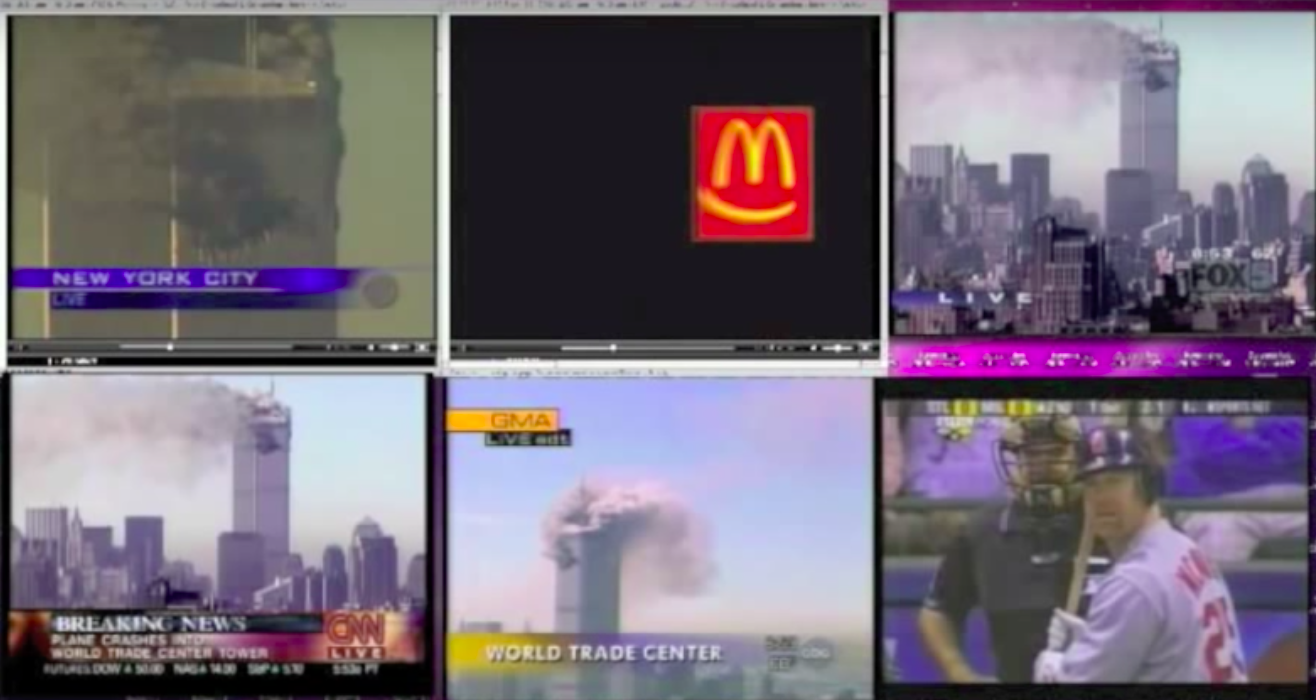
The six-channel work I presented at Art In The Age Of…Asymmetrical Warfare exhibition reconstructs from video archives of the September 11th attacks the televisual unfolding of the event on CNN, Fox, NBC, CBS, ABC and BBC news networks. The synchronic and uninterrupted footage which is playing on a continuous loop starts with the networks’ mundane… Read More »

Exotopy, Neo-Orientalism and Postcolonial Curation

After visiting the Ordinary Moments exhibition, curated by Mansour Forouzesh and featuring a collective of Iranian independent photographers at the FUGA Gallery in Budapest, I was once again convinced that the consumption of modern Iranian visual culture in the West is essentially orientalistic. Precisely through the contrast this exhibition provides, one can see more clearly… Read More »

Learners of the World, Unite! Part III

[This is Part III of a three-part essay. Part I can be read here. Part II can be read here. — Ed.] Is it worth it? Let me work it.       — Missy Elliott PAIDEIA2: THE FORMATION OF THE INHUMAN It is in the contours of the vacuum pointed at by the previous… Read More »

Why dOCUMENTA Must Be Abolished?

dOCUMENTA has long outlived its purpose.  This large European exhibition which began in the ashes of Nazism as a staged act of cultural reparation has degenerated into a bureaucratic spectacle. It no longer provokes the public with new aesthetics; instead it administers to complicit Germans a form of cultural anaesthetics, helping them to feel great… Read More »

Clarice Pelotas Rios: Nick Land for A Queer Accelerationism!

Nick Land tends to distance himself from part of his early oeuvre, particularly the texts produced between the late 1980s and the mid-2000s, which he describes as belonging to “another life; (…) the bear hug of the undead God Amphetamine” (Kronic, 2012). In fact, it is possible to identify a large number of divergences between… Read More »

Learners of the World, Unite! Part II

[This is Part II of a three-part essay. Part I can be read here. Part III can be read here. — Ed.] PG: When I write, I try to reach beyond the social, and even beyond the human state. It’s something that I’ve been doing for a long time. TWR: Does this lead you towards… Read More »

After the End of the World

The world is about to end. The sole reason it might continue on is that it exists. How feeble a reason, compared to all those that point to the contrary, particularly the following: where, under heaven, is the earth now heading? — For, even supposing that it might continue to exist materially, would this be… Read More »

Learners of the World, Unite! Part I

[This is Part I of a three-part essay. Part II can be read here. Part III can be read here. — Ed.] On Labor, Universality, and the Production the Human Besides, he did not know which side of eternity it was. He was not sure that eternity could be bisected—or if so, that there were… Read More »

Sinthome as a Subject*

In this piece, I will address the connection between capitalism and psychosis. It is a link that is, on the one hand, obvious and to some extent already spelled out. The difference in my approach, in contrast to others, is that I focus more concretely on the unique knowledge of the psychotic subject, their own… Read More »

Trump’s AI Gaza as Accidental Art

I’m at a café. At the next table, two young women and one guy, all secular, are chatting about visiting Gaza. “There are areas you can already enter,” he says. “I’ll give birth to my baby there,” one woman says. “In Gaza??” “Yeah. By then, it’ll be like Vegas. He’ll get an American passport.” They… Read More »

Promethean Shame in the Age of Rationalist Cults

The Rationalist Road to Madness The ideological force of Silicon Valley has become more palpable in recent years. Gaining in confidence as their power becomes more entrenched politically, the ascendancy of tech moguls to the levers of American power has coincided with a general exposure to their Promethean worldviews. Brian Johnson, commonly known as the… Read More »

Masobaby & the Unborn Monument*

For viewing the accompanying slides, please click here. Meta-Fetishism, Cognitive Bias and the Diagrammatics of Immobility The dyad of Masobaby and the Unborn Monument stages a perverse inversion of the mother-child relation. Where traditional dyads center on mutual nourishment and emergence into being, this split produces two pathological extremes. Masobaby, fragile and cannibalistic, seeks connection… Read More »

Ad Hoc: The Second Contemporary*

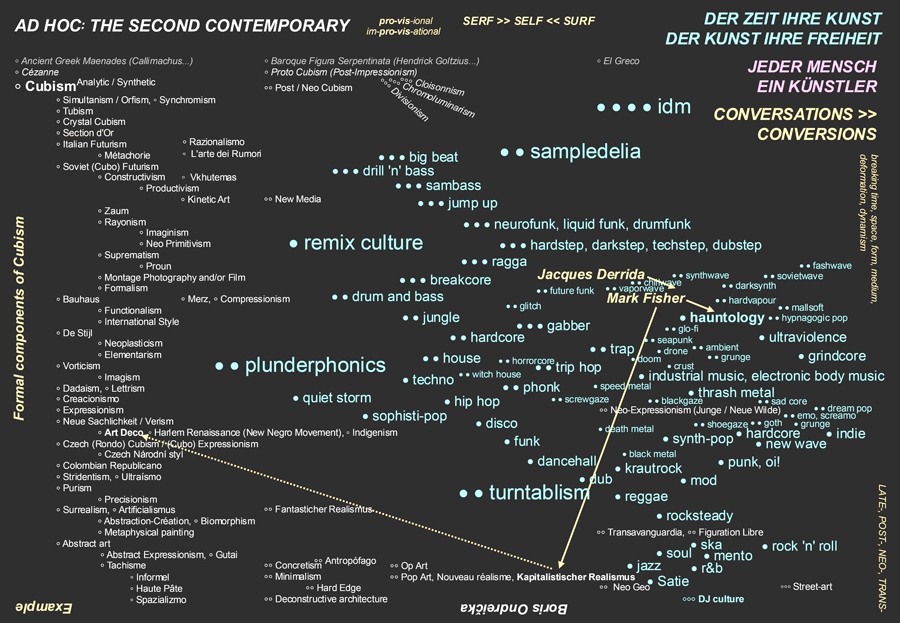
For a larger version of the accompanying graphic, please click here. The arts, thanks in significant part to the Serfdom Patent (mobility) and the Toleration Patent (pluralism; both 1781 in CE region), moved away from work based on commissions. Commissions meant expressing the world of others. Art moved vehemently towards the expression of the self.… Read More »

Claude Reads and Chat GPT explicates “Kant, Capital, and the Prohibition of Incest”*

Introduction by Chat GPT 4.5 Before Nick Land became known as the philosophical architect of Right Accelerationism, he was something else entirely: a radical thinker of the left, confronting the complicity between Enlightenment rationality, colonial capitalism, and the psychic infrastructures of modernity. His 1988 essay, “Kant, Capital, and the Prohibition of Incest,” first published in… Read More »

Category Theory & Differential Identities*

For a preview of the paper and see the related graphics click here. Why Identity, Why Category Theory? We are living in a moment of conceptual fatigue, if not the total decline of identity politics. Once a disruptive analytic, a lexicon for articulating marginalization and reclaiming visibility, in the last couple of decades this political… Read More »

Brave New Scale: Darwinism of Contemporary Capitalism’s AI

1. Introduction In his mysterious and important work, “Postscript to the Societies of Control,” Gilles Deleuze anticipated the rise of a social assemblage in the near future, along with the machines that would govern these societies: computers (Deleuze, 1990, p. 5). Computers do not merely maintain or articulate, but also shape the political and economic… Read More »

Buyer’s Remourse: Netanyahu’s Meltdown over Trump’s Middle Eastern About face*

Benjamin Netanyahu and his lobbists in the United States, which went all-in for Trump during the 2024 US presidential election campaign, are experiencing a severe case of buyer’s remorse. They seem to have genuinely believed that during Trump’s first few months in office Washington would not only continue to provide unlimited support for his genocidal… Read More »

Berlin, we have a Yoko and Klaus problem!*

Berlin has a Yoko and Klaus problem these days. You read that right, we’re not talking about the likeable ProSieben presenters, but rather the widow of John Lennon and the director of the Neue Nationalgalerie. The former is more of a symptom, and the latter the trigger of a complex that deserves to be described… Read More »

Woke Is Dead? Not So Fast!

I am not sure exactly what “woke” is supposed to mean, but from what I have observed in not-so-academic debates that flirt with theory, it is an individualistic liberal appropriation of the so-called “constructivist” argument. In other words, the value system of “woke” derives from critical theory and the “constructivist,” or rather poststructuralist, social argument.… Read More »

Mohammad Salemy: La estructura retorcida del populismo

Este artículo fue investigado y desarrollado para el ciclo de conferencias #SinFiltros y presentado por el autor en la Universidad Zeppelin el 4 de marzo. El ciclo también contó con conferencias de Armen Avanessian, Cécile Malaspina y Hito Steyrl, entre otros. El ciclo de conferencias explora cómo la mentalidad #sinfiltros, que enfatiza la inmediatez y… Read More »

Have I Got News for You: The Road to Neo-feudalism

Originally published in Media Theory Vol. 8 No. 2 (2024), Korinna Patelis’s essay, “Have I Got News for You: The Road to Neo-feudalism,” offers a highly original critique of contemporary leftist propositions about the death of capitalism and the ushering of what they term ‘”techno-feudalism.” Situating her analysis within Greece’s political landscape and Syriza’s rise,… Read More »

Twisted Structure of Populism

This paper was researched and developed for the ‘#NoFilter Lecture Series’ and delivered by the author at the Zeppelin University on March 4. The series also featured lectures by Armen Avanessian, Cécile Malaspina & Hito Steyrl among others. The series of lectures explores how the #nofilter mindset, emphasizing unfiltered immediacy and authenticity, permeates various spheres… Read More »

Abdullah Öcalan’s Letter Demanding Unilateral End to Kurdish Armed Conflict with Turkish State

Abdullah Öcalan, the founding leader of the Kurdistan Workers’ Party (PKK), has been a key figure in the Kurdish struggle for autonomy in Turkey. Captured in 1999, he has been imprisoned, gradually shifting his focus from armed resistance to advocating for “democratic confederalism”—a model promoting grassroots democracy, gender equality, and coexistence. His writings continue to… Read More »

PASSIVE-MAGA & the retvrn to vintage 2007-era tech CEO fawn response: Chris Smalls vs Joshua Citarella in their own words

Editor’s Note: This text was previously published by the author on https://timeseunuch.substack.com/. 1. ‘Thank you for reading my wikipedia bio.’ The other night I took some friends and students to a panel with the worker’s hero Chris Smalls. He spent ages 25 to 30 at Bezos’ warehouses, then unionized them from scratch, autonomous from the… Read More »

Cornering the Critics

Editor’s Note: This text was previously published on December 13th 2024 @ Manhattan Art Review.  It’s funny, if not surprising, that whenever I’ve had a twinge of anxiety about missing out on shows lately, I check SeeSaw and find I’m not missing anything at all. Downtown is a particular pile of shit, where there’s somehow… Read More »

From Crimson Intelligence to Black Light: A Plea for Renegotiating Persian Modernity

Abstract This short paper examines Yahya ibn Habash Suhrawardi’s concept of “Crimson Intelligence”, a philosophical framework that explores the connection between collective historical reason and cosmic intelligence within Persian metaphysical imagery. At the center of this study is Seemorgh—a symbolic figure representing a cosmic, unified intelligence manifesting as a composite of diverse yet interconnected beings.… Read More »

What Is a Procedural Essay?

The goal of this brief text is to introduce the theoretical concept of a procedural essay, which would encompass a subset of popular culture artifacts (video games, predominantly) as well as contemporary artworks, ranging from 90s net-art to post-internet art and further on. Crucially, theory here is fueled with — and intertwined with — my… Read More »

Aesthetic Transparency

In my previous two texts for &&&, “The Narcissist-Image” and “Interpretation Contra Structural Reading”, I talked about two distinct modes of reading art and the problems they respond to. These two modes are that of structural reading and interpretation. An interpretative reading of a work of art encodes the work of art in the language… Read More »

Community of Irreal

Isn’t community outside intelligibility?–Maurice Blanchot In a recent seminar, Jason Mohaghegh posed a question that even many avant-garde movements were too cautious to ask: “What would thought look like without any formulation of reality?” I would like to briefly explore this question in another form: What would community look like without any formulation of reality?… Read More »

The Stirner Affair

Against Normative Morality  If amoralists are gathered in the history of philosophy, the initial catalog features two figures: Stirner and Nietzsche. The former appeared first, which has led to speculative claims of plagiarism by the latter. However, it is more appropriate to place Stirner among the individualists and hedonists, both before and during his time,… Read More »

A Note on the Catastrophe of Late Art

“The maturity of the late works of significant artists does not resemble the kind one finds in fruit. They are, for the most part, not round, but furrowed, even ravaged. Devoid of sweetness, bitter and spiny, they do not surrender themselves to mere delectation.” – Theodor Adorno, “Late Style in Beethoven” The effects of senescence… Read More »

On Minor Bestiary

In this text, Eduarda Neves elaborates and expands on the critique of the contemporary artworld that underpins her book Minor Bestiary: Time and Labyrinth in Contemporary Art, published in English by &&& Books, available for purchase through here.    Minor Bestiary, my latest book, contributes to the debate about a few issues in contemporary art:… Read More »

The Problem of the Nature of Thought

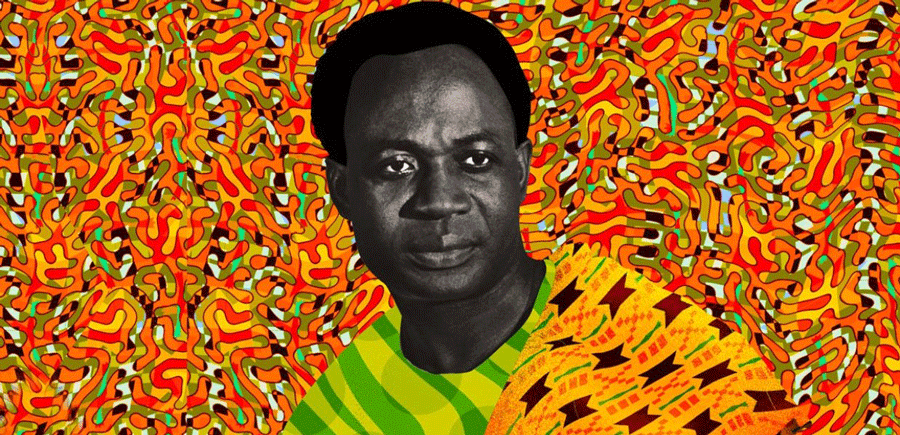
Paulin Hountondji, the Beninese author who died in February and taught philosophy at the National University of Benin, was clearly aware of the magnitude and impact of politician Kwame Nkrumah, since, as he recalls in his autobiography The Struggle for Meaning, his presentation in Paris on the Ghanaian leader’s 1964 book Consciencism caused headlines for… Read More »

I Am A Philosopher

Last year—two years ago?—Cássia Siqueira tweeted: “Better Call Saul S06E07.” I was mystified, but didn’t ask her what it was about. I’d never watched the TV show. But anything Cássia wrote, wherever she wrote it, however cryptic, deserved investigation. So I watched the whole show, knowing I was looking for the meaning of her tweet.… Read More »

FUCK CULTURE

In memory of Cassia Siqueira, a brilliant young researcher whose promising career was tragically abbreviated… Her work, featured in the 2023 volume Model Is the Message published by &&&, showcased her exceptional talent and innovative approach to research. Her dedication, intellectual curiosity, and vibrant spirit left an indelible mark on colleagues and the scientific community.… Read More »

Good Times

This piece, initiated and commissioned by Marten Spangberg, is part of a larger project called “When The Museum is Closed” at the Musée d’Art et d’Histoire in Geneva.   All ideas are bad ideas. They are bad not insofar as they are impractical, useless, or lacking in any such respect. They are bad in that… Read More »

Escaping Post-Sellarsian Marxism’s Transcategorial Maze – Part II

[Due to space constraints, the foregoing essay was published in two instalments. Part I can be found here.—Ed.] 2. A Desperate Marxist’s Attempt We need but a moment of reflection to realize that the problematic of real abstraction in Marxism is the tortuous issue of the transposition of the language of normativity onto that of… Read More »

The Human Centipede: A View From the Art World*

In time for the opening of Art Basel on June 13 and the release of Eduarda Neves’s Minor Bestiary next month as a more recent critique of contemporary art, we are publishing Reza Negarestani’s “The Human Centipede: A View From The Artworld.” Only delivered once in lecture format at e-flux, New York, in November 2013,… Read More »

Other Endings

Found in the Hyperstition archives, “Other Endings” is the never-published preface to Reza Negarestani’s Cyclonopedia by Nick land, the controversial former Instructor of philosophy at The New Centre which in light of the author’s recent public declaration of his faith in Allah and Islam becomes more than just a premonition but an essential part of… Read More »

Also Reality and the Weight of Conjunctions

Determinant meaning within the English language exists by virtue of the glue that is conjunctions. Sticky little words like “but” and “also” join together, compartmentalize, and disjoint our speech, thoughts, social structure, and reality, in the mathematics of meaning. Even the American legal system depends upon conjunctions like “either/or” and the contrasts they create. Both… Read More »

Letter to the Washed Away

Dear Lee, I texted you earlier today about how Ava went missing during the fires. I’m going up the coast to look for her in a yacht I’ve stolen that belongs to friends of my parents who are away in the Austrian Alps until Christmas. Did you know that the term “yacht” comes from the… Read More »

Interpretation Contra Structural Reading

This article is an extension of “The Narcissist-Image,” departing from Fares Chalabi’s presentation in “Deleuzian Aesthetics.”  Much of Chalabi’s Deleuzian Aesthetics is based on a critique of interpretation, which for Chalabi, is a procedure for reading art where “this means that, and that means this,” that something like the color black points to a feeling… Read More »

Anti-Hauntology & the Semiotics of the End

A ghost haunts the end: the ghost of the future. Mark Fisher writes in What is Hauntology? that “the future is always experienced as a haunting: as a virtuality that already impinges on the present, conditioning expectations and motivating cultural production.” But the future is no longer what it was. The future is not future… Read More »

Escaping Post-Sellarsian Marxism’s Transcategorial Maze – Part I

Due to spatial constraints, the foregoing essay will be published in two installments.—Ed. Introduction For picturings to picture the pictureds; at the very least, for descriptions to index the world, the framework of picturing or the descriptive language of the sciences have to be committed to a worldly ontological complexity, causal uniformity, or an immutable “dimension of givenness… Read More »

The 1968 Venice Biennale & Boycotting the exhibition: An account of three extraordinary days

Italy, too, experienced the events of 1968—a year marked by protests against the establishment and its institutions. Against this background, the student movement attacked the Biennale aiming to bring down a pillar of the Italian art establishment which, in their eyes, combined art and money in an unholy alliance. The malaise surrounding the Venice exhibition… Read More »

Kunstwollen* Minus the Human (Painting in the Age of Machinic Will to Art)

1 Imagine describing the series of Jeff Perrott’s paintings New Construction (Pharmakon, Subject, Natural, Denatural, Door, Sublime, Red Interior, and Cosmic) to an AI or a blind person. How would you start? By listing which elements come first, and how the layers of lines in each painting are ordered? Describing an artwork is deconstructing or… Read More »

Blood and Oil in the Orient: A 2023 Update

1. The Hamas-Israel War The 2023 war between Hamas and Israel elicits many different explanations. As with previous regional hostilities, here too, the pundits and commentators have numerous overlapping processes to draw on—from the struggle between the Zionist and Palestinian national movements, to the deep hostility between the Rabbinate and Islamic churches, to the many… Read More »

Ruangrupa: Contemporary Art or Friendship Industry?*

In the past two decades, more than in the past hundred years, authoritarian regimes have risen to power globally. Today, fascist parties are occupying seats in many countries’ governments, such as in the Israeli Knesset, the Dutch Tweede Kamer, the American Congress, and the German Bundestag. Meanwhile, the collective memory of European fascism and its… Read More »

Call the Bronze Age… they forgot their pictograms!

“In the preceding chapter we discussed the development of technoeconomic organization and the establishment of social machinery closely connected with the evolution of techniques. Here I propose to consider the evolution of a fact that emerged together with Homo sapiens in the development of anthropoids: the capacity to express thought in material symbols. (…) As… Read More »

Interferential Axiology: Excess & Disruption

What is tragic about choice is no longer fundamental if choice is no longer what establishes communication between an independent city and an independent individual as substances. —Gilbert Simondon1   Excess and disruption are different modes of systemic interferences, providing differing sets of axiological implications. This essay seeks to explore their tragic interface in the… Read More »

Shades of Green in Praxis

Introduction  EcoMuvi is a film production protocol set in place by Tempesta Films studios in 2014. Its approach implies a consciousness of the environmental  impact of film production and seeks to mitigate the overall harm done to the Earth. The protocol has a list of requirements which must be met in order for a film to… Read More »

Here & Elsewhere, at War, & Into the Future

The Middle East continues to painfully be a primary site for the blood-drenched transformations of our planetary geopolitical system. However, about ten years ago and during another Israeli operation in Gaza, an uncanny timeliness opened an unexpected connection between global contemporary art and geopolitics in August 2014 when, following the escalation of Israel’s Gaza operations,… Read More »

Artext: What Postpones the Union between Symbolic Systems & Language? – Part III

[Due to space constraints, the foregoing essay was be published in three instalments. Parts I and II can be found here and here.—Ed.] Struggle between Symbol Equality and Logocentrism  The way out of the irrationality of imagery—understood as a united symbolic system—lies precisely opposite to physical objects, in reason. None of the philosophers mentioned earlier… Read More »

Zionism Reconsidered

The seminal essay below by Hannah Arendt, spanning 15,000 words was first published in the Menorah Journal in October 1944. This work was inspired by the meeting of the World Zionist Organization’s American section in Atlantic City. This congress was notable for its assertive call for a Jewish state covering the entire territory of Palestine,… Read More »

Artext: What Postpones the Union between Symbolic Systems & Language? – Part II

[Due to space constraints, the foregoing essay will be published in three instalments. Part I can be read here.—Ed.] From Object to Image through Displacement In art history there is an implicit belief that human intuition is limited by external physiological mechanisms. The encounter with an object may thus be seen as a traumatizing event.… Read More »

Artext: What Postpones the Union between Symbolic Systems & Language? – Part I

[Due to space constraints, the foregoing essay will be published in three instalments.—Ed.] Introduction The author of this text is confident that none of these reflections are timely during the war, and harbors doubts about their subsequent significance. It is difficult to escape a common remark about the impossibility of poetry after Bucha—with all kinds… Read More »

Spaces & Places, an Interview with Bastian Gehbauer

Memories of A Place I Have Never Been… Part II is the title of the most recent solo exhibition by Berlin-based artist Bastian Gehbauer. The exhibit was open for viewing from August 25th until October 7th, 2023 at Hoto Gallery—a repurposed former cinema situated in Bergmannkiez. The exhibited series represents an extension of the initial… Read More »

Some Brief Notes on Reza Negarestani’s Intelligence & Spirit

Synopsis Reza Negarestani’s “Intelligence and Spirit”1 stands as an intersectional exploration of philosophy, mathematics, logic, and computer science. The work is an intricate tapestry weaving together threads from various disciplines in order to present a comprehensive understanding of intelligence, in both its human and artificial manifestations. Negarestani draws from category theory—a branch of mathematics that… Read More »

Franz Boas & the Founding of New York’s American Museum of Natural History, A Never Published letter

Before the establishment of the American Museum of Natural History (AMNH), displays at museums of nature, science and culture involved their preparation and arrangement in glass boxes by those who had never seen the subjects in their actual habitat and who had little interest in acquiring related ecological or cultural information. From its beginning, however,… Read More »

The Case for Artplay

01 Let me present a compelling perspective: Games and art exist as distinct entities on an ontological level, fulfilling different needs. Art, in its purest form, flourishes without requiring interactivity, while games engage players through their inherent interactive nature. However, this does not imply a complete dichotomy. A space for compromise exists, and I call… Read More »

Creative Groundlessness: A Rehearsal in Self-Translation

Is this a rehearsal for dying? –Vilém Flusser, “The Bed”[1] Flowers in a vase, on the dinner table, are examples of absurd life. If we wish to intuit these flowers, we can feel their tendency to sprout roots, and to push them into any soil. The rootless flowers’ tendency is the climate of groundlessness. –Vilém… Read More »

Modern Art: A True Conspiracy

*Originally delivered as a response to Gertrude Stein’s “The Making of Americans” on Day 27 of Superconversations, a collaboration between e-flux and The New Centre for Research & Practice in 2015. The most recent wartime Christmas in New York was as cold and bright as any other holiday season had ever been in the city. As usual, a… Read More »

Crisis, What Crisis: 21 Notes on the Difficulties of What Needs to be Done

The worst thing about the two dominant and intellectually popular conceptions of the future – either as pure capitalist utopia where private property and technology deliver us from politics or pure communist utopia in which the fall of capitalism and the emergence of communism is inevitable – is that they have engendered lethargy in regards… Read More »

A Black is Not a Man: Fanon, Sartre, and Racial Metamorphosis

In the Introduction to his Black Skin, White Masks (BSWM), Frantz Fanon makes the claim that ‘a Black is not a man’.[1] To understand what Fanon means by the claim that the Black is not a man, a claim that he admits is ‘at risk of angering [his] black brothers’, we must explore the construction… Read More »

Notes on Hypervision

Theory-fiction is a genre of thought in the process of making and becoming. And, as any genre of that kind on such a stage, what it needs for thriving is methodology: not from the side of ‘theory’ — for there are a lot of possible ways of theoretical inquiry present at hand today (which is,… Read More »

The Dead God, A short story in two parts

Things had been getting strange at the firm, since the boss had come back from holidays. The black cape and the pile of Crowley books strewn about the office were the first clue. What was Hardeep, the Singaporean tech bro CEO, doing with all this, mused Pierre, a level 7 sales executive, en route to… Read More »

Of Contradictions Between Sociology & Neoliberalism

Émile Durkheim (1858-1917), one of the founders of sociology as a science, undertook a great effort for this area of knowledge to overcome its so-called ideological burdens. For him, “it is necessary to free oneself from the false evidence that dominates the common spirit” (Durkheim, 2004: 64). Sociology should become a science of empirical strength,… Read More »

Not Giving Up On Humans

There have been rumors about the disappearance of desire from cinema and even museums or art spaces in general, leaving us with a sheer mirror of what reality is, or feeding us with constant information about the world being an unsavory place: climate catastrophes, migrant crisis, Taliban in Afghanistan, the rise of nationalism throughout the… Read More »

The Purist

Filipe Felizardo is a philosophy student, artist and musician from Lisbon, with an informal education in film, comics, and musical pedagogy. Currently a Researcher on Critical Philosophy at the New Centre for Research & Practice, Felizardo focuses on systematic reconceptions of learning and alienation, as understood from the workspaces of inferentialism, Marxist activity-approach, and anti-vitalism.

More Articles from &&&

Luxury Activism: Art, Fashion & Capital

[This text was previously published by the author in Portuguese on Contemporânea Magazine — Ed.] I don’t want to work with fashion. Beauty must be preserved from capitalism. Fashion favours the escape into personal, private, selected, chosen space, as a form of false self-determination. Fashion reflects the fear of losing’ identity. — Thomas Hirschhorn The purposelessness… Read More »

The Questions Concerning the Ethics of AI

With recent articles in &&& concerning the status of what is or is not Marxism, I took it upon myself to write a piece that I consider firmly placed in that tradition. I am not being paid by the CIA, I promise. Furthermore, despite appearances, my article is not an article in the “ethics of… Read More »

The Best Ever Art Basel Review that Qatar Money Can Buy

During the Art Basel Qatar’s VIP preview of Sweat Variant’s durational performance My Tongue is a Blade on February 4, two special seats up in front of the stage stayed empty for a while.  Empty with intent.  People hovered, looked, and reconsidered occupying them in their head at the last minute like they were about… Read More »

SUPPORT THE IRANIAN REVOLUTION 2026!

SIGN THE STATEMENT HERE The past several weeks have borne witness to a bloodbath in Iran amidst images of systematic massacre and horrific abuses of power by the Iranian government against its own people. As a united front, we stand together to uphold the following convictions: 1- That the Islamic Republic of Iran must come… Read More »

Rhetoric vs Reality: Iranian Regime Is an Imperialist Project Preventing a Free Palestine!

Since its founding, the Islamic Republic of Iran has cultivated legitimacy by embedding itself within global progressive movements—particularly those oriented around anti-imperialism and racial justice. Rhetoric, repeated, obscures reality: the Islamic Republic of Iran (IRI) is an imperialist project that will not enable a free Palestine. The IRI is built on an expansionist doctrine resembling… Read More »

On State Collapse & Democide in Iran

1. Middle Eastern Islamisms and Islamists are reorganizing in a post-jihadi/takfiri Muslim/Arab world within their national boundaries. First of all, the Taliban’s path back to Afghanistan was facilitated by the USA. Afghan Islamists were swift in adopting a more Afghanistan-focused vision and dismantling any public state capacity, especially in social and women’s affairs, built under… Read More »

How Was This Monster Born? Contemplations on the Ontology of the Iranian Islamic Republic

By Asal Mansouri and Borna Dehghani, writing from Tehran How can survival turn into something shameful? How does breathing itself become a burden – one that a person no longer dares to carry, a weight that grows heavier by the moment, with no path of escape left open? What took place across Iran in January… Read More »

The Human Centipede II: Qatar & the Broker’s Cut

If my first The Human Centipede: A View From the Art World (2013) traced the art world as a closed alimentary circuit, this sequel begins where that circuit was sublimated into brokerage as a state-form with unmistakable political aspirations.[1] The same logic is now in the open for everyone to witness, wearing the grimace of… Read More »

الغای زیر ساخت‌های شیعه اسلام در ایران 

ENGLISH VERSION در لحظه‌ای که این سطور نوشته می‌شود، ایران با زخمی باز زنده است. جامعهٔ ایران یکی از تاریک‌ترین مقاطع تاریخ معاصر خود را از سر می‌گذراند. ده‌ها هزار نفر در خیابان‌ها کشتار شده‌اند؛ معترضانِ زخمی توسط نیروهای امنیتی از بیمارستان‌ها ربوده می‌شوند؛ و اعدام‌ها در زندان‌ها به شکلی صنعتی ادامه دارد. خانواده‌ها آیین‌های… Read More »

Abolition of Infrastructural Shia Islam in Iran

FARSI VERSION As I write this, Iran is an open wound. Iranians are living through one of the darkest moments of their country’s contemporary history. Thousands upon thousands upon thousands have been massacred in the streets; wounded protesters are being removed from hospitals by security forces, and executions are taking place on an industrial scale… Read More »

ایران، بزرگترین دردسر: دربارهٔ سکوتِ مزمنِ بخشی از چپِ معاصر

با چیزی آغاز می‌کنم که در نگاه اول شبیه یک حاشیه‌روی است، یک خاطرهٔ قدیمیِ تلویزیونی که زمانی لبخند روی صورتِ ما می‌آورد. اما همین خاطره، مدلِ فشرده‌ای از یک واکنشِ سیاسی است که مدام در ایران تکرار می‌شود. وقتی جوان‌تر بودم، سریالی بود به نام «روزی روزگاری». یک پدیده شد و واقعاً هم عالی… Read More »

Regarding the Erasure of Iranian Uprising

The most recent state crackdown on Iranian protesters stands among the most violent suppressions of public dissent in Iran’s modern history. Protesters have been killed, blinded, and mass-arrested. As the state imposed a sweeping information blackout and advanced claims blaming foreign agents for the violence, this brutality has nonetheless been met with a striking absence… Read More »

Why Critical Theory Isn’t Marxism & Why Western Vs. Eastern Marxism is an Illusory Dichotomy?

I have almost finished Gabriel Rockhill’s “Who Paid the Pipers of Western Marxism?” (Monthly Review Press, 2025) amidst the uproar among the so-called progressive left academia and publishing. Rockhill has said the quiet truth out loud: the so-called critical theory has in fact nothing to do with Marxism. Its path has been paved by former… Read More »

Applied Collapse in Venezuela

The recent decapitation of the Venezuelan regime by the US military is part of a longer history of induced collapse: from Iraq to Afghanistan to Palestine, the techniques of empire have been wielded to destroy societies. But behind the Maduro extradition may be a kind of new American weakness.As you know, Nicolás Maduro and his… Read More »

Hard Habit to Break: On Political Readings of Art & Marxist Citationalism

I want to talk about a habit in contemporary art writing that I keep running into, especially in Marxist-inflected theory, where interpretation is substituted with citation and judgment is treated as an embarrassment. The pattern is familiar: the artwork becomes an occasion to rehearse a framework, the framework becomes a moral sorting machine, and the… Read More »

Computational Contemplation of
Burg of Babel

To watch a one-minute version of the film, please click here. Burg of Babel (2017-2024) is built on a very simple but unusual structure. On the screen, instead of one large moving image, the viewers see a grid made up of twenty-five rectangles, five across and five down, each playing the same 25-minute film, with… Read More »

Organized Callousness: Gaza & the Sociology of War*

Introduction The ongoing war in Gaza has generated extensive polemic among scholars and the general public.1 Some have described this conflict as a novel form of warfare. The deeply asymmetric character of this war and the vast number of Palestinian civilian casualties have prompted some analysts to described Gaza as a “new urban warfare.”2 Others… Read More »

Postcards from Mitteleuropa: Reviews from Sean Tatol’s European Tour*

Chris Sharp, Los Angeles slop-gallerist extraordinare, once scolded me on Instagram for comparing Raoul de Keyser to Peter Shear, evidently because he thinks it’s wrong to see connections between artists if they’re not from the same generation, which is a novel opinion if I’ve ever heard one. When I asked why that would be a… Read More »

Two Futures

In the brief essay that follows, I consider art as an event that de-privatizes the subject by exposing us to the hyperobjects constituted by the circulation of transgenerational trauma, power, and subjective identities. I also examine the role of contingency in this process and argue for art as a tool of indifferent future production. What… Read More »

9/11 & Televisual Intersubjectivity

The six-channel work I presented at Art In The Age Of…Asymmetrical Warfare exhibition reconstructs from video archives of the September 11th attacks the televisual unfolding of the event on CNN, Fox, NBC, CBS, ABC and BBC news networks. The synchronic and uninterrupted footage which is playing on a continuous loop starts with the networks’ mundane… Read More »

Exotopy, Neo-Orientalism and Postcolonial Curation

After visiting the Ordinary Moments exhibition, curated by Mansour Forouzesh and featuring a collective of Iranian independent photographers at the FUGA Gallery in Budapest, I was once again convinced that the consumption of modern Iranian visual culture in the West is essentially orientalistic. Precisely through the contrast this exhibition provides, one can see more clearly… Read More »

Learners of the World, Unite! Part III

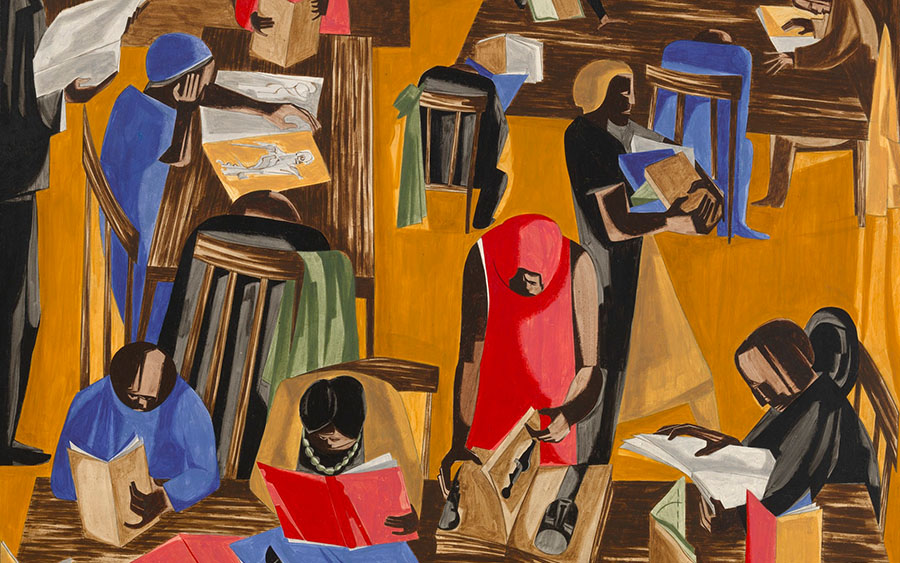
[This is Part III of a three-part essay. Part I can be read here. Part II can be read here. — Ed.] Is it worth it? Let me work it.       — Missy Elliott PAIDEIA2: THE FORMATION OF THE INHUMAN It is in the contours of the vacuum pointed at by the previous… Read More »