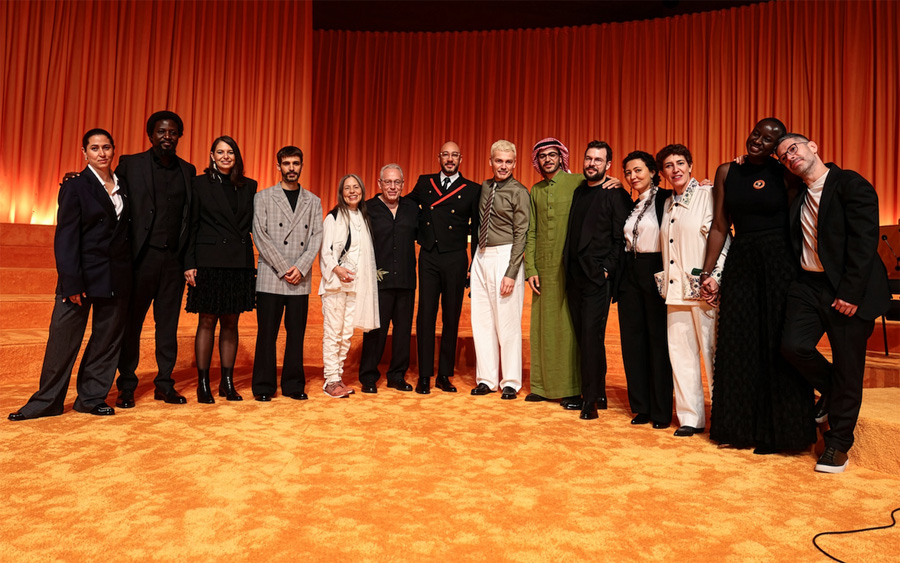
At some point, every empire invents a prize. The Romans had triumphs, the French had academies, the British had honours, the Americans had foundations, and the Swiss now have the Art Basel Awards. This was probably inevitable. After selling booths, conversations, VIP previews, lounge access, city guides, market reports, collector breakfasts, public commissions and satellite programming, Art Basel has finally arrived at the last available product: moral authority. This is not the Prix de Rome, sending young painters to copy antiquity under the hot supervision of state taste. It is not the Turner Prize, with its charming national masochism, where Britain annually pretends to hate contemporary art before congratulating itself for being sophisticated enough to hate it in public. It is not even the Hugo Boss Prize, which at least had the decency to attach luxury branding to a museum rather than to the entire global digestive system of the art market. The Art Basel Awards are something stranger and more contemporary. They are an award system for an ecosystem. Artists are awarded. Curators are awarded. Institutions are awarded. Patrons are awarded. Allies are awarded. Media are awarded. One almost expects, in the next edition, a medal for Outstanding Use of Linen at a Collector Dinner.
Art Basel describes the Awards as recognising excellence across the contemporary art world. The 2026 cycle begins with anonymous nominations by “industry leaders and influential voices”, after which a jury of nine international experts selects 33 Medalists. The Medalists then participate in the Art Basel programme and, later, Gold Awardees are chosen through a peer process. It sounds democratic in the way one of our dinner parties sounds open to the public because the waiters are technically also in the room. The key selection mechanism is not the peer process but the gate before the gate. Anonymous industry leaders nominate. A jury of high-ranking institutional authorities selects. Only then do the selected become the “peer” body. Democracy begins after the village has already been fenced, landscaped, photographed and sold to UBS. I am not saying this is corruption. It is more elegant than corruption. It is structure.
Awards have always been suspicious objects. In ancient Greece, a victor could receive a wreath whose material value was close to nothing but whose symbolic force could transform a life. The prize was public consecration. Later, crowns became money, money became patronage, patronage became institutions, and institutions became the administrative face of taste. The Prix de Rome, founded in the 17th century, rewarded artists with study in Rome and turned competition into cultural training, producing the artist acceptable to the state. The modern art prize inherited this double function. It gives money. It gives visibility. More importantly, it converts selection into history. A prize is a small machine that manufactures the conditions under which something can later be called excellent. The Hugo Boss Prize understood this beautifully. Founded in 1996 with the Guggenheim, it offered the winner $100,000 and a solo exhibition at the museum. It was corporate patronage wearing museum gloves. The brand got cultural memory. The museum got sponsorship. The artist got money and canonisation. Everyone behaved as if the arrangement was clean because the white cube had absorbed the smell of the shop. Then the Hugo Boss Prize ended. Boss had, in the words of CEO Daniel Grieder, “lost” its Guggenheim presence. In conversation with Vogue Business, Grieder explained that the company had been connected to art for 30 years through the Guggenheim, that this element was missing, and that, as an international company looking for an international partner, “who could be better than Art Basel?” This sentence belongs in small vinyl letters above the champagne in every art fair VIP lounge: WHO COULD BE BETTER THAN ART BASEL?
The amusing thing about the Art Basel Awards is not that the Medalists are bad. Many are excellent. This is precisely what makes the thing more interesting and more difficult to attack. A stupid award giving prizes to mediocre artists is boring. A powerful award giving prizes to good artists, good curators, good institutions and good patrons is much more dangerous, because it can defend itself through the quality of its victims. David Hammons, Adrian Piper, Joan Jonas, Cecilia Vicuña, Nairy Baghramian, Cao Fei, Ibrahim Mahama, Ho Tzu Nyen, Saodat Ismailova, Lydia Ourahmane, Grace Wales Bonner, RAW Material Company, Jameel Arts Centre, Candice Hopkins, Gasworks, Negar Azimi: these are serious names. The 2025 list was full of people and institutions one can respect without needing to love the mechanism that gathers them under the sign of Art Basel. The 2026 list is equally well assembled: Barbara Kruger, Howardena Pindell, Jenny Holzer, Arthur Jafa, Julie Mehretu, Theaster Gates, Rirkrit Tiravanija, Apichatpong Weerasethakul, Farah Al Qasimi, Precious Okoyomon, Sumayya Vally, Laurie Anderson, Diriyah Biennale Foundation, SAVVY Contemporary, ICI, the Studio Museum in Harlem Artist-in-Residence Program and others. This is not the problem. The problem is that Art Basel is awarding the world it already hosts, circulates, sells, platforms, flatters and depends on. It is like a casino giving an annual prize to probability. Look at the categories. Artists, curators, institutions, patrons, allies, media. Is this a prize or a group portrait at the Art Basel closing party? The patron category is perhaps the most honest. In older prize structures, patrons sat behind the curtain, wrote cheques, joined boards, bought work, lent work, funded catalogues and were thanked in the back matter. Here they come forward as protagonists. Maja Hoffmann, Joel Wachs, Pamela Joyner, Mercedes Vilardell, Teiger Foundation: the class that already shapes museums, collections, acquisition patterns and careers is now itself the object of public recognition. There is a strange beauty in this. No more hypocrisy. The art world has spent decades pretending that patrons are simply generous ghosts who appear at openings and vanish before the invoice. Art Basel, more efficiently, gives them medals.
The jury is a dream cast of institutional authority. Vincenzo de Bellis, Art Basel’s Chief Artistic Officer and Global Director of Art Basel Fairs, chairs it. Returning members for 2026 include Hans Ulrich Obrist of Serpentine, Adriano Pedrosa of MASP, Elena Filipovic of Kunstmuseum Basel, Franklin Sirmans of Pérez Art Museum Miami, Jessica Morgan of Dia, Hoor Al Qasimi of Sharjah Art Foundation, Philip Tinari of UCCA and Suhanya Raffel of M+. Bonaventure Soh Bejeng Ndikung joined the 2026 jury after the death of Koyo Kouoh. It is a biennial opening dinner with administrative powers. Again, there is nothing illegal or even unusual here. Art juries are usually made of people already powerful enough to sit on juries. Expertise is often just social repetition with better shoes. The issue is that the Awards present themselves as an expanded, community-driven recognition system while relying on precisely the institutional class whose power is already consecrated by the system. Ho Tzu Nyen, a 2025 Medalist, had Night Charades unveiled on the M+ Facade in January 2025. The work was co-commissioned by M+ and Art Basel and presented by UBS. Suhanya Raffel, director of M+, sits on the Art Basel Awards jury. Nairy Baghramian, a 2025 Medalist and later Gold Awardee, appeared in conversation with Elena Filipovic at Kunstmuseum Basel in April 2025, shortly before the inaugural Medalists were announced. Filipovic is also an Awards juror. Cao Fei, another 2025 Medalist, had her major UCCA exhibition Staging the Era curated by Philip Tinari and others; Tinari sits on the jury. RAW Material Company, a 2025 Medalist and Gold Awardee, was founded by Koyo Kouoh, who was part of the inaugural jury before her death. Art Basel’s own description calls RAW an institution established by “the late visionary museum leader, curator and Art Basel Awards juror Koyo Kouoh”. Art Basel has also announced a collaboration with RAW on a three-year Koyo Kouoh Fellowship. One could continue. These relationships are not automatically improper. The art world is small, especially at the top, where everybody has curated, exhibited, advised, commissioned, interviewed, collected, panelled, toasted or vaguely hugged everybody else. But this smallness should not be the unspoken condition of the award. The Awards reveal a field in which the same actors nominate, jury, commission, exhibit, collect, sponsor, host and then celebrate one another. This is not even a conspiracy. It is worse: it is normal.
Art Basel’s cleverest rhetorical move is the peer-driven stage. After the Medalists are selected, they vote for Gold Awardees. This gives the process a warmer tone. It sounds less like hierarchy and more like community. Less tribunal, more potluck. But the peer group is already pre-selected. The “community” that votes is created by the anonymous nominators and the jury. The Awards first decide who belongs to the room, then ask the room to decide who deserves the chandelier. Peer recognition can matter. Artists often know more than committees. Curators often see nuances that institutions flatten. But democracy after pre-selection is still curated democracy. It is the dinner after the fair, when everyone is already wearing the right bracelet. The phrase “anonymous nominations by industry leaders” deserves its own small ministry of suspicion. Who are these leaders? Dealers? Collectors? Museum trustees? Biennial curators? Fair insiders? Sponsors? People whose assistants answer emails with “warmly”? Are they required to declare relationships with nominees? Are jurors required to recuse themselves when their institutions have recently commissioned, exhibited or collaborated with a candidate? Are conflicts published? If not, why not? The art world is allergic to transparency in the way vampires are allergic to sunlight. It prefers soft codes: trust, discretion, reputation, conversation, nuance. These are beautiful words. They are also how power avoids paperwork.
It would be too easy to say the Art Basel Awards are scandalous because someone knows someone. Everyone knows someone. That is not the scandal. The scandal is that the Awards reveal how little outside remains. There is no outside jury. No outside sponsor. No outside platform. No outside public. The nominations come from unnamed insiders. The jury comes from major institutions. The sponsor comes from luxury fashion. The platform comes from the art market. The awardees come from the same circuits of museums, biennials, galleries, patrons and commissions. The prize then gives them more access to the platform that helped define them as prize-worthy. The most irritating thing is that it functions perfectly. Bad systems usually defend themselves by hiding their failures. The Art Basel Awards defend themselves by displaying their success. Every individual recognition can be defended. That artist deserves attention. That institution does good work. The machine is protected by the quality of its contents. The real question is different: what happens when all these valid recognitions are assembled by the market’s most powerful fair into an annual ritual of symbolic authority? The fair stops being merely a fair. It becomes an academy without a curriculum, a museum without a collection, a state without citizens, a church without theology. The great joke is that the Awards are probably sincere. That is always the problem with power today. It does not twirl its moustache. It hires a sustainability consultant, funds an emerging artist and speaks movingly about community. Nobody thinks they are laundering anything. They are supporting culture. They are building bridges. They are creating platforms. They are recognising excellence. They are, as always, just trying to help.
The medal has no outside. It hangs beautifully around the neck of the network that made it.