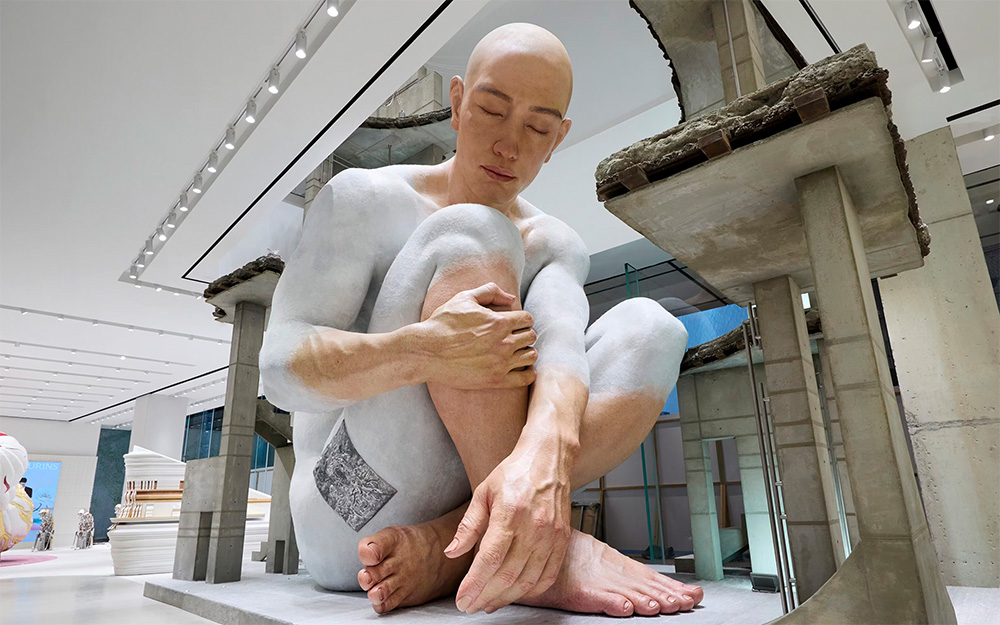
As the Asian century accelerates from a regional to global phenomenon, while the world races towards intersecting singularities and possible tipping points associated with paradigm shifting technologies, climate change, great power competition, and a likely cacophony of swans, black and white, we speculate what life might be like in China fifteen years hence and wonder, will it be tacky to wear matching outfits with our robots, and will they be washing our clothes or will we be washing theirs?
…
We humans tend to think about the future and the past, an evolutionary advantage it seems, a powerful capacity for “mental time travel.” Scientists suggest we’ve been doing this for at least a hundred thousand years, an ability linked to our extraordinary capacity for language, to recall or imagine what once was or what might be, thereby helping us learn lessons from the past and plan for our futures. We’re not entirely alone in this capacity, some great apes and corvids, among a few others, have demonstrated at least rudimentary abilities for basic planning and caching—two qualities I fear I lack in sufficient quantities—although even rats appear to draw lessons from experience and store food for the winter. Of course, we might soon see sentient machines, even self-aware AI, capable of thinking much more deeply about such matters than we can. Already, you can ask AI to tell you what the future might bring us, and it will, likely better than I can.
You already know we’re living in a “new era,” and yet, if you’re past adolescence, you’ve also figured out that the old never departs completely and the new never fully arrives. Nevertheless, we might be approaching a precipice, perhaps a tipping point, a moment of intersecting singularities, including the onrush of paradigm-shifting technologies associated with the fourth industrial revolution, the return of great power competition, and existential risks associated with climate change, including extreme weather, food and water scarcity and novel disease outbreaks. While some celebrate the great potential for positive breakthroughs that such disruptions may occasion, others are filled with dread. Indeed, some are worried we’ve already passed a Rubicon of post-humanity, or soon will. Others believe AI may eliminate their jobs, enslave them, or reify their children with symptoms that look a lot like spectrum disorders. Or perhaps we’ll be liberated from simple tasks, enjoy improved delivery times during rush hour, and form caring relationships with robots in cities where the elderly far outnumber the young. All of these are possibilities, and perhaps more realizable in China by 2040 than any other place, given China’s leading position as a technological society and still deepening digital transformations. And yet, despite the onrush of all these changes, many of us remain…
…Stuck in Time
Insomuch as Hollywood still reflects and shapes a global zeitgeist, apocalyptic themes abound. Many of us remain transfixed by the Mad Max, Dune, Foundation and Fallout series, and the endless parades of zombies and devolved degenerates, personifying our grossest potentials and anxieties of the same. If only there was a superhero that might save us from ourselves… Meanwhile, Superman has been rebooted, once again, and Batman, and Spiderman, and in a decade or less, Ne Zha. Meanwhile, fans debate whether David Corenswet is a worthy replacement for Henry Cavill, and whether Robert Downey, Jr. should be Marvel’s new supervillain Doctor Doom despite previously dying as Ironman in the Avengers series.
Meanwhile, as a fan of anti-heroes, my daughter loved Jared Leto’s campy Joker in Suicide Squad, despite critics panning his performance with predictably unfavorable comparisons to Heath Ledger’s iconic portrayal. She was initially heartbroken the new Joker films featured Joaquin Phoenix, only to fall in love again with the astoundingly dark and subversive first movie of that series, only to feel cheated again by the self-defeating sequel. And yet, who’s ready to imagine someone other than Ryan Reynolds playing Deadpool or Hugh Jackman as Wolverine?
In fact, all of these properties are reboots or sequels, the youngest being the original Fallout, a video game first released in 1997. The first Mad Max was released in 1979. Frank Herbert’s novel, Dune, was published in 1965, Isaac Asimov’s first Foundation novel in 1951, the first Superman comic in 1938, and so on. And given Disney’s immense investment in Star Wars and the MCU, we can expect the light and the dark sides of the force to continue their never-ending struggle to recapture the glory they experienced during with the first Star Wars trilogy (1977, 1980, 1983), just as we can see Johnny Storm, aka the Human Torch, this summer with the Fantastic Four, coming again and again, having appeared in the first Marvel comic in 1939, as long as Los Angeles doesn’t go up in flames completely and take Hollywood with it, as nearly happened earlier this year. All of which begs the question: Are we truly in the moment of great change or are we stuck in time?
If the latter, in which era are we stuck? The famed cultural critic of postmodernity and longtime friend of China Fredric Jameson once suggested ‘our heads are in the clouds of the 21st century, but our feet are still grounded in the 19th,’ repeating the boom-bust traumas of modernity built on a contemporary global economy that would look all too familiar to 19th century theorists Marx and Engels.
In fact, dystopian, apocalyptic and salvation narratives are nothing new. They have played central roles in religious and mythological texts for millennia, while in the modern period, they correlate strongly with periods of global upheaval and uncertainty, including the first decade of the 20th century, again during the Depression, again during the onset of the Cold War, again during the global disruptions of the 1970s, and so on to the present. They’ve become a perpetual staple with cross-over appeal, part romance, part comedy, part sci-fi, part fantasy, part horror, with the most successful finding the right combination to satisfy the ever shifting cultural algorithm capable of capturing the sweet spot of commercial success. That said, while we might indeed be living in the end times or merely the end times of the petrodollar—with fossil fuel imperia still testing the limits of the Anthropocene—the tendency to privilege the moment of our own lives as the most important in all of history reveals much about the narcissistic insecurity of the human condition, with each new age beset with both anxiety and optimism.
We might ask whether the global rise of Chinese media points to a new era or simply skinning the same cat but with Chinese characteristics. On the one hand, Douyin, Ne Zha, The Three-Body Problem, Black Myth: Wukong and even “Labubu” (however sexist as some suggest), all demonstrate a maturation of Chinese cultural products and the ability to capture global market share, on par with what we’re seeing with other Chinese goods, like EVs, solar panels, and wind turbines, without necessarily reflecting a sea change in global tastes. On the other hand, we have seen real innovation and transformations related to China’s leading positions in green development, as the aforementioned products illustrate, complemented by high-tech solutions like smart cities, ports and mines, the world’s best climate tracking satellite systems, open-source AI, and so on.
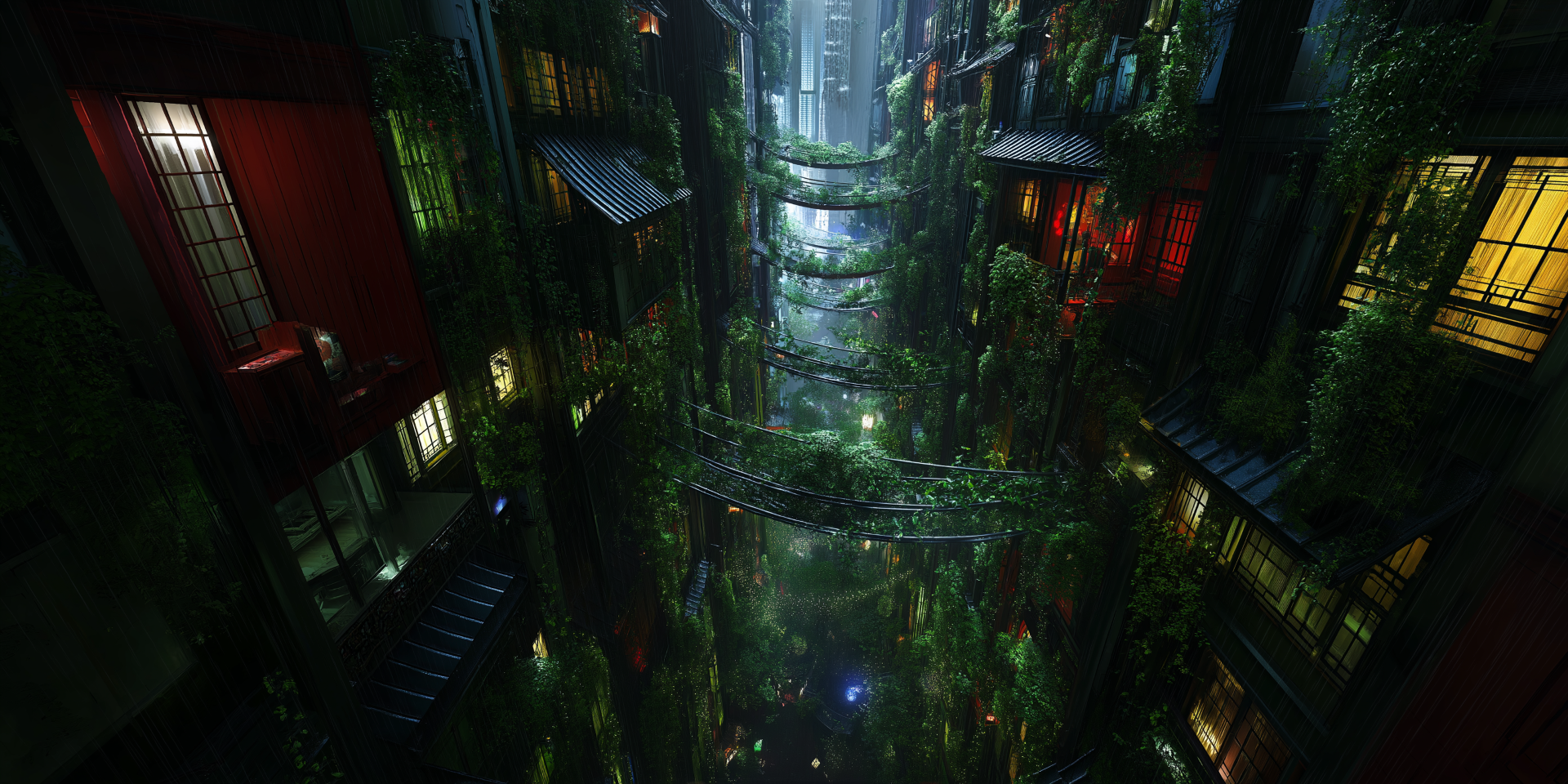
Indeed, China is already home to some of the world’s most advanced cities, among them Beijing, Shanghai, Hangzhou, Shenzhen, and Guangzhou, among others, and for those visiting these places the future already greets them. Over the next five-to-ten years we can easily predict a growing number of similarly advanced cities in the Global South, thanks to Belt and Road Initiative and the rapid advance of China’s technology. Studies indicate significant progress already in a number of unexpected places. For example, the China-supported digital transformation of Addis Ababa is by some accounts well-ahead of comparable developments in any city in Germany.
However, if the future in some respects is already here in some parts of China, then what will the actual future be in those same places? Of course, with prototypes already in the field, many of us readily imagine robot servers, drone deliveries and driverless taxis. Perhaps we can anticipate robot baristas brewing lattes and drones delivering them to your balcony. But we can also anticipate a city that is home to a large number of older people. I’ll be nearly 70 then, and you’ll be older too, if we’re both lucky. Breakthroughs in biomedical science, including new innovations in cancer treatment, some of which are already here, will be more commonplace. That said, it might be a rare treat to see a baby in the city, and a common pleasure to avoid them on airplanes.
Perhaps you’ll have no nostalgia for children, but you’ll probably be quite nostalgic for your own youth. Will you vintage shop or merely hold on to old clothes, your fashion stuck in time? Will you style your hair the same way you do now? Will you have hair? Will it still cost so much to cut so little? Or will gene therapy and new methods already discovered for awakening slumbering hair follicles give you more hair than you had in your prime? Perhaps this will mean more hair on your arms and legs, and maybe your back too… but don’t worry, ‘tis easier to subtract than add. “I’ll shave your back, sweetheart, if you shave mine.” And not just for fashion: global warming discourages furriness.
That said, what might I remember later about today but perhaps wrongly, embellished, a self-mythologized moment of personal significance? Will today be romanticized in 2040 as one of the “good old days” or recalled as a moment of trauma responsible for future failures? Or will today be forgotten entirely, as so many are? I might scroll back through my photos for proof of existence and see, yes, on this day, in 2025, I took a well-lit picture of a very pretty piece of cake. And now that’s why I’m lonely with love handles. That’s why my favorite shirt, an athletic cut, shimmering vintage velvet from Ralph Lauren’s purple label, is buried behind a box of chocolates in the back of my closet. And every time I see it I’m reminded of the only funny thing my ex-wife ever said: “I wish both you and your purple shirt would stay in the closet.”
Nevertheless, even if our goal is to maintain the status quo and deny the fact we’re getting older, even if you’re still rocking curves and a well-coiffed Balmain midriff, we’ll keep moving forward. Sure, I probably once be one of the grandpas waiting at the primary school and you probably won’t be one of the grannies practicing taiji in the park, “empty stepping,” but we’ll be well-enough aware of the Daoist/Zen principle that 退步原来是向前 …
…Every Movement Forward Begins with a Movement Backward
So you won’t remain entirely stuck in time, unless you’re dead. There’s no reason to be morbid but that’s a possibility, of course. As much as new breakthroughs in biotech may extend our lives, new challenges are coming too. For example, if the early returns from science are correct, COVID-19 was likely caused in no small measure by climate change, as were the coronavirus outbreaks that came before: SARS-CoV-1 and MERS. Such are the dark wages of correlation. Perhaps we can mitigate such risks and meet them in stride, but the UN says we’re still failing to arrest climate change globally.
However, in China at least, we’ll continue to see strong public health safeguards, as the last pandemic taught us, and we’ll continue to see major achievements in environmental protection and ecological recovery. We’ll continue to see strong efforts to cultivate an ecological civilization, and we’ll also see the development of new green zones, including massive “oases” playing larger roles in China’s national rejuvenation. For example, we can point to reforestation of the Xishan Mountains west of Beijing, a feat once believed impossible by foreign experts. We can also point to the remarkable efforts to clean up Chaohu Lake and reestablish wetlands surrounding Anhui’s Hefei, which will provide that city with sufficient water resources and carbon traps to sustain the new “silicon valley” being developed there.
As we continue to see the possible loss of arable land due to desertification in China’s northwest, we’ll see new technologies working millennia-old terraces in China’s southwest—agricultural zones that have proven remarkably resistant to climate change through time—but which are being abandoned now by farmers seeking more comfortable lives in the cities. In the coastal regions, we’ll see more “black rain” days, i.e., the “heavy rain” designation used in Hong Kong, perhaps further worsening on-time arrivals and departures, but we’ll also see greater regional integration and cooperation, already world class in the Greater Bay Area and providing a model for other regions to emulate. That said, experts are concerned that in terms of exposed populations and fixed investments, Shandong, Shanghai-Jiangsu and the GBA are in the top five areas in the world facing increasing risks from extreme weather associated with climate change, and these areas have to adapt new technologies, new methods and new fashions to meet these challenges.
We don’t anticipate you’ll need to revert to fish skin clothes (鱼皮衣) crafted by China’s Hezhe minority (赫哲族) to protect you from the rains, though it might offer a sustainable solution for those who prefer their salmon skinless, nor do we expect you’ll need a Dune-inspired “still suit” to visit the Gobi or that you’ll encounter stylishly post-apocalyptic ravagers straight out of Fury Road once you get there. Nevertheless, climate change and disease outbreaks have long played a significant and sometimes decisive role in fashion. In the 13th century, Marco Polo observed silk face coverings were used in China to prevent the spread of disease, while modern studies demonstrate that silk cloth functions well as an antimicrobial barrier, especially when multiple layers are used. Consequently, while the historic Silk Road is sometimes blamed for spreading diseases in ancient times, it also carried products that could be used to prevent the same. Some of the same products, including silk, were useful for those living in desert regions, like Arabia, providing a pre-synthetic cloth that performed relatively well in UV protection while also avoiding the excessive heat associated with other fabrics, like wool, or the more poorly performing UV protection of cotton.
So, while we don’t expect “hazmat” styles it’s not unreasonable to imagine clothes that will protect us better from the elements and outbreaks. Silk would be a renewable option, the spent silkworms recycled in bio-energy plants, already a new norm in Chinese cities, or as protein sources for your pets. And don’t worry about handwashing your delicates. Your robot will do that for you, unless of course the master-slave dialectic also applies to sentient machines, in which case you might be overthrown, washing clothes for your robot… Will ‘androids dream of electric sheep,’ to recall Philip K. Dick’s novel (1968), or will they dream of Hermes handbags, Chanel jackets, and wearing Balenciaga to the club? Perhaps they’ll fancy a past they never experienced, and dress themselves in silk embellished with guofeng (国风).
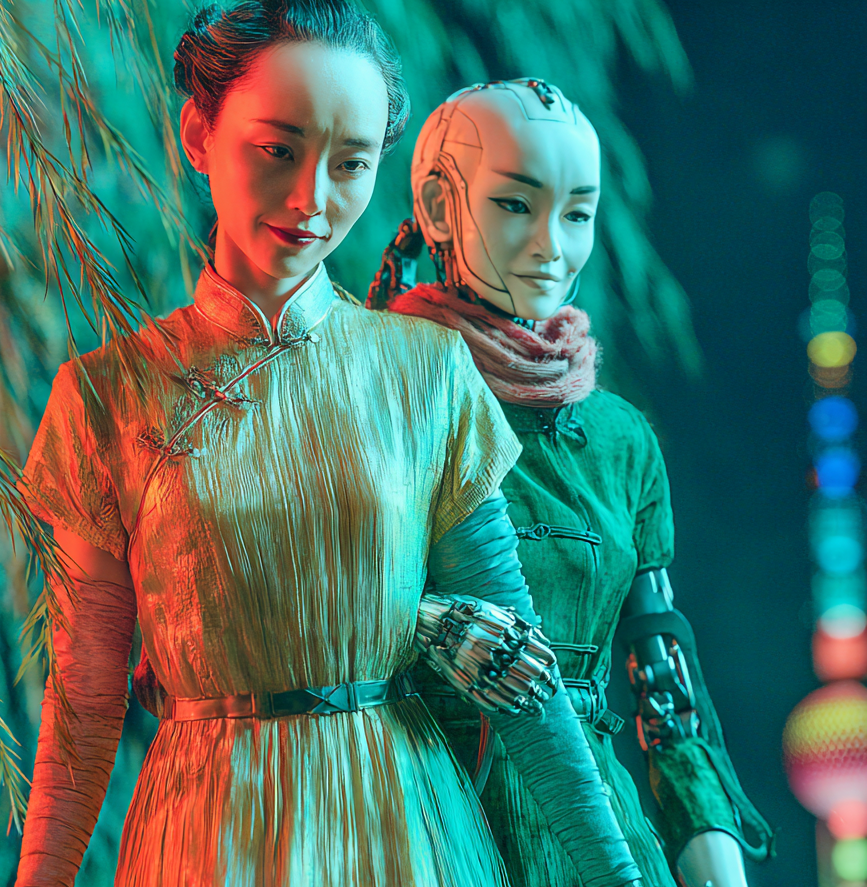
I rather like the idea of shopping with my robot, and matchy-matchy Gucci scarves (情侣装), but I wouldn’t sell a cloned kidney to do so. Will I still be working at 70, or financially secure? I’m a single parent with two kids in my portfolio. What’s in yours? In fact, many worry the world is moving towards a global financial breakdown. On the one hand, due to the ongoing role of the US dollar as the global reserve currency and the likelihood that unfair US fiscal and monetary policies will continue to extract disproportionate value from the global economy, some experts believe we might be heading towards currency wars that will be difficult to hedge against. If this sounds like a “crypto bro” sales pitch then you’re forgiven for thinking so. Nevertheless, a Hong Kong-based crypto guru recently remarked to me that if you don’t have at least 3 bitcoins by 2030, approximately US$340 thousand today, “then you’ll be a slave to the matrix.” Of course, some are already slaves to the matrix, so to speak, victims of misinformation and information cocoons, and not just a few given the way such phenomena are impacting mental health, markets and election outcomes in some countries. Furthermore, for the good of the environment and the renminbi, China banned crypto mining and trading in 2021…
On the other hand, experts at Google and elsewhere predict we’ll encounter “Q-day” sometime in 2030—the day when quantum computing abilities will be able to hack most of the encryption used today, putting everyone at risk, including those holding and using digital currencies. Studies warn we’re not doing enough to prepare for such risks, while reports suggest criminals are stockpiling encrypted data now to be hacked later… So perhaps you’d be better off spending your money while you still can. Stop saving so much, grow the economy, but avoid irresponsible debt! In the meantime, keep one hand reaching forward, the other holding on to whatever you partially own. You might even browse Eleme for things you might need. Like a crowbar (撬棍). Checking the app I see four available for delivery within three kilometers and 30 minutes. There, I bought a blue one, my favorite color. I’ll hide it under my bed, just in case my AI-robot or the cicadas suddenly stop singing and turn against me. And perhaps I’ll keep it in a classic LV trunk bought from the “The Louis,” aptly docked in Shanghai’s downtown, should we see rising waters due to climate change. In this way I may come to embrace what Sigmund Freud called the “death drive:” often interpreted as the human tendency to be saboteurs of our own lives and predestined to act against our own best interests, instead I realize “fashion” is how I choose to approach my inescapable ends.
Worry not. This might be the end of five centuries of Western global domination but the end times are not yet here. Instead, remember 张三丰’s eighth rule of taiji:“有上即有下,有前则有后,有左则有右。如意要向上,即寓下意,若将物掀起,而加以挫之之力。斯其根自断,乃坏之速而无疑.” Or, recall the closest equivalent from the West, Newton’s third law of motion, paraphrased as, ‘in order to get to where you want to go, you have to leave something behind.’ So what I am leaving behind? What am I forgetting? What do I know now that dementia may take from me later? Whatever, for the moment at least I recall the immortal words of the French philosopher Louis Althusser…
…The Future Lasts Forever / 来日方长
Or as the poet Robert Browning wrote, “What’s time? Leave Now for dogs and apes! Man has Forever.” Of course, that isn’t necessarily true, and we shouldn’t be surprised both were being intentionally ironic. In Browning’s case, a retort in his poem, “A Grammarian’s Death” (1855), “praising” a scholar who spent his life, debilitatingly hunched over his desk, seeking academic immortality, forgoing the pleasures of the flesh. With Althusser, it’s the title of his autobiography, written in an asylum after murdering his wife while suffering severe depression and iatrogenic hallucinations. But it’s useful to note his book especially because in that moment Althusser was struggling with a contradiction that bedevils many of us, the juxtaposition of hope and despair. On the one hand, he was no doubt deeply familiar with the mantra of the Italian political philosopher Antonio Gramsci—imprisoned by Mussolini—who wrote repeatedly in his Prison Notebooks of “the pessimism of the intellect and the optimism of the will.” Similarly, Althusser’s title is also believed to convey a subtle critique of deterministic views of history, suggesting there’s still a role of chance and accidents in historical development, and emphasizing the complex interplay of multiple, often contradictory, forces that shape a particular event or outcome. Is this not the lesson we’ve learned in recent years, and one to keep in mind as we move forward?
But how can the future last forever when we’ve just seen Mission Impossible: The Final Reckoning, the eighth and reportedly last film in the franchise, the plot revolving around a “terrifying AI known as the Entity—which has infiltrated intelligence networks all over the globe.” I mean, let’s be realistic. Tom Cruise is 63. He’s still looking great and there’s no reason to believe he won’t still be with us in 2040, but if we’re watching Mission Impossible films in fifteen years they’ll be reboots, and they won’t be playing on the anxiety we face today with the AI revolution. More likely the future Ethan Hunt or his Chinese equivalent will be dealing with whatever our existential fears will be then. A likely theme: a race against global warming, a race starring billions…
Writing this now on yet another oppressively hot summer day in Shanghai, I’ll treat myself to a more temperate memory. On a pleasant autumn day in 2017, after a lazy stroll through Yu Garden and a happy, late-afternoon indulgence of meat mooncakes, I took my mother and children to the top of the Oriental Pearl Tower. There, hovering more than three hundred meters above the already futuristic Lujiazui, just across the Huangpu River from the colonial-era architecture on the Bund, we saw a short film visualizing Shanghai’s future. It carried the usual themes of hyper-modernity, including the sort of sleek, neon architecture imagined in William Gibson’s futuristic Asian “sprawl” novels in the 1980s. Gibson, famous for imagining and coining the word “cyberspace” and other high-tech concepts now common in our vernacular, did not have Shanghai specifically in mind when he wrote cyberpunk classics like Neuromancer (1984), a novel in part about a sentient AI trying to evolve as a superintelligence matrix with the help of hacker outlaws and a cybernetic samurai in a world controlled by high-tech mega-corporations.
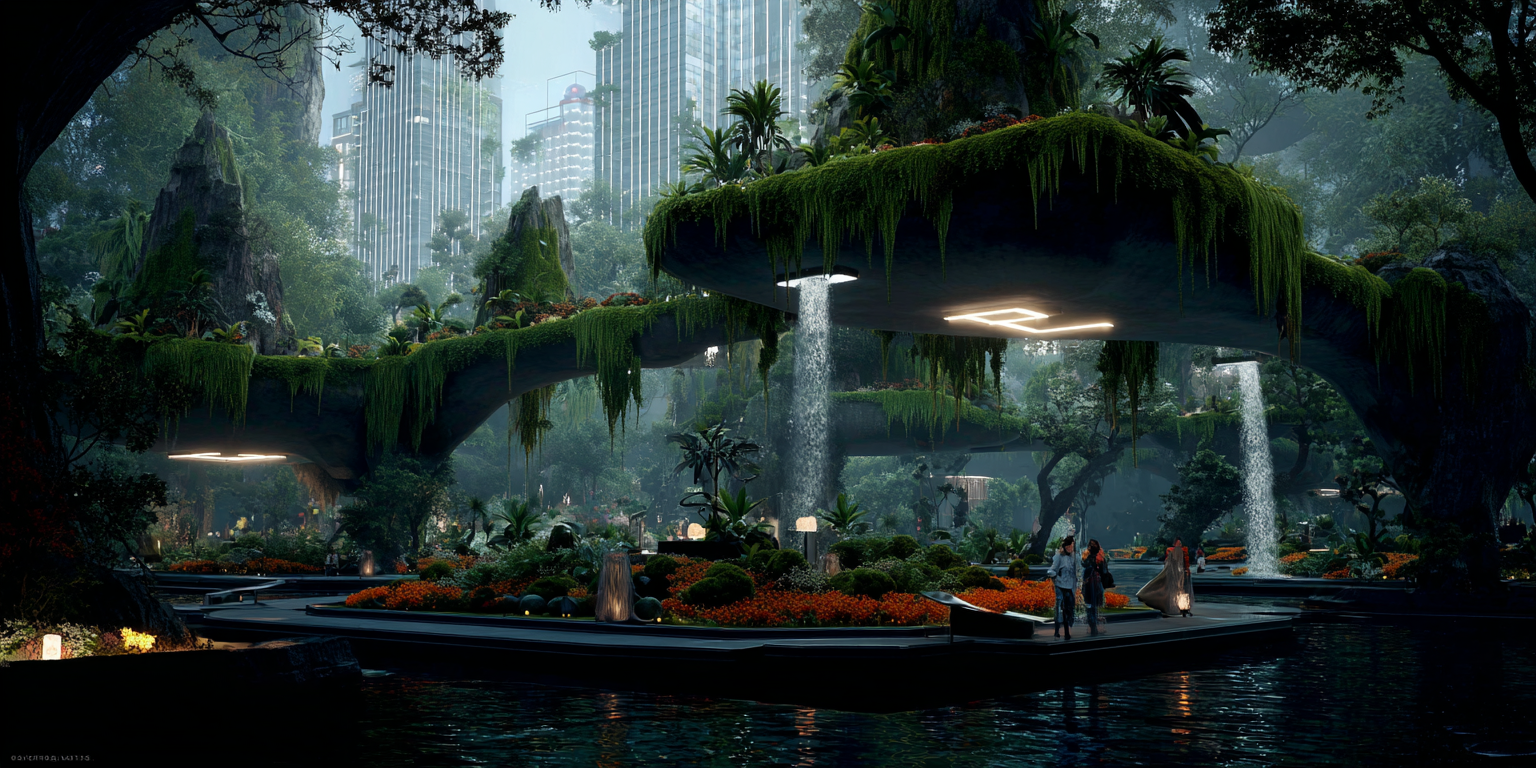
However, in his essay Terminal City, the foreword for Greg Girard’s Phantom Shanghai (2007), Gibson wrote that Girard’s photo-documentary of Shanghai’s rapid transformation in the early 21st century reminded him of the urban landscapes he had imagined in his early novels. Today, Gibson’s imagined future exists in part, and is increasingly being supplemented by the growing use of augmented reality (AR) and other developments enhancing in-real-life (IRL) experiences. I will not be surprised to ride the Shanghai metro in 15 years, wearing glasses that embellish the world, letting me see it the way I want to see it, paying extra to remove the ads, and transmitting the image of myself that I want others to see. Thus, I might be 15 all over again, or a devil with green eyes. Either way, it might be Halloween every day, and we might all end up cosplayers (角色装扮者) after all.
But there was more than sleek architecture in the Pearl’s tech-fantasy vision of the future. It also depicted the functionally extinct baiji (白暨豚) again swimming and jumping in the river below, the rewards of yet-to-achieved cloning techniques and accelerated efforts to restore the ecological health of the Yangtze delta. In fact, whether or not we see the return of the river dolphins, once a source of traditional veneration as the “Goddess of the Yangtze,” we’ll see the delta continuing to advance ecologically, especially areas like Chongming Island, where green innovation and development are bolstering protected wetlands and a massive bird sanctuary, and where the internet-of-things is already linking organic farming with local markets in the city, creating healthier urban-rural integration and promoting better income equality and sustainable social justice in the region.
These developments and others like them are essential, and perhaps nowhere else are being advanced as seriously as we see today in China. According to the Intergovernmental Panel on Climate Change (IPCC), approximately 3.3 to 3.6 billion people are highly vulnerable to the effects of climate change, many in low-income countries in the Global South, which face greater barriers for adaptation. The UNHCR predicts that by 2050, over 200 million people could be forcibly displaced by climate change. Approximately 2.4 billion workers will be at risk from excessive heat at work, and between 2030 and 2050, according to the World Health Organization, we’ll see 250,000 additional deaths per year due to climate change impacts leading to undernutrition, diseases, and heat stress.
Additionally, worldwide we face tremendous risks associated with microplastics and other pollutants in our seas, with a ‘pandemic’ of dying reefs and oceanic dead zones signaling a terrifying loss of biodiversity. We still don’t know if all of these problems will be addressed effectively and whether they still can be, and if not, whether they will worsen incrementally or increasingly intersect and produce cascade effects, including possible rapid ecosystem collapses. However, we do know there are major innovations in the GBA directed at developing an entirely new ‘blue economy’ to integrate with the green economy, and China here is in the global lead, with other countries looking to follow suit using Chinese tech and know-how.
Furthermore, we expect new advances in space development. Frozen out of international space programs due to US laws that prohibit Chinese participation, China developed its own advanced space abilities and recently completed a new space center for launches in Hainan. The only nation to land on and explore the dark side of the moon, China anticipates operating a manned lunar base by 2035. In the meantime, scientists now believe there are more than four billion Earth-like worlds around Sun-like stars in our galaxy alone, and some predict we’ll discover evidence of alien life within the decade. Perhaps the aliens will arrive just in time to save us from ourselves, as fantasized in Arrival (2016), or perhaps they’ll arrive to exploit us at our weakest, as Francisco Pizarro did to the Incas in 1532. Or perhaps they’ll stop for tea on the moon first, visiting Wu Gang and his immortal osmanthus tree, and then arrive on earth for the Mid-Autumn Festival and speaking Chinese, reversing Francis Godwin’s The Man in the Moone (1638), just as China reverses history by accelerating it, returning again to the forefront of human civilization.
More than a decade ago Francis Fukuyama gave a public talk in Shanghai, and given the then-interminable US War on Terror, was already disillusioned with America as the country he’d previously argued was the first to reach the “end of history,” but still unwilling to give up on the concept that made him famous. So I asked him which country should we imagine in America’s place? His answer then: Germany. Of course, that response has not worn well in the years since, nor has his commitment to liberalism and capitalist systems. But what, I asked, about the fact that these systems are so directly responsible for so many of the problems we face in the world today, problems that are still getting worse? Don’t worry, he said, without intentional irony, capitalism always innovates solutions to the problems it creates.
That seems doubtful, to say the least. As capitalism continues to eat the poor and itself, as it continues to resist in too many corners green innovation and green transformations, we might instead consider the brighter prospects of socialism with Chinese characteristics, where positive economic restructuring is accelerating, and where a new model of foreign policy is promoting solidarity with the Global South and a shared future for humanity, slowly transforming the unilateral, unipolar global system into a multilateral, multipolar reality. Of course, whether or not the Chinese model becomes a portable concept that can be adapted by other countries remains to be seen. For now, certainly, it has set its sights on achieving the UN’s 2030 Agenda for Sustainable Development, focusing on eradicating poverty and hunger, promoting innovation and industrialization, improving social security and services, safeguarding social justice, and protecting the environment through eco-security and climate action. Despite tremendous headwinds, it’s keeping pace to meet Agenda objectives.
China also envisions achieving “socialist modernization” by 2035, characterized by significant growth in economic strength, science and technology, and overall national power, leading to higher incomes for citizens, greater innovation, and an improved capacity to support peaceful development worldwide. Next, by the so-called “second-100,” 2049, China expects to have established itself as a “modern socialist country that is prosperous, strong, democratic, culturally advanced and harmonious.” Next, carbon neutrality by 2060, if not sooner. Certainly there are still tremendous challenges that must be met, including our own unwillingness at times to move towards the future at all, or to do so with half steps. But if past results are any indication of future performance, then I’d be willing to bet that China in 2040 will be foremost in the world, and for those of us who remain here, we’ll be lucky to call it home—even if we concede, as Laozi taught us long ago, “The Dao that can be told is not the eternal Dao.”
This article originally appeared in the Chinese edition of the French magazine Numéro on October 17, 2025.