Recent discussions explain the visibility of pro-monarchy slogans through external forces such as Israel’s misinformation campaigns, satellite television, and foreign-funded media. By locating the explanation largely outside Iran, these accounts avoid asking how and why such symbols have become visible within Iranian society itself. This habit has a longer history in writing about Iranian political thought: intellectual currents critical of the Pahlavi state in the 1960s and 1970s have often been described as imports from Germany, while today some critics claim that monarchist opposition to the Islamic Republic has been manufactured by Israel. In both cases, foreign origin substitutes for historical explanation. Others dismiss monarchism as a marginal reaction born of despair rather than political substance. But treating monarchism either as an artificial imposition or as a political mistake keeps harder questions off the table: if this support is merely a foreign mirage or a fringe cry of despair, why has it persisted and grown for nearly a decade—becoming a visible language of rejection in some streets—while other political traditions have failed to offer a convincing alternative? I argue that to grasp this moment, we need to read it historically and attend to the emotional responses shaped by lived experience, rather than attributing it to external manipulation alone. I begin by treating collective emotions not merely as immediate reactions, but as clues to how people make sense of political history. I then trace a brief history of recent dissent and conclude by asking how these movements might be better coordinated and more clearly expressed.
Several accounts from Iran in recent days describe public anger as the immediate force driving people into the streets, despite the fatal risks involved. Over the past decades, each wave of protest and its demands has been met with state violence intended to produce fear and silence, even as the underlying reasons for protest have worsened. As a result, anger has accumulated over time and hardened into a durable sense of repulsion directed at the political and social world the state has created. A well-known example helps clarify how these collective emotions take shape. The killing of Jina Amini provoked immediate anger, fueling mass protests that demanded accountability, named a wrong, and showed how harm ran through the state’s entire structure—from street-level repression to violence inflicted in detention. What many came to reject was no longer a single policy or institution, but the entire world that made such brutality possible. In this shift, anger at specific injuries hardened into repulsion toward a political order experienced as uninhabitable. This repulsion reaches beyond the Islamic Republic’s leaders and policies. It extends to its language, imagery, and rituals, and to the world it has built over decades. While anger has driven political action and public articulation against the establishment, repulsion has produced something else: a refusal to inhabit the state’s universe or imagine a future under its rule.
Beyond the imposition of death through killing and ongoing executions, state policies such as crisis-driven foreign policy and the resulting economic hardship are widely experienced as assaults on livelihood, joy, and national welfare. Over time, society’s responses to these practices have contributed to the formation of social norms centered on reclaiming Iran as a nation committed to the well-being of its people, with a right to life and joy. These norms are visible in everyday acts and symbols, from the prominence of “Iran” in protest slogans to public affirmations of joy and life, including families dancing at the funerals of those killed. In some of these funerals, this turn toward dance also marks a refusal of official religious language, which the Islamic Republic has claimed as its own and imposed on society, so people reach instead for dance as a gesture the state has long tried to police. These commitments are also visible in organized campaigns against execution, such as Karzar-e Seshanbeh-ha-ye Na-be-Edam (the No to Execution Tuesdays Campaign), and in demands for accountability led by families of victims, including Madaran-e Dadkhah (the Justice-Seeking Mothers). Yet the same anger and repulsion that generate these norms also impose limits. Under these conditions, political resources are often discarded simply because they resemble the language, symbols, or historical lineage of the Islamic Republic. As a result, strands of Iran’s own revolutionary and oppositional thought have become difficult to inhabit because they echo a political vocabulary now experienced as intolerable. In this landscape, the post-1979 political order is rejected wholesale, while the pre-1979 period is selectively idealized, setting the conditions under which monarchist symbols begin to circulate not because of their political substance, but because they appear unburdened by the language, history, and collective emotional weight produced by the Islamic Republic.
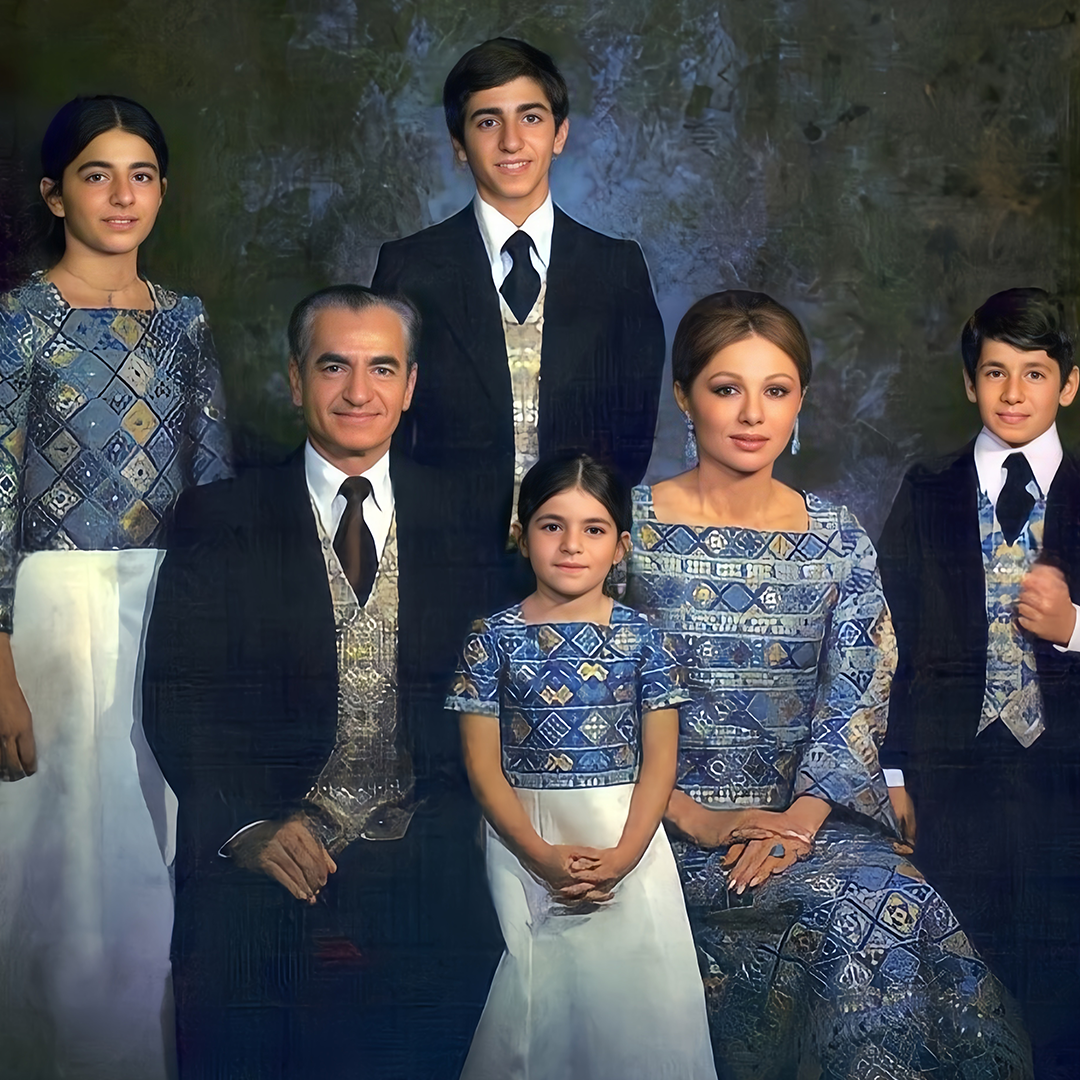
After the 2009 Green Movement, as demands for reform were met with intensified repression and key reformist figures were placed under house arrest or imprisoned, anger and repulsion toward the state deepened. The Pahlavi period also remained a point of comparison in popular imagination, well before the rise of diaspora satellite channels. As an older activist who lived through the 1980s told me, jokes circulating as early as the late 1980s captured this comparison. In one such joke, the late Shah Mohammad Reza Pahlavi appears in Iranians’ dreams and asks for Ray-Ban sunglasses in his grave. When asked why, he explains: “Because you all keep wishing light on my grave, after seeing how dark life has become for all of you.” Many people contrasted their present conditions with the pre-revolutionary era in everyday terms—currency value, social freedoms, mobility, and a sense of national standing and future possibility. These comparisons were not simply abstract nostalgia; they were grounded in daily assessments of life chances and state performance. As reform lost credibility as a viable path forward and public violence intensified, the Pahlavi past increasingly came to function not only as a memory of “before,” but as an imagined alternative beyond reform. In this sense, the growing presence of monarchist slogans is less a return to monarchy than a search for an exit from a political order experienced as irredeemable.
If reform has lost credibility, why has this language of rejection attached itself to the Pahlavi rather than to other political alternatives? The answer lies in the systematic narrowing of the political field over the past four decades. After the 1979 Revolution, melli (nationalist) currents—most visibly associated with the National Front—were swiftly criminalized, while the melli–mazhabi current was gradually suppressed, effectively removing liberal-democratic visions of social justice from the political field. The faction of the Islamic Republic that had suppressed these currents later reemerged in the 1990s as reformists and attempted to revive—or partially recycle—elements of the very traditions it had previously banned. These efforts, however, were repeatedly constrained and ultimately dismantled. Following the violent suppression of the 2009 protests, the reform project was rendered politically inert and further hollowed out during the presidency of Hassan Rouhani (2013–2021). At the same time, reformist political thought itself contributed to the narrowing of Iran’s political field. In the late 1990s, reformist journalists and thinkers retrospectively pathologized the 1979 Revolution, portraying it as inherently violent and reinforcing a broader trend that recast much of 1970s political thought as nativist or anti-modern. In particular, they blamed the revolutionary fusion of Shiʿism and Marxism in the 1970s for the emergence of religious despotism after 1979. This mode of critique contributed to a flattened political landscape in which alternatives were discredited in advance, leaving society increasingly dispossessed of its political inheritance.
The Left entered this narrowed terrain already shaped by decades of constraint. Following the severe criminalization of the post-1979 period and the mass executions of the 1980s, what remained of leftist politics was structurally weakened. Those executions disproportionately targeted multiple factions of the Left, severing organizational continuity and wiping out much of its leadership. In the reform era, a second blow followed at the level of narrative: as the 1979 Revolution was retrospectively framed as inherently violent, reformist commentators often treated the Left, especially its most radical strands, as the engine of that violence. This did more than criticize past strategy. It helped turn “the Left” into a moralized shorthand for extremism, emptying its ideals of social justice and reducing a complex political tradition to a caricature. In doing so, reformist commentators not only reduced the Left to a caricature of violence; they also helped make the Pahlavi era appear, by contrast, as a more “normal” alternative, thereby easing the later return of monarchist symbolism. In subsequent years, the Left’s limited appeal was not only due to repression and erasure, but also to the weight of unresolved historical legacies. For many, the anti-imperialist rhetoric of some factions of the Left came to resemble the Islamic Republic’s own language. Other strands remained burdened, in hindsight, by a pre-1979 culture of revolutionary austerity and by the Left’s accommodation of Ayatollah Khomeini’s leadership during the 1979 Revolution. At times, factions of the Left dismissed popular political expressions as false consciousness, while other currents retreated into detached intellectualism, addressing Iran’s crises by translating Western theory rather than sustained engagement with lived experience. Taken together, these historically layered constraints limited the Left’s ability to reconstitute itself as a widely trusted political language.
This political vacuum—understood not as an absence of resistance, but as the erosion of shared political languages and future-oriented horizons—was produced through more than repression alone. Over four decades, the Islamic Republic dismantled oppositional traditions through multiple, overlapping processes. Some lineages were eliminated materially through criminalization, imprisonment, and execution, severing organizational continuity. Others were eroded more subtly through the production of a political common sense that defined reformism, gradualism, and electoral participation as the only legitimate horizons of political action. When hardliners later closed the door on reform, the narrowing that reformist discourse had already helped produce meant that few other alternatives were available as a shared public language. At the same time, the saturation of public life with violence and coercion produced a further form of dispossession: surviving political languages became difficult to inhabit because they came to resemble the state itself—an object of deep repulsion. In this climate, resemblance functions as a liability. Traditions that share a historical genealogy, vocabulary, or symbolic register with the existing order—even when oppositional—are rejected as intolerable reminders of a system experienced as incompatible with life.
This helps explain why the political vacuum persists even where resistance is visible. Inside Iran, a wide range of political movements and organizations exists—women’s rights groups, student organizations and networks, labor organizations, Kurdish and Baluchi grassroots movements and networks, and environmental justice initiatives—but the conditions of repression make sustained coordination across sectors dangerous, limiting the articulation of a shared political horizon. Outside Iran, many former reformists—now working as journalists and human rights advocates—share broad commitments to a democratic and secular republic grounded in political pluralism, even as they differ over economic and social models, from socialist to more liberal visions. Yet, lacking a mandate for collective coordination and planning, they have not coalesced around durable channels of connection with organized groups inside the country. If this vacuum of articulation is to be disrupted, opposition politics must move beyond defining itself primarily through rejection—of the Islamic Republic, of reform, or of monarchy—and toward articulating the political order it seeks to build. That requires sustained conversation across fragmented sites of struggle around questions that have largely remained suspended: constitutional design; economic and infrastructural development; gender and ethnic justice; and environmental survival. Only through the labor of building such an alternative—plural, internally contested, and grounded in lived concerns—can meaningful dialogue emerge across different oppositional currents, including those drawn to monarchist symbols.
The front for a democratic republic must be more than a political coalition; it must serve as a shelter for language and collective emotions. Because, in society’s view, the dominant language of politics has been contaminated by the Islamic Republic, such a front cannot simply recycle inherited vocabularies and ideas—whether the caution of reformists or the state’s own jargon of “anti-imperialism” and “resistance.” Instead, it must listen to society to forge a new language, or reclaim existing concepts by stripping them of state narratives, while validating widely shared demands for happiness and normalcy—meaning a life not lived under constant, state-produced crisis—alongside individual liberties and social justice. This approach respects the hard-won wisdom of a nation that, having lived through the 1979 Revolution or grown up in its long shadow, has grown skeptical of grand narratives. Society no longer accepts abstract ideologies of utopia; instead, it demands to know—in simple language free of jargon—exactly how day-to-day life will be reorganized to establish justice and dignity. This project requires fully incorporating the claims of political actors inside Iran—including women’s movements, labor organizations, environmental activists, and ethnic networks and organizations—and establishing a fundamentally different relationship to society. A democratic front cannot be built through dismissal, superiority, or mockery, even when popular responses appear politically imperfect. The exhaustion visible across Iranian society is itself a form of knowledge: it reveals the limits of recycled ideas and voices that speak over people rather than with them. As long as political vocabularies remain inattentive to lived experience, their repetition functions less as critique than as another form of repression. Monarchist symbolism has gained traction precisely because it acknowledges demands for normalcy—from everyday happiness to an end to crisis-driven foreign policy—rather than minimizing them. A republican alternative will not succeed by rejecting these desires, but by taking them seriously and rearticulating them—not as a return to the past, but as a future-oriented project grounded in the insistence that life itself must be livable. It is time to stop explaining society’s shifts through mass manipulation. We need to read these shifts historically, take collective emotions seriously as a record of lived history, and ask what kinds of renewal—of language, politics, and everyday life—Iranians are already trying to build. The task now is to listen carefully and think with the people of Iran, not over them.