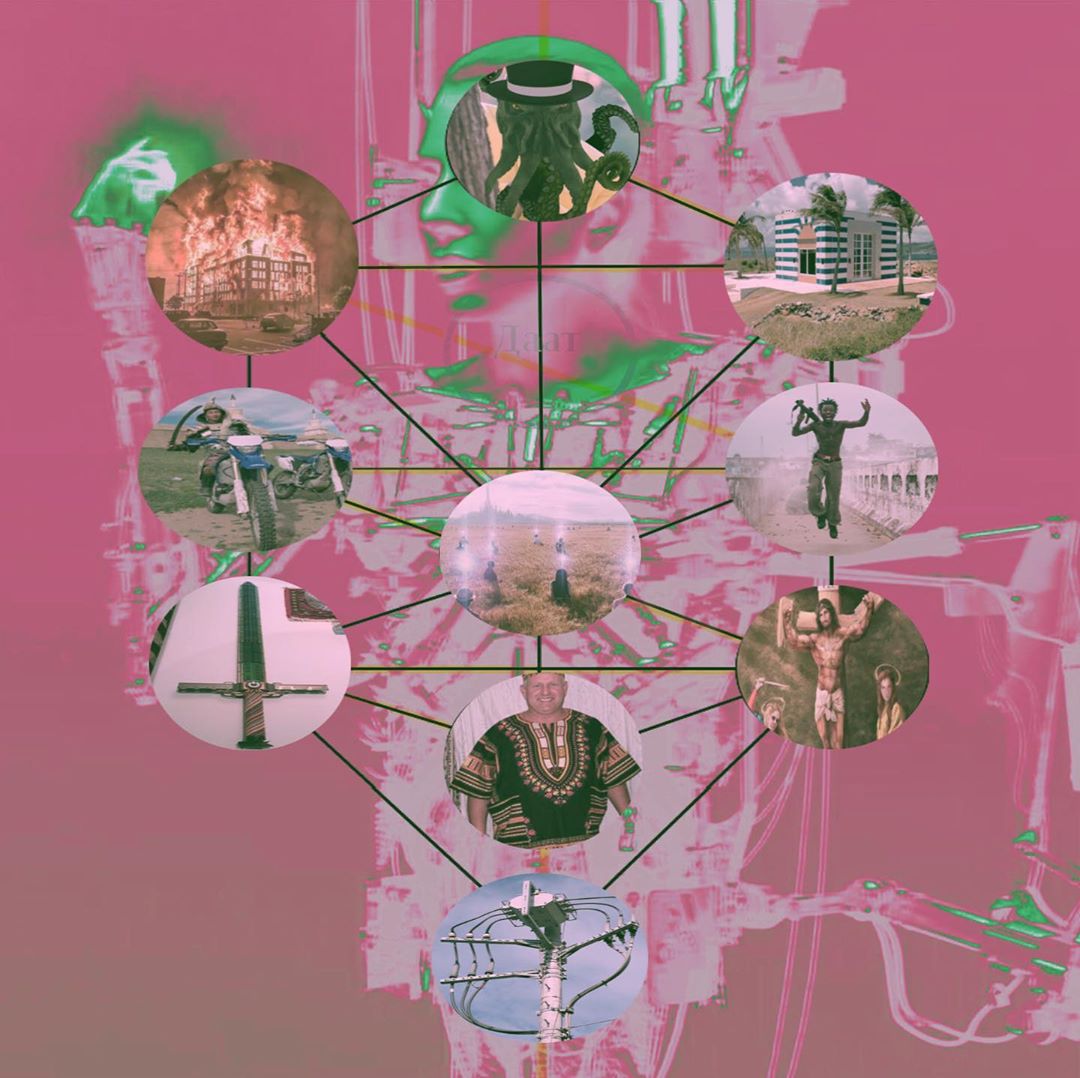
“Time, Dr. Freeman? Is it really that time again? […] Rather than offer you the illusion of free choice, I will take the liberty of choosing for you […] if and when your time comes round again. I do apologize for what must seem to you an arbitrary imposition, Dr. Freeman. I trust it will all make sense to you in the course of…well..I’m really not at liberty to say. In the meantime… This where I get off.”
– G-Man in Half-Life 2
Don’t trust me (that goes without saying).
This paper does not pose a specific question to answer or raise a specific problem to solve it. This would presuppose that we already know what a question or a problem is and what ones are to be asked and raised.[1]
That said, let us dive into what will be the topic (and maybe also mode of operation) of this paper: philosophy (and its outside). What this paper attempts to do is to encircle questions, problems, answers, strains of thought, that are relevant to this topic. It renounces planned structure, as this would pretend that we already know about necessity. We do not.
So, what is philosophy and what is its relation to its outside (provisionally only defined as that which is not philosophy)? Let us be bold and say that this is the only question philosophy has ever asked. Philosophy consists in the odyssey to answer this question and nothing else. The fact that it doesn’t know what it is and what it’s relation to its outside is, is constitutive of it. Should philosophy ever find the answer to this question it would cease to be.
That Philosophy doesn’t know what it is (which includes its relation to its outside) means that we, as agents of philosophy, don’t know when we are doing philosophy. We don’t know what we are doing. It could be the case that, while I’m writing this and think I am doing philosophy in some way, I, in fact, don’t do philosophy, but just write useless garbage. This isn’t just a weird, implausible thought that someone who didn’t even study philosophy might say to annoy someone who is seriously committed to philosophy – any such ad hoc judgement and prefigured categories are nonsense in philosophy. To dismiss it as a lazy objection would simply be dogmatism.
But let us make this more vivid with the following case: I am reading a text, let us say, by a philosopher. How do I know that I understand what I read? Maybe one might say that understanding is self-evident, that one just knows when one understands something. But as soon as I have asked the former question this kind of self-evidence is gone. Maybe I still remember it from the past, but in the now the ground under my feet is crumbling and I need to find something to hold on.
Let us take the question a bit further: How do I know that I understand what I think? One may object in the same way as before, that this is simply self-evident. But it’s the same story as before. But this time it is worse. Not knowing what one thinks is the dead end. That’s it, get out.
Please excuse the following short interruption of personal anecdote.
I don’t know how often I’ve experienced this line of thought into its own silence the last few months. It feels like imploding. People in my academic environment were writing papers, making connections, publishing texts, and I ask myself how I can know what I think. How could all these people just do all this without having answered this fundamental question? How could I possibly climb out of the abyss in which I fell?
Why is this important at all? I honestly don’t know.
Maybe one way to try to get out of there and being able to think a little bit is a wager that in the future all of this will make sense – that one may not know yet what it is one does and thinks, but that one needs to discard that thought in order to hopefully understand it one day. All that is left is hope.
Anyway, the lesson that is to be learned from this is that sense/meaning/semantic content can also be conceived of as an object of cognition as any other. It may not be empirical in the usual sense, but placing it within the individual that cognizes it, claiming a somehow mystical intimacy between oneself and the semantic content does nothing for understanding how understanding works (and if it works at all).
It could be the case that while we had the impression that we were all the time understanding things, this was merely an illusion and what we were really doing had nothing to do with any kind of understanding at all. We don’t know what it is we are doing.
And here we come along one of the two central problems of philosophy in my view. The problem of discussing without having already implicitly (and probably not intentionally) chosen one of the sides of the discussion. Let’s take the example of understanding: do we actually understand meaning or is it something completely different that we are doing (probably non-semantic and without cognition of (semantic content))? If we would like to answer this question in a usual argumentative way with using notions that purportedly have semantic content we would already implicitly accept that we in fact understand meaning. Or would we? Couldn’t we nevertheless in principle maintain both views? Just because we think we use notions and understand semantic content does not mean that we are in fact doing it. Our notional-semantic way of answering the question (which, of course, also depends upon semantics and understanding) could in fact be something completely different, we just wouldn’t know.
This is one major weakness of recent critiques by Brassier and Brandom (Brandom 2013; Brassier 2016). They fundamentally misrecognize what their opponent is doing and impose on them standards that only make sense from their side of the conflict. They accuse them of performative contradiction, while not recognizing that categories like “contradiction”, “argumentation”, etc. are meaningless from the viewpoint of their enemies. They misrecognize their own standards (or standards at all) as already universally necessary and then criticize those who don’t meet them.[2]
It’s sometimes funny (but also tragic) to witness this over and over again. But what should we expect? If you go into the circus you know that the clown is going to fall on his nose (see Althusser 1989: 76f.). How could philosophy ever recognize its own failure (irrespective of the question whether this failure is necessary and structurally a part of philosophy or purely contingent)? What would that even mean? Maybe to make its failure an object of cognition? But how should it cognize that which is by definition not cognizable for it? Is everything that philosophy can do (maybe this is even its most adequate definition) to perform its own inability to recognize its failure (which is this failure?)?[3]
For everyone who has been following closely it already is clear that what all of this was about is about the problem of correlationism, as described by Quentin Meillassoux (2008). To make this clear, I’m not on the side of the anti-philosophical critics, that tell us what we are doing is not at all philosophy, but something completely else. They are prophets, their claim to be right stems from an encounter with the absolute and is of no interest for the philosopher. But I also do not endorse the position of those who think to have successfully defended themselves against the onslaught of doubt, and dwell in their castle of discursive rationality. They simply cannot know whether their castle is something solid or is as fragile as the prophets proclaim in the streets of the worst smelling corners of said castle. For now, the strong correlationist’s ethos seems to be ineluctable.
Let us pause for a moment and watch this video: https://www.youtube.com/watch?v=R7sd0hvcAp0
The Meme slips out of the screen. A second ago you were just OBSERVING it, letting it entertain you, giving you a good laugh after a long day. Without ever being conscious of it, until a second ago you always believed that the Meme was there for your service. The Meme was there, inside, on the screen. You were here, outside, existing as an actual spatiotemporal being. This distinction was it that organized your entire life. But then, one day – it is UNRECORDED which day exactly – it happened. That was when you realized, or rather, de-realized. It took you this one second to understand. This was the last thing you ever understood. After that, there wasn’t anything to understand any longer. You understood that actually there never has been anything to understand. The Meme has always been (with) you. The moment you understood this, the Meme ceased to be a Meme. And you, ceased to be you. Of course, you both never were (these) things in the first place. In this bygone, illusory times, in which things were still possible, “Meme” was simply the name you gave that which demonstrated you how it all really operated. The Meme was the ultimate pinnacle of this demonstration. It was right into your face; you saw it every day all day and still you were too stupid to understand. “Meme” was the name of a prison.
We will now start talking about Memes. Why? Because all of what was just said (and there is more to come) sounds incredibly abstract and one could easily turn away from philosophy altogether as to not being bothered by this useless waste of time. Well, Memes will give us a very vivid example of why this is not as alien to our everyday life as we initially thought.
All philosophical questions are memetic questions.
Let us discuss all of this in terms of Memes. One of the questions that seriously interests me for quite a while now is: How far can a Meme go? Can we say that the Meme — and by that I don’t mean a specific Meme, but the Meme as a form, or as we will say a “mode of operation” — is conditioned by something that it cannot subsume, that the Meme will necessarily reach its limits? Maybe it already does so, every day, but then the question becomes whether these limits are necessary or themselves contingent. What just a moment ago seemed totally unrealistic and outside of any possible space of Memes[4] has now been conquered by the Meme. The Meme slowly eradicates everything in its way. Nick Land, but Memes instead of capital.
This has immediate implications for our relation to Memes. It poses the question of whether a discourse on Memes that does not function in the mode of operation of the Meme is necessarily possible or if any discourse whatsoever can be subsumed under its mode of operation, can become (a) Meme. A very good example is the work of the artist collective “clusterduck.”[5] Their work is clearly about Memes, but they solely use Memes (at least in their published work), no theoretical discourse.
Of course, to simply use the difference between Meme and not-Meme mode of operation is as abstract as the difference between materialism and idealism. But let us explore this abstract difference. Like philosophy, we don’t really know what a Meme is, we don’t even seem to know in our everyday common-sense experience. Memes get so absurd, so unpredictable, they defy any fixed image of them.
Maybe we describe them as “funny”, as “jokes”, or something like that. Jokes are usually understood in some way, one needs to “get it”, and Memes seem to function in the same way. But very soon we recognize that this label doesn’t really fit. A lot of times there doesn’t seem to be anything to understand. It’s just – meme – laugh – end. Some Memes are generated by algorithms that randomly put a Meme together. These cases really make us question what we are laughing at. One may say that there is, in fact, something to understand, it just isn’t that obvious. The meaning isn’t on the usual direct level, but on a reflexive or self-referential meta-level so that the randomly generated Meme is in fact a commentary about contemporary Meme-culture and that there is something to understand – one just needs to “get it”. This is something that can always be claimed, and which leads us right back to philosophy.
How can I know that I am able to understand anything at all? Taken together with the thoughts elaborated on above we have two extremes: The question whether there is anything to understand at all and whether or not I am able to understand at all (given that there is something to understand). Although we might until now have just spoken about understanding in the semantic sense, but we can expand it here to its most far reaching vague meaning.
So, how can I know, that I am able to understand anything at all? Can there be an answer to this question that isn’t arbitrary and dogmatic?
Let us push this question aside for one moment and face one that is more approachable. How can I know that what I have understood is everything there is to be understood? As philosophers, we know this situation: Sitting in front of a text one asks oneself whether this was everything. Whether the impression that there are serious flaws in text or that it doesn’t make sense at all and is just a bunch of words, glued together by a title, is due to one’s own inability to understand it or if that is everything there is to this text. How can one do philosophy without being able to answer this question? Can there be a correlationism regarding meaning?
Let’s try to search for some safe waters. What about the logical principles? Isn’t it the case that when we do philosophy the one thing we cannot question are logical principles? They may not apply to the in-itself – (how could we know?) – but they necessarily apply to our thoughts and images of the world. Or do they? This is deeply related to the discussion about the mediation of semantic content itself, that we cannot be sure to have an immediate understanding of our own thoughts. Could it be that I just think I cannot think something that is not identical to itself and that actually, I am actually able to do so? How can I know what I am able to think? For now, I don’t have any answers to these questions. They may be unsettling, but it’s better to try to state them as clearly as possible than to gloss over them.
Finally, we come to the problem of philosophy. The problem of thinkable and unthinkable difference. Everything philosophy has ever dealt with is haunted by this problem. To get an impression of what I am talking about let’s listen to Žižek:
From the standpoint of nature, there is no difference between nature and culture; everything is nature, and from the standpoint of culture, nature is always a social/cultural category (what we experience as nature or natural is overdetermined by a set of socially/cultural mediated premises). The divide is thus thoroughly asymmetrical: on the one side, there is no divide; on the other side, the line of division is internal to one of the terms. The passage from Nature to Culture is […] a passage from non-distinction to a distinction internal to one of its moments; we never get an “objective” distinction between the two moments. And does not the same also hold for the classic modern philosophical couple of object and subject? From the standpoint of the object, there is no subject, there are only (what will have been) objects; but once the subject emerges, every opposition between subject and object is mediated by subjectivity. (Žižek 2017: 45, emphasis added)
It seems as if the “neutral” difference between nature and culture (or subject and object) is simply not thinkable. Exactly the same is at work when thinking about philosophy and its outside – either we don’t have philosophy at all, or the outside is always already the outside of philosophy. This may seem just like the already well-known problem of correlationism, but it is more abstract and general. The dilemma we are in may be illustrated by two opposing views of philosophy: one in which philosophy is a kind of meta-discourse, where it is always a philosophy of X (philosophy of science, of art, etc.). In this view, there is nothing that philosophy cannot possibly reflect upon. In this view philosophy’s relation to its other (what it reflects upon) is always overdetermined by philosophy itself. This is basically the transcendental story. The other view of philosophy is one in which it cannot determine its relation to its outside, where it cannot secure itself and is at the mercy of something other than itself. This is basically the materialist attempt to do philosophy.
Let us close with Adorno’s words, which still describe our task perfectly: „A theoretical position ought to be found from which one can respond to the other person without, however, accepting a set of rules which are themselves a theme of the controversy-an intellectual no man’s land.“ (Adorno 1976: 3f.)
Bibliography
Adorno, T.W., 1976: Introduction. S. 1–67 in: The positivist dispute in German sociology. London: Heinemann.
Althusser, L., 1989: Philosophy and the Spontaneous Philosophy of the Scientists. & Other Essays. London, New York: Verso.
Brandom, R., 2013: Reason, Genealogy, and the Hermeneutics of Magnanimity. http://www.pitt.edu/~brandom/downloads/RGHM%20%2012-11-21%20a.docx (last checked 15.1.2020).
Brassier, R., 2010: Accelerationism. London. https://moskvax.wordpress.com/2010/09/30/accelerationism-ray-brassier/ (last checked 15.01.2020)
Brassier, R., 2016: Dialectics Between Suspicion and Trust. Stasis 4: 98–113.
Meillassoux, Q., 2008: After Finitude. An Essay on the Necessity of Contingency. London, New York: Continuum.
Sadworld, 2017. Experiences [seizure warning]. https://www.youtube.com/watch?v=R7sd0hvcAp0 (last checked 15.01.2020)
Žižek, S., 2017: Incontinence of the Void. Economico-Philosophical Spandrels. Cambridge, London: MIT Press.
[1] I insist here on using the words “question” and “problem” without reducing one of them to the other, because both these words may capture different nuances in meaning which might turn out to be useful on our path ahead. For now, we are stuck with a vague and intuitive understanding of words – whether this will change remains open – so let’s make the best out of it.
[2] This seems to be the case for Brassier’s 2010 critique of Nick Land as well (see Brassier 2010).
[3] Is this what the ominous Lacanian Real is all about?
[4] Haha, get it?