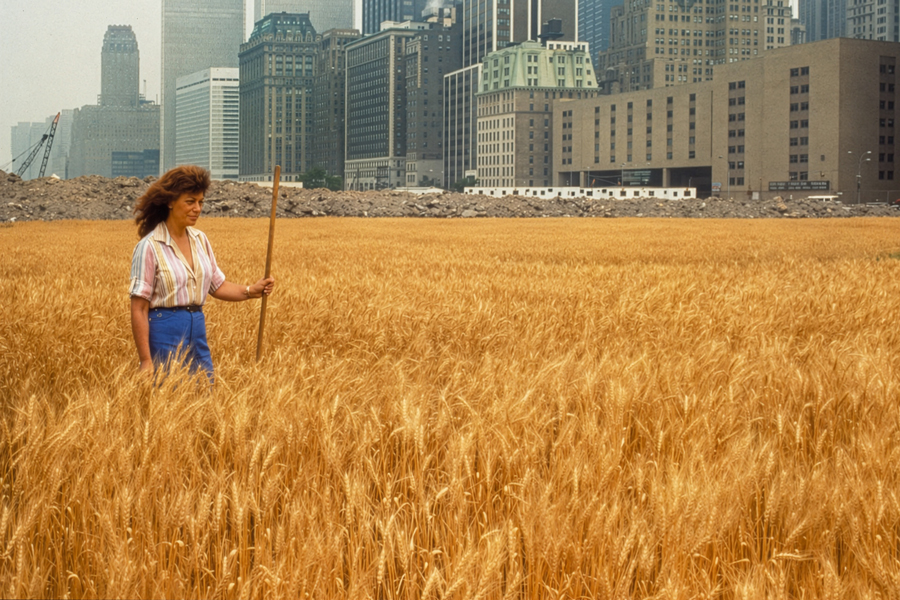
Transitive social action, which has a social impact and engages the issues of the present, is part of what makes art contemporary, yet it has become rare in today’s artworks. Much artistic production across many fields is still driven by intuition, experimentation, and aesthetics (rooted more in immediate understanding than in mediated interpretation) and remains enframed within conventional institutional art, where it poses no question to power structures and prompts no change in public attitudes. Categorizing, enframing, and artistic determination are themselves methods of analysis and control. Such works are produced through the repetition and reproduction of forms, technical prowess, or heavy economic investment; they descend from the legacy of modernism without exerting any real influence on authority or the public. The market and the cycle of consumption absorb them, and capitalism profits from them because they never escape its discourse. Practitioners who persist with this approach have stripped art of its relevance to the present and have taught audiences to take art and the artistic process for ornamental, decorative, tradable things, that is, for tangible objects aligned with capitalist methodology, while they hold on to the outdated notion of “high culture” and its ties to modernist ideas.
In his Uppsala lecture, Albert Camus says, “To create today is to create dangerously” (Camus 251). Hannah Arendt likewise holds that thinking, and the thinker, are potentially dangerous because, for her, nothing is self-evident: every concept must be redefined, critiqued, and secularized. Critical thinking that redefines pre-established ideas, defaults, and normalized practices fosters activism within society and gives rise to new speech, and in a social context new speech becomes political action. Artworks that have an affinity with contemporary issues, understood through Arendt’s paradigm of action, can therefore affect the social fabric and, in turn, the political climate, and open new pathways in mass culture with possibly long-term effects. Such artworks, being fluid, multi-component, and process-oriented, tend to escape the influence of centralized power. Their non-commercial, intangible, ephemeral, and time-based character makes them harder to commodify and sell, though not immune: in the postface to Six Years (1973), Lucy Lippard conceded that Conceptual art had largely failed to escape the commercialization it hoped to avoid (Lippard 263).
Social intervention, as the term is used here, names an artistic practice that sets out to alter a specific social, institutional, or political situation with the participation of those it affects, and which is judged by its effect on that situation. The object economy is the production and exchange of finished objects whose meaning the market sets, whatever their connection to a social situation. Made stories, engineered for individual consumption and marketability, differ from unmade stories, which are collective, useful, and passed on through retelling; the two labels name the poles of a range. An unmade story is the form in which Arendt’s lived stories travel among people, retold, shared, and owned by no one, and the exemplum is one instance of that form. Immediate and mediated understanding are meant in the Hegelian sense: immediate understanding is intuitive, given, and not yet worked through, while mediated understanding is worked through discursively, by experience and reasoning. The object economy runs largely on the first; social intervention requires the second.
Four tests give these terms a use. A practice counts as social intervention when (1) it names a situation it aims to change; (2) it unfolds as a process over time and does not end in a finished, saleable object; (3) it involves others as participants who appear to one another; and (4) its effects can be traced outside the art institution. The fourth test asks for traces and leaves aside whether the aim was reached, since action, for Arendt, starts processes whose outcome no actor controls (Arendt, The Human Condition 190–92). A practice that only represents an issue, ends in a commodity, or stops at the gallery wall fails these tests and belongs to the object economy. Two kinds of case would count against the argument: a work that meets all four tests yet is absorbed by the market without remainder, and a commodity-form work that demonstrably changes its situation.
Contemporary society is an ecosystem living in a discourse vacuum, shaped primarily by what the authorities propagate and normalize through mass media. This has produced a manipulated culture marked by unnatural growth and a lack of social self-development. Technological advances have narrowed most people’s roles to operating systems built by others, leaving few occasions for the speech and action that Arendt places at the center of freedom. By distinguishing action from “work” and “labor,” Hannah Arendt makes room for individuals who think and also take part in public affairs. As Margaret Canovan puts it in her introduction to The Human Condition, human beings are “creatures who act in the sense of starting things and setting off trains of events” (Canovan xvi). For Arendt, action means beginning something new among others, and because every beginner is unique, action keeps plurality, and with it freedom, alive. The public realm, however, is a space in which humans can appear to one another, a condition that social networks and the internet do not meet by themselves. This phenomenological appearance lets humans recognize and engage with each other through self-presentation. If freedom requires appearing among others, the question for art is whether its practices produce that appearance or substitute for it.
What is presented as artwork often consists of finished objects with no connection to the contemporary issues facing humanity. Such objects lack a social function and may even fail to address the concerns of their own creators. Statements accompanying the works, or the creators’ own discussions of them, describe the pieces as discoveries, intuitions, or experiments in aesthetics. This emphasis on form and shape often overshadows the dominant subject and the concept derived from it. Under such circumstances, the making of a piece privileges the originality of the object over its connection to the artist’s social responsibility. Their makers, here called crafters, therefore act in an object-oriented way instead of considering social concerns, and a review of the chronological path of their works reveals conceptual incoherence.
Crafters represent the world of tangibles merely by imitating it or by applying established elements and calling them changes, while an artwork, even when it is a physical object, serves only as a starting point for addressing more critical, universal questions on the path of social life, which can be called a change of social attitude.
The human mind, as a creative force, is shaped by individuality and existence, which evolve along a continuous path through time. This ensures plurality and diversity of ideas and concepts in society, but it is not consistently reflected in the works of current crafters. What they practice belongs to the object economy. To call what they do art, or to call them artists, would therefore be inaccurate, since their expertise lies mainly in mastering a specific medium. They are better seen as skilled technicians proficient in a medium that happens to share certain similarities with the methods contemporary art occasionally, but not always, employs to convey its ideas to a broader audience. Art is not necessarily material and is therefore neither medium-based nor technique-oriented. The fluid, unpredictable, non-identical, ever-elevating, and multifaceted features of contemporary art, together with the universal and eternal qualities of human concepts, have led to its interdisciplinarity and post-medium manifestation in long-term, ongoing social projects. In his 1935 essay “The Work of Art in the Age of Mechanical Reproduction,” Walter Benjamin argues that the accessibility of mechanically reproduced art prompted art to redefine itself as action in the social and political sphere, preserving its critical and questioning essence: “From a photographic plate, for instance, many prints can be made; the question of the genuine print has no meaning. However, the instant the criterion of genuineness in art production failed, the entire social function of art underwent an upheaval. Rather than being underpinned by ritual, it came to be underpinned by a different practice: politics” (Benjamin, Work of Art 10–11).
In his 2013 essay “Instagram as Non-Photography,” Mohammad Salemy examines similar themes in relation to Instagram. He notes the app’s impact on photography and highlights its demeaning role in the medium’s history: “Instagram is not only undermining the future of photography but is also having an obliterating effect on the history of the medium. Through its unstoppable production and circulation of photographs, the app reveals the fractal essence of all pre-Instagram photographs and imposes on them its own finite sets of recursive, self-similar, and therefore fractal identities” (Salemy). The sheer availability of tools and the ease of learning production techniques, particularly in the current age of technological dominance, have thus made it possible to create works analogous to those traditionally regarded as art. This very fact calls for a redefinition of art.1 When art merely replicates the obvious, it adds to the stagnation of the social sphere. The platforms that make this production so easy are not neutral stages for appearing to one another. Zeynep Tufekci shows that digital tools can take a movement “from almost zero to a massive movement within days,” yet the same ease “often fails to signal an organizing capacity powerful enough to threaten those in authority” (72). She also describes the platform algorithm as “a hidden shaper of the networked public sphere” (159), and Adrienne Massanari’s study of Reddit argues that a platform’s algorithm, governance, and culture together shape the publics that form on it (Massanari 329–46), so circulation on a platform does not by itself let people appear to one another.
The key to recognizing and distinguishing artwork is therefore the contrast between its quality and its essence. In Hannah Arendt’s terms, the crafters’ pieces belong to “work,” which rises above “labor” yet remains distinct from “action.” Labor is embedded in the life cycle and is something humans share with animals; what it produces is consumed. Work fabricates the durable things that make up the human world, and Arendt counts artworks among them, calling them “the most intensely worldly of all tangible things” because of their permanence (Arendt, The Human Condition 167). The trouble with the crafters’ objects lies elsewhere. They are made for the market and the attention economy, which treat the products of work as goods to be used up, the way the products of labor are, so that permanence turns into turnover; Arendt describes this in “The Crisis in Culture,” where mass society seizes cultural objects in order to consume them (205). Action, for Arendt, is a beginning that shapes history. It requires thinking, and its new beginnings reach the public realm. Citizens, understood here as humans with agency and called artist-citizens, must therefore trust the epistemological identities that shape their existence. Their immediate and mediated understandings shape their internal concerns about society and the environment. By embracing accountability, citizens can become more aware of their individuality within their social context.
Individuality, the result of artist-citizens’ input, is a defining trait of contemporary art. Contemporary art abandons the idea of art as merely a “technical and material practice” and of its maker as a “technician”; it replaces them, respectively, with the “development process” and the “character” of the artist-citizen, and it does not necessarily end in a result. This approach has an incorporeal essence that transgresses the boundaries of specific mediums in favor of a fluid, non-identical approach, which Rosalind Krauss calls the post-medium condition (Krauss 7, 20), though Krauss describes that condition as a loss, where this argument welcomes it. It is always in progress, ever-elevating, and unpredictable, interpreting art and artists as action and activists. Christiane Paul, writing on new media art, treats its supposed immateriality as a myth, since such work depends on hardware, software, and the institutions that present and preserve it (Paul 252); process-based work still has a material base. New media art also remains vulnerable to being taken for an entertaining show.
Contemporary art has shifted from “object” to “process,” though finished objects are not rejected as such; the objection concerns their vulnerability to the establishment and the market economy, which frame them, neutralize their criticism, and return them to the same system in an economic cycle: “Enframing, in a way characteristic of a destining, blocks poiesis” (Heidegger 30).
The word “art” cannot carry this practice, because it arrives already loaded with the object, the institution, and the market, and every use of it drags those determinations back in. This essay therefore calls the practice Non-art. The prefix refuses the word’s grammar, its aesthetic rules, its social rank, and its history, and leaves creativity and the artwork alone, so that what artist-citizens do among others is not sorted back into the object economy before it has had a chance to act. The construction has a precedent. Salemy’s non-photography applies François Laruelle’s concept, which he places within Laruelle’s “larger project of non-standard philosophy” (Salemy 33), and for Laruelle the prefix “does not signify some absurd negation of photography, any more than non-euclidean geometry means that we have to do away with Euclid. On the contrary, it is a matter of limiting the claims of ‘theories of photography’ that interpret the latter in terms of the world” (Laruelle vii–viii); non-photography is “a use of photography in view of a non-photographic activity” (5). Non-art takes the prefix in that sense, as a limit on the claims that art’s institutions and theories make over what artist-citizens do and as a use of art in view of an activity that is not art’s own. It recognizes the actions of ordinary citizens as an artistic movement that questions established power, and it leaves traditional mediums standing while redefining them: when a painting, a song, or a film is made wild, tactical, improvisational, and heterogeneous, it shifts from an object to an action, and it is Non-art to that degree. Its character is incorporeal and perpetually in flux, an event or a vibration more than a thing, and it resists representation (Nadi, “Mansionry of Ruin”).
Non-art has no center that power could capture: it originates in the process of thought and conduct and in the character of the artist-citizen, and in no medium, technique, or skill; it has no administrative roles, no authority, and no program, so plurality stays possible and nobody controls it. The artist may therefore be a collective, many people advancing an act together, practically or intellectually, with no one owning the result. Its effect is better named transfusion than expression: a shared, meditative experience that arises from the atmosphere and spatial dynamics of a community and aims at a collective ontological impact beyond any therapeutic comfort for the individual (Nadi, “Mansionry of Ruin”), which separates it from art that at most helps people bear a situation without changing it. Non-art promises no utopia and has no ready solution; it stays uncertain while retaining ethics, and that revocability keeps it from hardening into dogma or a style.
Marcuse saw the trap that the prefix is meant to escape. The twentieth-century revolt against art, he writes, rebelled “against the art-form of art, against the traditional ‘meaning’ of art” (Marcuse 41), yet “anti-art has remained art, supplied, purchased, and contemplated as art”: the wild revolt “has remained a short-lived shock, quickly absorbed in the art gallery, within the four walls, in the concert hall, by the market” (42). Marcuse also names what such rebellious art still lacks: the “mediations” that would make it “a liberating force on the societal scale,” which “are yet to be attained” (48), which is the gap between immediate and mediated understanding. Non-art answers by moving the act out of the object, so that the market finds no new style to absorb and nothing to hang on a wall. Marcuse’s own horizon points the same way, toward a state in which art “may have lost its privileged, and segregated, dominion over the imagination, the beautiful, the dream” (48), and he cites the students of the École des Beaux-Arts in May 1968, who called for a consciousness guiding the “creative activity immanent in every individual,” so that the “work of art” and “the artist” become “mere ‘moments in this activity’” (48n15).
Accumulating information, however, differs from thinking in the sense of action in the public realm. Gathering data from social media, the internet, and mass media in general does not generate thought, which emerges through creation, development, and appearance to one another; processing knowledge and information can lead to it. A continuous accumulation of information, especially when it is left unprocessed and repetitive, leads to the normalization of ideas and entrenches them in society’s collective mindset. Routine and repetition can render individuals passive and meaningless, stifling their ability to question the social and political order and turning them, inadvertently, into tolerant creatures incapable of thinking, speaking, and acting. Establishments, meanwhile, benefit from the resulting depoliticization of society, which pushes it toward docility and submissiveness. Left unchecked, routine drives a community toward decay. “If left to themselves, human affairs can only follow the law of mortality. . . . It is the faculty of action that interferes with this law because it interrupts the inexorable automatic course of daily life . . . if it were not for the faculty of interrupting it and beginning something new, a faculty which is inherent in action like an ever-present reminder that men, though they must die, are not born in order to die but in order to begin” (Arendt, The Human Condition 246).
Modern capitalism treats individuality as a social and moral pillar, yet freedom has its meaning in the public realm, where action, for Arendt, is a new beginning that “eventually emerges as the unique life story of the newcomer” (Arendt, The Human Condition 184). The distinction between technician and artist-citizen becomes clearer in Arendt’s contrast between a fictional story and a real one. The tangible finished object implies that someone made it, just like a fictional story with a writer behind it. A fictional story is “made up,” while a real story is not. A real story is one that is struggled with throughout life, and it “has no visible or invisible maker because it is not made” (Arendt, The Human Condition 186). The only person a real story reveals is the “hero,” the unique identity that, with the help of speech and action, can be known after the fact through tangible forms (the world of objects) or intangible forms (the intricate web of human relationships). “Who somebody is or was we can know only by knowing the story of which he is himself the hero—his biography, in other words; everything else we know of him, including the work he may have produced and left behind, tells us only what he is or was” (Arendt, The Human Condition 186). The hero of a real story, that is, the character of citizens and their narratives, the development process, and the pursuit of a meaningful life, is a unique story that can be artistically valued. This artistic value, shaped through engagement with the public realm, demonstrates social efficacy. The importance of process, action, and the intricate web of human relationships, which proceed imperceptibly and are integrated through individual life, is evident in the fact that “although we know much less of Socrates, who did not write a single line and left no work behind, than of Plato or Aristotle, we know much better and more intimately who he was, because we know his story than we know who Aristotle was, about whose opinions we are so much better informed” (Arendt, The Human Condition 186). Thus the tangible objects and the intangible processes in the actions of a meaningful citizen, including their relationships and unique lives within a social context, can be regarded as forms of artwork. Arendt adds that such a story becomes fully visible only afterward, to the storyteller and the historian, and lasts only if someone tells it (Arendt, The Human Condition 192). A real story needs a teller; what matters is whether the teller claims to own it.
The distinction is older than the novel, and the older forms show it better. Take the didactic exemplum: an anecdote from Sa’di’s Golestan (1258; Thackston, “Translator’s Preface” iv), or a fable from Kelileh va Demneh2, which traveled out of India, from an earlier form of the stories behind the Panchatantra, through Middle Persian into Arabic, and from Arabic into Persian (Thackston, Introduction ix–x). In the Golestan, the young Sa’di, pious and proud, sits up at night with the Koran in his embrace among a group of sleeping people and sneers that not one of them will lift his head to pray. His father answers that it would be better for him to be asleep than to be criticizing others (Sa’di 49). Nothing in this scene was programmed: it is a happening, and a happening is already a story, a narrative that belongs to life itself. What the anecdote does is reveal its hero, the proud child and the father who deflates him, through what they said and did. Kelileh va Demneh cannot simply be written off as invention either. Its animals are metaphor and allegory, and what they carry may well be lived experience and pand, practical wisdom, in figurative dress. A monkey sits astride a plank the carpenter has been splitting with two wedges, his testicles dangling in the gap, and pulls out the wedge as he saw the carpenter do; the plank slams shut and mashes them, and the carpenter comes back and beats him to death (Nasrullah Munshi 4). Kelileh tells the tale to warn that “anyone who meddles in what does not concern him will suffer the fate of the monkey” (4): the meddler is revealed by his own act, and the lesson is told for its use. Nobody owns these stories; each remains intelligible when torn from its book, and each lives only by being retold, as people carry it into their own speech and act through it, which is how a real story lives inside the web of human relationships. Sa’di’s book was for centuries the first one Persian-reading children studied, and its lines passed into the proverbs of everyday speech (Thackston, “Translator’s Preface” iv). An anecdote is gathered, which is to say collected, from what was heard and retold; the preface to Kelileh va Demneh says as much of its own tales, “collected by the learned and the Brahmans of India” (Nasrullah Munshi xxxv). It is told to teach, and set beside a novel or a short story made up for pleasure it can be plain boring. The made-up story has to please, because it has to sell, while the exemplum only has to be useful to be passed on. Fiction inverts this. Walter Benjamin drew the same line in “The Storyteller” (1936): the storyteller takes what he tells from experience and makes it the experience of his listeners, while “the birthplace of the novel is the solitary individual,” who “is himself uncounseled, and cannot counsel others” (Benjamin, “Storyteller” 87). The novel has a maker, and the maker’s name guarantees a tangible finished object, authored, bound, and sold. Nor is this object innocent of its era. The realist novel borrowed the authority of positivist science; Zola announced the borrowing in so many words, proposing to take Claude Bernard’s experimental medicine and “replace the word ‘doctor’ by the word ‘novelist’” (Zola 1–2), until the novel became “simply the report of the experiment that the novelist conducts before the eyes of the public” (9). Realist fiction is, historically, itself a technology, an instrument for fabricating possible worlds, built with the same apparatus that produced the individuated subject and the market that sells him his stories. The industry that grew from that apparatus moved away from communal material, toward entertainment and stories engineered for consumption and the dopamine hit that keeps the reader buying, each a new product under a new name.
The stories that matter are collective narratives, and they build collective empathy out of what humans have always been: ordinary people, morally gray characters, bearers of fault and deficiency. From a community of ordinary and imperfect people come ordinary characters and ordinary stories; they happen and are documented as shared stories. Such stories call for what is meant here by a stoic aesthetic, part of which was developed in the essay “Exotopy, Neo-Orientalism and Postcolonial Curation”: an art of “simplicity, restraint, and emotional control” that “often avoids excessive emotion, drama, or fascinating story, focusing instead on calmness, clarity, and the lasting truths beneath appearances beyond fleeting trends,” an art that is “both moralistic and naturalistic,” and so can show the ordinary without exploiting or exoticizing it (Nadi, “Exotopy”). The stoic aesthetic rejects nothing in an absolute form; what it refuses is excess, the engineered indulgence and hedonism of the made story. Its maxim is moderation, and the unmade story resolves its imbalances without making a product of them. Against the stoic aesthetic stand the extraordinary: the superhero, who is not an ordinary human at all. Perfection and black-and-white characterization are a must there, because nothing else keeps a made story from boredom.
Here the distinction meets social intervention. A made story atomizes: it arrives as a finished object with an owner and is consumed the way objects are consumed: one reader, one screen, with no one else needed to complete it. Its pleasures are engineered for the individual, so even a crowd watching the same film is a sum of separate viewers, each alone with his own reaction, and a society fed on such stories learns to read everything, its own life included, as a private matter. Benjamin saw this already: a man listening to a story is in the company of the storyteller, but “the reader of a novel . . . is isolated, more so than any other reader” (Benjamin, “Storyteller” 100). Read in isolation, a made story presents its matter as someone else’s problem, and the audience is only sympathetic. The unmade story lives only by being taken up in speech and act and passed from person to person, so the audience meets it as a shared narrative and treats the issue as part of its own life; the audience is then empathetic. The unmade story calls for collective empathy and produces it: people recognize themselves in ordinary, faulty characters, and recognize one another in that recognition. That is social impact in Arendt’s sense, a story that appears among people. The unmade story therefore has fewer entertaining elements. Captivation is the made story’s method of holding an isolated reader, and a story that has to travel through a community and be of use to it has nothing to gain from holding anyone. An art that wants to intervene in society must behave like the unmade story, even if it captivates less.
The logic of the made and the unmade story also applies to the mediums native to capitalism, from photography, cinema, and television to fiction, and even to pre-modernist mediums, such as painting and sculpture, that are domesticated within capitalism’s framework. In each of them the distinction runs inside the medium and does not sort mediums into two camps. It applies to the exoticism of news products, which pack distant lives into spectacle for a viewer who keeps his distance and is moved, at most, to sympathy. It applies as well to the deliberately cold, high-friction, and repellent aesthetics of advertisements and other forms of capitalist material culture, which captivate by a designed jolt as much as by pleasing. Nor does the jolt need an ugly object: the made story and the advertisement can pair seduction with a manufactured shock. Consider the Tesla Roadster “Rocket” trim video that Musk posted on X and Tesla circulated on Instagram in October 2026, in which the car flips upside down above a row of parked vehicles in a clip that reads as a rollover crash and is in fact a staged demonstration (Musk; Tesla). The viewer is held by the apparent catastrophe, and the catastrophe is the product: a manufactured imbalance, resolved on schedule, wrapped around a flawless object. This occurs within the attention economy, where pleasure–pain reciprocity and dopamine addiction are engineered, and repulsion holds the isolated individual as firmly as charm does. The unmade story mostly offers boredom, which the made story refuses.
So the made story goes looking for the exotic, where outsideness, which could enable dialogue, is made to “exaggerate differences, fetishize the unfamiliar, and flatten complexity into stereotypes” (Nadi, “Exotopy”). The exotic comes out of a long tradition of spectatorship and monologism, in Bakhtin’s sense of a discourse that “denies the existence outside itself of another consciousness with equal rights and equal responsibilities” (Bakhtin 292): the spectator watches, and the spectacle never answers back. This hedonistic point of view distances viewers from the ordinary and commonplace and suppresses the truth of life. In the age of late capitalism, humans look psychologically for indulgence instead of boredom, and that is the gaze of the mechanism of consumerism toward life. Story structure carries it too. Todorov’s theory of equilibrium (Todorov 111), in which an imbalance in a supposedly balanced world is narrated until it balances again, is another exoticizing process, particularly in dramatic art. It exploits life events broadly: it looks for moments of radical imbalance, for crisis, and never for balance as something worth narrating. What is objectionable is the exploitation of resolution. Crises are temporary, while commonplace conditions endure. The made stories also gradually shape the audience’s mindset to be blind to the commonplace, ordinary moments of everyday life, and because much of today’s audience also creates content, the mindset spreads to every dimension of epistemic experience. The stoic aesthetic does the opposite. It praises boredom, which Benjamin called “the dream bird that hatches the egg of experience” (“Storyteller” 91), and the ordinary and dull moments that reflect a more authentic experience, and it consciously avoids the stereotypes and the fetishization of life’s moments that an audience embedded in market dynamics currently demands.
The exemplum, too, reaches readers by hand: someone chose these tales, gathered them, reworded them, carried them into other languages, and handed them on. Sa’di is a stylist, and Ibn al-Muqaffaʿ a translator, so no story arrives untouched. The Kelileh that is read is a translation of a translation of a translation: Thackston’s English renders Nasrullah’s twelfth-century Persian, which renders Ibn al-Muqaffaʿ’s Arabic, which renders a lost Middle Persian text said to derive from a lost Sanskrit original (Thackston, Introduction ix–x). Even the Persian is no steadier: editions of the Golestan differ, and Thackston finds a later scribe “correcting” Sa’di’s archaic grammar into modern Persian (Thackston, “Translator’s Preface” x–xi). The difference lies in what the hands claim. The compiler and the translator are relays: the story passes through them and keeps circulating as nobody’s property. The novelist is an owner: the work is his, and retelling it is at best quotation and at worst theft. The unmade and the made differ, then, in degree, by how much of a story its handler claims as his own. At stake is what a society trains itself to recognize as narrative at all, and what disappears once the authored, finished, marketable object becomes the only model of a story. That is the crafter’s model, which keeps the crafter from seeing the real story even when he stands inside one.
One is considered an artist because of one’s character and relationships, which precede any tangible pieces one might have made. A citizen can therefore take on the characteristics of an artist while living and experiencing the world as it unfolds, even if no physical objects are fabricated. Death cuts off one’s connection to the human world and ends the capacity to begin. Abbas Kiarostami was highly regarded during his lifetime; his death in 2016 ended his chance to act and to make anything new, and those still acting can now surpass his work. For Arendt, however, death is also what completes a life story, since the essence of who someone is comes into being “only when life departs, leaving behind nothing but a story” (Arendt, The Human Condition 193). Kiarostami’s story now belongs to those who retell it, in the way the exemplum belongs to the people who carry it.
Arendt also points out that a sense of reality must accompany humankind’s inclusive world. Crafters call to mind the term “techné,” which encompasses technique, craftsmanship, and utilitarian art, yet they cannot add any genuine meaning to life. They adhere primarily to the market and the attention economy, which revolve around trends and the production of repetitive work. Social media, meanwhile, standardizes and homogenizes human taste and practice and neglects people’s origins, lives, and existence. As a result, crafters lack a true sense of reality: they discard any meaningful recognition of diversity and create a false layer of reality through the market economy and a mass media boosted by technology. The modern world displays humankind’s craftsmanship everywhere. Yet the current lack of emphasis on the truth of the social environment has led to a crisis in human political life. Amid the hustle and bustle, little space remains for reflection. In a society that disregards the truth of its social environment, any evil can arise in politics. Arendt’s notion of the banality of evil applies here: in Eichmann in Jerusalem, she finds in Eichmann “no motives at all” apart from personal advancement (Arendt, Eichmann in Jerusalem 287), and she links his crimes to an inability “to think from the standpoint of somebody else” (49) and to a “thoughtlessness” that “can wreak more havoc than all the evil instincts taken together” (288). A society habituated to accumulating information without thinking, and to reproducing the status quo, cultivates this condition.
In Canovan’s account of Arendt, the modern world is shaped by Promethean3 powers exercised by people too absorbed in consumption to take responsibility for it (Canovan xv), and the crafters can be seen as makers of that world, intimidated by the sophisticated technologies and industries of capitalism. These craftspeople become enslaved to the cycle of reproduction and serve to uphold the existing political order. Instead of fostering freedom and diverse perspectives, they inadvertently perpetuate the status quo, normalize it, and convince society to accept it. This leads to a state of “alienation” in which people can no longer speak and pursue the project of freedom. Consequently, according to Arendt, they become meaningless beings. This meaninglessness makes individuals passive and enslaved, and paves the way for the emergence of totalitarian systems. Margaret Canovan states, “To understand political action as making something is, in Arendt’s view, a dangerous mistake. Making—the activity she calls work—is something a craftsman does by forcing raw material to conform to his model. The raw material has no say in the process, and neither do human beings cast as raw material for an attempt to create a new society or make history” (Canovan xi–xii). In the object economy the makers of finished objects end up in the place of that raw material: through alienation they have become subordinate to the bureaucratic system. Meaningless individuals are easily and inadvertently turned into machines that repeat and reproduce the status quo, unifying beliefs and practices while having nothing new to say. These craftspeople promote the ritualistic and mythical values of an outdated art. Ritualistic values share characteristics with totalitarian systems, particularly in their symbolism and declarative nature, and the Nazi and Soviet states favored a ritual, monumental art over the modernism they persecuted. Through the power of aesthetic reproduction, these systems seek to embellish their politics, stifle independent critical thought, and lead society to normalize the prevailing situation. Fascism, in Benjamin’s account, “sees its salvation in allowing the masses to find their voice (not, of course, to receive their due)” (Benjamin, Work of Art 21). This happens inadvertently: the crafter mistakenly assumes themselves a free agent, which leads to the mere accumulation of information without proper processing. Such a situation allows the masses only to declare their presence, yet it misleads the public and fosters passivity.
In 2019 Forensic Architecture, working with Praxis Films, responded to an invitation to the Whitney Biennial with Triple-Chaser, a video investigation of the museum’s own vice chair, made, in the group’s words, “without request, oversight, or influence by the Whitney Museum,” as the screening booth at the Biennial made clear (Forensic Architecture). Photographs showed that many of the tear gas grenades US border agents fired at civilians in November 2018 were manufactured by the Safariland Group, which is owned by Warren B. Kanders (Forensic Architecture). The sale and export of tear gas, unlike other military equipment, is not a matter of public record, so the group trained a computer-vision classifier to find the canisters in images shared online. Because images of the Triple-Chaser grenade are relatively rare, the group built a digital model of it and placed it in thousands of synthetic environments (Forensic Architecture). Eyal Weizman, who founded and directs the group, describes the problem of forensic architecture as one that “forced us to examine the relation between an architectural detail, the media in which it could be captured, a general policy of killing, and its acts of denial,” a violence evidenced “at or under the threshold of detectability” (Weizman 27). The Triple-Chaser case transposes that problem: the detail is a canister, the media are scarce photographs, and the denial is a trade that, unlike other arms exports, is kept off the public record. The canister was not new to the group. Its model of the 2009 killing of Bassem Abu Rahma at Bil’in showed that the tear-gas canister was fired at him in direct aim, and in 2010 the work forced the Military Advocate General to reopen a closed investigation, though seven years after the killing no one had been arrested (Weizman 108–11). Triple-Chaser continues that work, with a tear-gas munition again treated as evidence in a process among others.
Triple-Chaser meets each test. It names a situation to change: a museum whose vice chair owned a manufacturer of the munitions used against civilians. It is a process: research, an open-source classifier, and updates running for over a year. It involves others who appear to one another: the European Center for Constitutional and Human Rights, Omega Research Foundation, and B’Tselem as collaborators, and the activist collective Decolonize This Place, at whose request the group documented Safariland products used by police in Puerto Rico (Forensic Architecture). And its effects were traceable outside the institution. Forensic Architecture withdrew from the Biennial with seven other artists; days later Kanders resigned from the board, following protests led by Decolonize This Place, and in 2020 he announced he would divest his company of its tear-gas divisions (Forensic Architecture). The artists did not claim the resignation as their own result, and it should not be claimed on their behalf; under the fourth test what counts is that they acted among others, at risk.
The case also shows a remainder. The project page lists twelve later exhibitions of the work, in museums and festivals from Stockholm to Sydney. The object economy absorbed the film, while the process that produced it, which made it an intervention, stayed outside.
A second case lies outside any institution. During the “Woman, Life, Freedom” protests that followed the killing of Mahsa Amini in September 2022, Iranians cut their hair and waved burning scarves, anonymously dyed the fountains of Tehran red, and wrote slogans on walls that the authorities and their supporters covered again and again; the remaining layers of scratches, drawings, and slogans belonged to no one. Earlier, in December 2017, a woman stood silently on a utility box holding her headscarf on a stick, a gesture replicated across Iran, and in December 2023 ordinary citizens danced in a market in Rasht to music that challenged authoritarian taboos, a performance that spread across the country. None of these ended in a saleable object. Each named a situation, unfolded as a process, drew others in, and left traces outside any institution. Calling these acts Non-art leaves them to the people who made them; the name limits art’s claims over them, in Laruelle’s sense.
Contemporary artistic practice with a social function resists materialistic features. Its creations are process-oriented, and they refuse to be reduced to a tangible object, an entertaining show, or a ritual; what it refuses is the excess of the object, since the artist, the path, and the artistic process matter more than the outcome. It recalls the process-oriented nature of Dada and Fluxus and the rejection of the artwork as an object at the core of conceptual art. Fetishization, ritualization, and commodification reduce art to a product, another consumable item within the market economy and the culture industry, and the concept associated with the artwork is diluted until it becomes a meme, even when its context involves human suffering or natural catastrophe, and people grow used to it. For Arendt, beauty is the quality that makes things last and lets them appear in a shared world (Arendt, “The Crisis in Culture” 218), and commodification threatens that quality (205, 211). The action of art, which interrupts the automatic course of daily life, must not help perpetuate the consumer society it criticizes. An artist ends, as an artist, when they shift from making art toward making objects.
The ability of humans to speak with others, to live among them, and to establish relationships and act together is the priority of artistic practice. Artistic practice has to identify the core requirements of social life that result in political engagement, focusing explicitly on humans’ rational, cognitive, linguistic, communicative, and organizational capacities, in a critical manner that stands outside the dominant discourse. Being enframed in any aspect of modern life ignores the reality of culture and nature, causing the “unnatural growth of the natural” (Arendt, The Human Condition 47). Citizens should keep in mind that reality constantly changes and truth continuously evolves. No establishment should therefore stop them from thinking and beginning in favor of any dogma. They must strive to separate these essential qualities from the absolute sacred instrumentalization and ritualization that are constantly employed for the profit-driven agendas of a hypocritical political environment and then presented to society.
Notes
- 1. Throughout history, art has continuously redefined itself in response to historical, scientific, and social changes in order to maintain its vital role. A prime example is modernist art, which arose from this critical redefinition, coinciding with the emergence of photography. As Benjamin writes, “with the advent of the first truly revolutionary means of reproduction, namely photography (simultaneously with the dawn of Socialism), art felt a crisis approaching that after a further century became unmistakable, it reacted with the theory of ‘l’art pour l’art’ [‘art for art’s sake’], which constitutes a theology of art” (Benjamin, Work of Art 10). ↩
- 2. Persian names and titles follow their Persian pronunciation here: Sa’di (Saʿdī), Golestan (Golestān), and Kelileh va Demneh (Kalīleh va Demneh). The cited editions romanize the titles as Gulistan and Kalila and Dimna, and those forms are kept in the citations and the reference list. ↩
- 3. In Greek mythology, Prometheus is the Titan who defied the gods by stealing fire and giving it to humanity. Fire is the symbol of technical skill, craftsmanship, and the progression of knowledge. ↩
References
Arendt, Hannah. “The Crisis in Culture: Its Social and Its Political Significance.” Between Past and Future: Six Exercises in Political Thought, Viking Press, 1961, pp. 197–226.
———. Eichmann in Jerusalem: A Report on the Banality of Evil. Introduction by Amos Elon, Penguin Books, 2006.
———. The Human Condition. 2nd ed., U of Chicago P, 1998.
Bakhtin, Mikhail. Problems of Dostoevsky’s Poetics. Edited and translated by Caryl Emerson, U of Minnesota P, 1984.
Benjamin, Walter. “The Storyteller: Reflections on the Works of Nikolai Leskov.” Illuminations, edited by Hannah Arendt, translated by Harry Zohn, Schocken Books, 1969, pp. 83–109.
———. The Work of Art in the Age of Mechanical Reproduction. Translated by J. A. Underwood, Penguin Books, 2008.
Camus, Albert. “Create Dangerously.” Resistance, Rebellion, and Death, translated by Justin O’Brien, Alfred A. Knopf, 1961, pp. 249–72.
Canovan, Margaret. Introduction. The Human Condition, by Hannah Arendt, 2nd ed., U of Chicago P, 1998, pp. vii–xx.
Forensic Architecture. “Triple-Chaser.” Forensic Architecture, forensic-architecture.org/investigation/triple-chaser. Accessed 12 Oct. 2026.
Heidegger, Martin. The Question Concerning Technology and Other Essays. Translated by William Lovitt, Garland Publishing, 1977.
Krauss, Rosalind. A Voyage on the North Sea: Art in the Age of the Post-Medium Condition. Thames and Hudson, 2000.
Laruelle, François. The Concept of Non-Photography. Translated by Robin Mackay, Urbanomic / Sequence Press, 2011.
Lippard, Lucy R. Six Years: The Dematerialization of the Art Object from 1966 to 1972. 1973. U of California P, 1997.
Marcuse, Herbert. An Essay on Liberation. 1969. Beacon Press, 2000.
Massanari, Adrienne. “#Gamergate and The Fappening: How Reddit’s Algorithm, Governance, and Culture Support Toxic Technocultures.” New Media & Society, vol. 19, no. 3, 2017, pp. 329–46.
Musk, Elon [@elonmusk]. “Turns out the future does have flying cars.” X, 15 Oct. 2026, x.com/elonmusk/status/2110913107094606330. Accessed 17 Oct. 2026.
Nadi, Amin. “Exotopy, Neo-Orientalism and Postcolonial Curation.” TripleAmpersand Journal, 14 Sept. 2025, tripleampersand.org/exotopy-neo-orientalism-and-postcolonial-curation/. Accessed 16 Oct. 2026.
———. “Mansionry of Ruin: Psychotic World-Making and the Architecture of Collapse.” Psychotic Savoir, 19 July 2026, psychoticsavoir.substack.com/p/mansionry-of-ruin-psychotic-world. Accessed 17 Oct. 2026.
Nasrullah Munshi. Kalila and Dimna. Translated by Wheeler Thackston, Hackett Publishing, 2019.
Paul, Christiane. “The Myth of Immateriality: Presenting and Preserving New Media.” MediaArtHistories, edited by Oliver Grau, MIT Press, 2007, pp. 251–74.
Sa’di. The Gulistan (Rose Garden) of Sa’di. Translated by Wheeler M. Thackston, Ibex Publishers, 2008.
Salemy, Mohammad. “Instagram as Non-Photography.” The Third Rail, no. 1, 2013, pp. 33–36, thirdrailquarterly.org/mohammad-salemy-instagram-as-non-photography/. Accessed 3 Nov. 2024.
Tesla [@teslamotors]. Video of the Roadster flight demonstration. Instagram, 15 Oct. 2026, www.instagram.com/reel/DeihEcjum6V/. Accessed 17 Oct. 2026.
Thackston, Wheeler. Introduction. Kalila and Dimna, by Nasrullah Munshi, Hackett Publishing, 2019, pp. ix–xxi.
———. Translator’s Preface. The Gulistan (Rose Garden) of Sa’di, by Sa’di, Ibex Publishers, 2008, pp. iv–xi.
Todorov, Tzvetan. The Poetics of Prose. Translated by Richard Howard, Cornell UP, 1977.
Tufekci, Zeynep. Twitter and Tear Gas: The Power and Fragility of Networked Protest. Yale UP, 2017.
Weizman, Eyal. Forensic Architecture: Violence at the Threshold of Detectability. Zone Books, 2017.
Zola, Émile. “The Experimental Novel.” The Experimental Novel and Other Essays, translated by Belle M. Sherman, Haskell House, 1964, pp. 1–54.