March 8, 2017

The Persian Empire & the Question of Democracy in Herodotus’s Histories

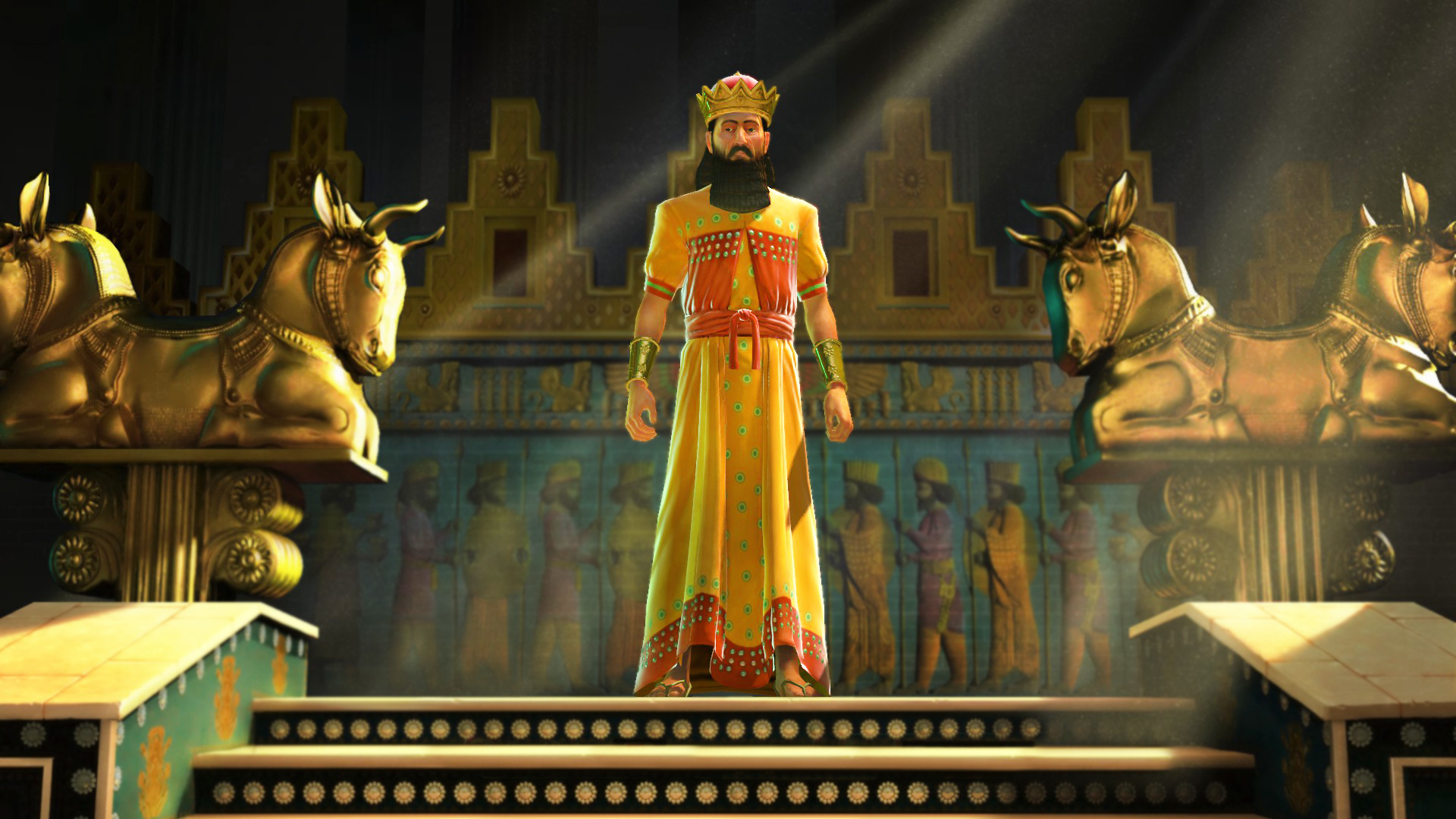
Political debates surrounding the question of democracy versus elite despotism has an interesting history. As a Persian, I find the passages 80-87 from Herodotus’ Histories demonstrating how these debates predate modern Europe and are rooted, at least in written text, in the struggle between Persia and Greece for civilizational hegemony:

80. And now when five days were gone, and the hubbub had settled down, the conspirators met together to consult about the situation of affairs. At this meeting speeches were made, to which many of the Greeks give no credence, but they were made nevertheless. Otanes recommended that the management of public affairs should be entrusted to the whole nation. “To me,” he said, “it seems advisable, that we should no longer have a single man to rule over us- the rule of one is neither good nor pleasant. Ye cannot have forgotten to what lengths Cambyses went in his haughty tyranny, and the haughtiness of the Magi ye have yourselves experienced. How indeed is it possible that monarchy should be a well-adjusted thing, when it allows a man to do as he likes without being answerable? Such licence is enough to stir strange and unwonted thoughts in the heart of the worthiest of men. Give a person this power, and straightway his manifold good things puff him up with pride, while envy is so natural to human kind that it cannot but arise in him. But pride and envy together include all wickedness- both of them leading on to deeds of savage violence. True it is that kings, possessing as they do all that heart can desire, ought to be void of envy; but the contrary is seen in their conduct towards the citizens. They are jealous of the most virtuous among their subjects, and wish their death; while they take delight in the meanest and basest, being ever ready to listen to the tales of slanderers. A king, besides, is beyond all other men inconsistent with himself. Pay him court in moderation, and he is angry because you do not show him more profound respect- show him profound respect, and he is offended again, because (as he says) you fawn on him. But the worst of all is, that he sets aside the laws of the land, puts men to death without trial, and subjects women to violence. The rule of the many, on the other hand, has, in the first place, the fairest of names, to wit, equality before the law; and further it is free from all those outrages which a king is wont to commit. There, places are given by lot, the magistrate is answerable for what he does, and measures rest with the commonalty. I vote, therefore, that we do away with monarchy, and raise the people to power. For the people are all in all.”

81. Such were the sentiments of Otanes. Megabyzus spoke next, and advised the setting up of an oligarchy:- “In all that Otanes has said to persuade you to put down monarchy,” he observed, “I fully concur; but his recommendation that we should call the people to power seems to me not the best advice. For there is nothing so void of understanding, nothing so full of wantonness, as the unwieldy rabble. It were folly not to be borne, for men, while seeking to escape the wantonness of a tyrant, to give themselves up to the wantonness of a rude unbridled mob. The tyrant, in all his doings, at least knows what is he about, but a mob is altogether devoid of knowledge; for how should there be any knowledge in a rabble, untaught, and with no natural sense of what is right and fit? It rushes wildly into state affairs with all the fury of a stream swollen in the winter, and confuses everything. Let the enemies of the Persians be ruled by democracies; but let us choose out from the citizens a certain number of the worthiest, and put the government into their hands. For thus both we ourselves shall be among the governors, and power being entrusted to the best men, it is likely that the best counsels will prevail in the state.”

82. This was the advice which Megabyzus gave, and after him Darius came forward, and spoke as follows:- “All that Megabyzus said against democracy was well said, I think; but about oligarchy he did not speak advisedly; for take these three forms of government- democracy, oligarchy, and monarchy- and let them each be at their best, I maintain that monarchy far surpasses the other two. What government can possibly be better than that of the very best man in the whole state? The counsels of such a man are like himself, and so he governs the mass of the people to their heart’s content; while at the same time his measures against evil-doers are kept more secret than in other states. Contrariwise, in oligarchies, where men vie with each other in the service of the commonwealth, fierce enmities are apt to arise between man and man, each wishing to be leader, and to carry his own measures; whence violent quarrels come, which lead to open strife, often ending in bloodshed. Then monarchy is sure to follow; and this too shows how far that rule surpasses all others. Again, in a democracy, it is impossible but that there will be malpractices: these malpractices, however, do not lead to enmities, but to close friendships, which are formed among those engaged in them, who must hold well together to carry on their villainies. And so things go on until a man stands forth as champion of the commonalty, and puts down the evil-doers. Straightway the author of so great a service is admired by all, and from being admired soon comes to be appointed king; so that here too it is plain that monarchy is the best government. Lastly, to sum up all in a word, whence, I ask, was it that we got the freedom which we enjoy?- did democracy give it us, or oligarchy, or a monarch? As a single man recovered our freedom for us, my sentence is that we keep to the rule of one. Even apart from this, we ought not to change the laws of our forefathers when they work fairly; for to do so is not well.”

83. Such were the three opinions brought forward at this meeting; the four other Persians voted in favour of the last. Otanes, who wished to give his countrymen a democracy, when he found the decision against him, arose a second time, and spoke thus before the assembly:- “Brother conspirators, it is plain that the king who is to be chosen will be one of ourselves, whether we make the choice by casting lots for the prize, or by letting the people decide which of us they will have to rule over them, in or any other way. Now, as I have neither a mind to rule nor to be ruled, I shall not enter the lists with you in this matter. I withdraw, however, on one condition- none of you shall claim to exercise rule over me or my seed for ever.” The six agreed to these terms, and Otanes withdraw and stood aloof from the contest. And still to this day the family of Otanes continues to be the only free family in Persia; those who belong to it submit to the rule of the king only so far as they themselves choose; they are bound, however, to observe the laws of the land like the other Persians.

84. After this the six took counsel together, as to the fairest way of setting up a king: and first, with respect to Otanes, they resolved, that if any of their own number got the kingdom, Otanes and his seed after him should receive year by year, as a mark of special honour, a Median robe, and all such other gifts as are accounted the most honourable in Persia. And these they resolved to give him, because he was the man who first planned the outbreak, and who brought the seven together. These privileges, therefore, were assigned specially to Otanes. The following were made common to them all:- It was to be free to each, whenever he pleased, to enter the palace unannounced, unless the king were in the company of one of his wives; and the king was to be bound to marry into no family excepting those of the conspirators. Concerning the appointment of a king, the resolve to which they came was the following:- They would ride out together next morning into the skirts of the city, and he whose steed first neighed after the sun was up should have the kingdom.

85. Now Darius had a groom, a sharp-witted knave, called Oebares. After the meeting had broken up, Darius sent for him, and said, “Oebares, this is the way in which the king is to be chosen- we are to mount our horses, and the man whose horse first neighs after the sun is up is to have the kingdom. If then you have any cleverness, contrive a plan whereby the prize may fall to us, and not go to another.” “Truly, master,” Oebares answered, “if it depends on this whether thou shalt be king or no, set thine heart at ease, and fear nothing: I have a charm which is sure not to fail.” “If thou hast really aught of the kind,” said Darius, “hasten to get it ready. The matter does not brook delay, for the trial is to be to-morrow.” So Oebares when he heard that, did as follows:- When night came, he took one of the mares, the chief favourite of the horse which Darius rode, and tethering it in the suburb, brought his master’s horse to the place; then, after leading him round and round the mare several times, nearer and nearer at each circuit, he ended by letting them come together.

86. And now, when the morning broke, the six Persians, according to agreement, met together on horseback, and rode out to the suburb. As they went along they neared the spot where the mare was tethered the night before, whereupon the horse of Darius sprang forward and neighed. just at the same time, though the sky was clear and bright, there was a flash of lightning, followed by a thunderclap. It seemed as if the heavens conspired with Darius, and hereby inaugurated him king: so the five other nobles leaped with one accord from their steeds, and bowed down before him and owned him for their king.

87. This is the account which some of the Persians gave of the contrivance of Oebares; but there are others who relate the matter differently. They say that in the morning he stroked the mare with his hand, which he then hid in his trousers until the sun rose and the horses were about to start, when he suddenly drew his hand forth and put it to the nostrils of his master’s horse, which immediately snorted and neighed.

More Articles from &&&

Socialism after Socialism, A Response to Conrad Hamilton

In the spirit of dialogue, I am responding to the observations in Conrad Hamilton’s recent expansive review of my book The Political Theory of Liberal Socialism. I will be concentrating on Hamilton’s three main claims, that there is a gap between the form and content of socvialism, invoking Marxist theories of struggle before coming down… Read More »

Biennialese Blues: Review of Whitney Biennial 2026

ARTISTS: Basel Abbas & Ruanne Abou-Rahme, Kelly Akashi, Kamrooz Aram, Ash Arder, Teresa Baker, Sula Bermudez-Silverman, Zach Blas, Enzo Camacho & Ami Lien, Leo Castañeda, CFGNY, Nanibah Chacon, Maia Chao, Joshua Citarella, Mo Costello, Taína H. Cruz, Carmen de Monteflores, Ali Eyal, Andrea Fraser, Mariah Garnett, Ignacio Gatica, Jonathan González, Emilie Louise Gossiaux, Kainoa Gruspe,… Read More »

No View from Nowhere: On Discourse, Différance & Functorial Semantics of Micro-Communities

This essay argues that natural language semantics admits no global orientation—no ‘view from nowhere’—but only local positions within psychoanalytically and sociologically embedded discourse communities. Drawing on Derrida’s concept of différance, I demonstrate that meaning is constitutively deferred across the differential play of signs, precluding any meta-linguistic standpoint from which all local meanings could be adjudicated.… Read More »

Liberalism Is Dead, Long Live Liberalism!

Matthew McManus’ The Political Theory of Liberal Socialism is a powerful attempt to merge two disparate traditions, parlaying reformist compromise into a coherent political program. It also rests on the assumption that socialism is inherently illiberal, an assumption that deserves to be questioned. While often hailed as the single-minded son of America, perhaps the best… Read More »

Luxury Activism: Art, Fashion & Capital

[This text was previously published by the author in Portuguese on Contemporânea Magazine — Ed.] I don’t want to work with fashion. Beauty must be preserved from capitalism. Fashion favours the escape into personal, private, selected, chosen space, as a form of false self-determination. Fashion reflects the fear of losing’ identity. — Thomas Hirschhorn The purposelessness… Read More »

The Questions Concerning the Ethics of AI

With recent articles in &&& concerning the status of what is or is not Marxism, I took it upon myself to write a piece that I consider firmly placed in that tradition. I am not being paid by the CIA, I promise. Furthermore, despite appearances, my article is not an article in the “ethics of… Read More »

The Best Ever Art Basel Review that Qatar Money Can Buy

During the Art Basel Qatar’s VIP preview of Sweat Variant’s durational performance My Tongue is a Blade on February 4, two special seats up in front of the stage stayed empty for a while.  Empty with intent.  People hovered, looked, and reconsidered occupying them in their head at the last minute like they were about… Read More »

SUPPORT THE IRANIAN REVOLUTION 2026!

SIGN THE STATEMENT HERE The past several weeks have borne witness to a bloodbath in Iran amidst images of systematic massacre and horrific abuses of power by the Iranian government against its own people. As a united front, we stand together to uphold the following convictions: 1- That the Islamic Republic of Iran must come… Read More »

Rhetoric vs Reality: Iranian Regime Is an Imperialist Project Preventing a Free Palestine!

Since its founding, the Islamic Republic of Iran has cultivated legitimacy by embedding itself within global progressive movements—particularly those oriented around anti-imperialism and racial justice. Rhetoric, repeated, obscures reality: the Islamic Republic of Iran (IRI) is an imperialist project that will not enable a free Palestine. The IRI is built on an expansionist doctrine resembling… Read More »

On State Collapse & Democide in Iran

1. Middle Eastern Islamisms and Islamists are reorganizing in a post-jihadi/takfiri Muslim/Arab world within their national boundaries. First of all, the Taliban’s path back to Afghanistan was facilitated by the USA. Afghan Islamists were swift in adopting a more Afghanistan-focused vision and dismantling any public state capacity, especially in social and women’s affairs, built under… Read More »

How Was This Monster Born? Contemplations on the Ontology of the Iranian Islamic Republic

By Asal Mansouri and Borna Dehghani, writing from Tehran How can survival turn into something shameful? How does breathing itself become a burden – one that a person no longer dares to carry, a weight that grows heavier by the moment, with no path of escape left open? What took place across Iran in January… Read More »

The Human Centipede II: Qatar & the Broker’s Cut

If my first The Human Centipede: A View From the Art World (2013) traced the art world as a closed alimentary circuit, this sequel begins where that circuit was sublimated into brokerage as a state-form with unmistakable political aspirations.[1] The same logic is now in the open for everyone to witness, wearing the grimace of… Read More »

الغای زیر ساخت‌های شیعه اسلام در ایران 

ENGLISH VERSION در لحظه‌ای که این سطور نوشته می‌شود، ایران با زخمی باز زنده است. جامعهٔ ایران یکی از تاریک‌ترین مقاطع تاریخ معاصر خود را از سر می‌گذراند. ده‌ها هزار نفر در خیابان‌ها کشتار شده‌اند؛ معترضانِ زخمی توسط نیروهای امنیتی از بیمارستان‌ها ربوده می‌شوند؛ و اعدام‌ها در زندان‌ها به شکلی صنعتی ادامه دارد. خانواده‌ها آیین‌های… Read More »

Abolition of Infrastructural Shia Islam in Iran

FARSI VERSION As I write this, Iran is an open wound. Iranians are living through one of the darkest moments of their country’s contemporary history. Thousands upon thousands upon thousands have been massacred in the streets; wounded protesters are being removed from hospitals by security forces, and executions are taking place on an industrial scale… Read More »

ایران، بزرگترین دردسر: دربارهٔ سکوتِ مزمنِ بخشی از چپِ معاصر

با چیزی آغاز می‌کنم که در نگاه اول شبیه یک حاشیه‌روی است، یک خاطرهٔ قدیمیِ تلویزیونی که زمانی لبخند روی صورتِ ما می‌آورد. اما همین خاطره، مدلِ فشرده‌ای از یک واکنشِ سیاسی است که مدام در ایران تکرار می‌شود. وقتی جوان‌تر بودم، سریالی بود به نام «روزی روزگاری». یک پدیده شد و واقعاً هم عالی… Read More »

Regarding the Erasure of Iranian Uprising

The most recent state crackdown on Iranian protesters stands among the most violent suppressions of public dissent in Iran’s modern history. Protesters have been killed, blinded, and mass-arrested. As the state imposed a sweeping information blackout and advanced claims blaming foreign agents for the violence, this brutality has nonetheless been met with a striking absence… Read More »

Why Critical Theory Isn’t Marxism & Why Western Vs. Eastern Marxism is an Illusory Dichotomy?

I have almost finished Gabriel Rockhill’s “Who Paid the Pipers of Western Marxism?” (Monthly Review Press, 2025) amidst the uproar among the so-called progressive left academia and publishing. Rockhill has said the quiet truth out loud: the so-called critical theory has in fact nothing to do with Marxism. Its path has been paved by former… Read More »

Applied Collapse in Venezuela

The recent decapitation of the Venezuelan regime by the US military is part of a longer history of induced collapse: from Iraq to Afghanistan to Palestine, the techniques of empire have been wielded to destroy societies. But behind the Maduro extradition may be a kind of new American weakness.As you know, Nicolás Maduro and his… Read More »

Hard Habit to Break: On Political Readings of Art & Marxist Citationalism

I want to talk about a habit in contemporary art writing that I keep running into, especially in Marxist-inflected theory, where interpretation is substituted with citation and judgment is treated as an embarrassment. The pattern is familiar: the artwork becomes an occasion to rehearse a framework, the framework becomes a moral sorting machine, and the… Read More »

Computational Contemplation of
Burg of Babel

To watch a one-minute version of the film, please click here. Burg of Babel (2017-2024) is built on a very simple but unusual structure. On the screen, instead of one large moving image, the viewers see a grid made up of twenty-five rectangles, five across and five down, each playing the same 25-minute film, with… Read More »

Organized Callousness: Gaza & the Sociology of War*

Introduction The ongoing war in Gaza has generated extensive polemic among scholars and the general public.1 Some have described this conflict as a novel form of warfare. The deeply asymmetric character of this war and the vast number of Palestinian civilian casualties have prompted some analysts to described Gaza as a “new urban warfare.”2 Others… Read More »

Postcards from Mitteleuropa: Reviews from Sean Tatol’s European Tour*

Chris Sharp, Los Angeles slop-gallerist extraordinare, once scolded me on Instagram for comparing Raoul de Keyser to Peter Shear, evidently because he thinks it’s wrong to see connections between artists if they’re not from the same generation, which is a novel opinion if I’ve ever heard one. When I asked why that would be a… Read More »

Two Futures

In the brief essay that follows, I consider art as an event that de-privatizes the subject by exposing us to the hyperobjects constituted by the circulation of transgenerational trauma, power, and subjective identities. I also examine the role of contingency in this process and argue for art as a tool of indifferent future production. What… Read More »

9/11 & Televisual Intersubjectivity

The six-channel work I presented at Art In The Age Of…Asymmetrical Warfare exhibition reconstructs from video archives of the September 11th attacks the televisual unfolding of the event on CNN, Fox, NBC, CBS, ABC and BBC news networks. The synchronic and uninterrupted footage which is playing on a continuous loop starts with the networks’ mundane… Read More »

Exotopy, Neo-Orientalism and Postcolonial Curation

After visiting the Ordinary Moments exhibition, curated by Mansour Forouzesh and featuring a collective of Iranian independent photographers at the FUGA Gallery in Budapest, I was once again convinced that the consumption of modern Iranian visual culture in the West is essentially orientalistic. Precisely through the contrast this exhibition provides, one can see more clearly… Read More »