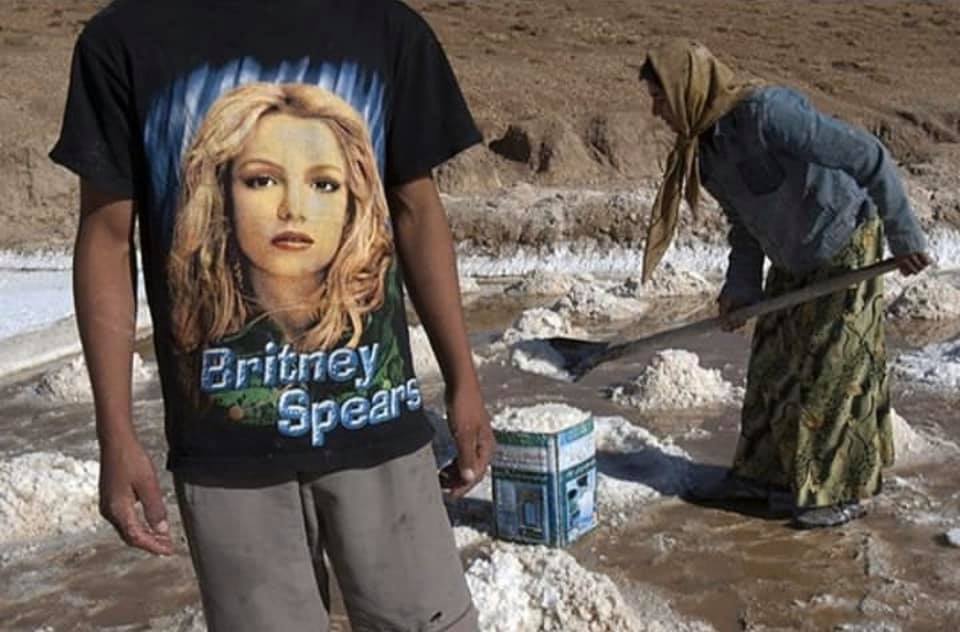
Despite the rhetoric of globalization, nations have historically remained walled off behind militarized borders. Over the last few years, even greater restrictions have been imposed on those most troubled by wars, tyranny, and economic sanctions. Despite all that, a cough, due to COVID-19, cannot be contained in one place, either in a nation or in a body. Some analysts have suggested that, in the age of COVID-19, the distinction line between rich and poor have been erased. Celebrities such as Madonna have echoed that thought, calling Covid-19 a great equaliser: “What’s terrible about it is that it’s made us all equal in many ways, and what’s wonderful about it is that it’s made us all equal in many ways.”
It is true that all communities, regardless of whereabouts and social class, are facing their vulnerabilities and precariousness of life. However, we are not vulnerable equally, as groups of people reduce their vulnerability by relying on socioeconomic structures (or relations) that exploit other groups of people and leave them vulnerable. [1] After COVID-19, rich people’s lives are not as easy as they used to be due to the limitation of access to social services, after all the “self-sufficient rich” proves to be a false idea. The pandemic has created a space to interrogate dominant assumptions about society and economy. Yet, COVID-19, is not an equaliser. As an example, the right to self-protection against the current pandemic is not equally accessible among different factions of society and among different parts of the world. In fact, COVID-19 is the great highlighter of inequalities. It has stripped the world of its ideological veneer, further exposing existing injustices. Today everybody has to pay attention to every cough, an illness in one part of the world is an illness in the whole, and society cannot heal until all members are healed. In a sense, the wellbeing of the society is contingent upon saving the lives of all, including those whose lives are considered less worthy of saving.
Social Responsibility vs. Individual Interests
Only a few weeks ago, equal access to health and education as basic human rights, advocated for by the US presidential candidate Bernie Sanders, were illustrated as a “communist” threat to basic American values in the US media outlets. Those whose access to health was limited were expected to choose martyrdom so that capitalism remains in tune with values perceived American. Ironically, the overriding issue in American media now is the question of whether the state is taking enough responsibility to guarantee the survival of all or not. Poor and marginalized people’s access to health is no longer considered a threat to American values, it is, on the contrary, considered to be the basic principle of survival for the society as a whole.
According to the New York Times, “A study from Delhi, India, one of the world’s most economically polarized cities, found that its slums served as citywide accelerants for an influenza outbreak. ‘Public health isn’t just about your own personal health, it’s about the health of the public at large,’ Dr. Errett said. ‘If there’s one person who can’t get treatment, that person is posing a risk to everyone.”
Responsibility towards the other, only a few weeks ago before the pandemic, was a blasphemous topic in societies obsessed with individualism and a commitment to laissez faire economics. It is now brutally evident that the only way to overcome a universal catastrophe is by taking sociopolitical responsibility towards the pain of the most marginalized people. Even the suffering of animals disdainfully kept in a cage, under the complete control of human will, can not remain contained. Thus, COVID-19 proves social transformation towards more equality is an urgent need for mere social survival, and not merely a matter of sloganeering.
Too Close But Too Far
As COVID-19 was spreading in Iran, a joke was being shared on social media: “we, humans, came to this world by eating an apple, and we left this world by eating a bat.” Soon enough, it became clear that the bats were not to be blamed, but rather humans’ interventionist environmental behaviour was the true culprit. It has turned out that one of the possible reasons for the emergence of COVID-19 was the compromised immune system of bats. In a piece published on CNN, Andrew Cunningham, Professor of Wildlife Epidemiology at the Zoological Society of London, explained that the stress imposed on bats (by human activity) results in their immune systems being compromised, leaving them more susceptible to viruses and slower to recovery. Given their proximity to humans and other species, due to humans’ destruction of their habitat, we witness zoonotic spillover from distressed animals to people, and contemporary lifestyle spreads the viruses throughout the world more rapidly than ever before. Being too close to a compromised immune system, seems to be an inevitable consequence of the dynamics of exploitation, be it ecological or economic. Hence, it has become obvious that a withdrawal from invaded spaces is a necessity for survival of the biosphere.
The current catastrophe, in a sense, is to be blamed on the poor treatment of species that humans consider expendable, and ultimately on pre-existing conditions: global and domestic inequalities. Recently, a tiger Nadia was test positive for COVID-19 at the Bronx zoo in New York, Bronx has been considered to be at high risk with the current pandemic due to, “high numbers of residents living in multigenerational housing with a relative lack of resources.” The wellbeing of the entire ecosystems and other living beings, including the distressed bats, is inseparable from the wellbeing of the human individual and vice versa. Rich New Yorkers who recently panic-fled to the Hamptons to escape COVID-19 brought class war with them, “along their disdain and disregard for the little people — and in some cases, knowingly […] coronavirus”; they caused a shortage of food for the poor and locals in the city, due to panic-buying, and some arrived already infected by the virus. The locals in the Hamptons were also left worrying about a shortage in medical care personnel and equipment. Proximity here, contrary to its appearance, does not indicate the existence of community, togetherness, and friendship. Rather it demonstrates structural separation and a lack of social responsibility. Perhaps that is the reason there was a suggestion bruited by local Hamptonians: “We should blow up the bridges. Don’t let them in.” Distancing here is not about protecting nationalistic identities against cosmopolitanism. It is not the same as the militarization of the borders.
A woman, coughing freely, had jeopardized the wellbeing of people around her in a bus in Detroit. The bus driver Jason Hargrove, a few days before passing away, had criticized the individual and systemic irresponsibility that had left social service providers like him the most vulnerable.
“’I feel violated. I feel violated for the folks that was on the bus when this happened,’ he said, adding: ‘To those who are watching, this — this is real. And y’all need to take this serious.’”
Distancing here is to create a respectful space for the survival of both sides with a particular attention paid to the more fragile groups most susceptible to harm and with less privilege for self-protection. The Italian philosopher Roberto Esposito explains that community “binds individuals to something that pushes them beyond themselves.” [2] One must free themselves in a community for that sense of togetherness to be formed, they must expose themselves to the “contagion” of the other. Modernity, perhaps with more force in its Western version, activates an immunitarian response to defend the individual against the community, and immunity “reconstructs their identity by protecting them from a risky contiguity with the other, relieving them of every obligation toward the other [..]” [3] The current social distancing, in response to COVID-19 can be superficially understood to be the triumph of immunity (i.e. the return of individuals to themselves and the separation of individuals from their community for self-protection) over being together. Social distancing, however, is imposed as a means of survival and also protects the other. It stems from an ethic of responsibility and care. Ironically, however, this new distancing has created more of a sense of community and responsibility. Even the Prime Minister of the UK, a child of the Thatcher revolution, has come to the realization that society, as opposed to only “individuals,” exists after all:
“In his video message, Johnson said: ‘We are going to do it, we are going to do it together. One thing I think the coronavirus crisis has already proved is that there really is such a thing as society.’”
That is the reason that the carceral society with its prisons, homelessness, starvation, draconian immigration policies, and lack of access to health and medicine are no longer considered to be safe for survival. None of these are new conditions, none have become unsafe recently; they have only happened to be felt and considered more widely after the outbreak of the pandemic.
The Nation and Its External Enemy
The fragile immune systems that wars and economic sanctions compromise haunt the wellbeing of the world, not only in terms of memory and trauma, but also material physical health. This responsibility (towards the other) lies not only with populations inside nations and their governments, it is also required between nation-states and the nations that they keep under domination (for example, the Iranian people under the economic sanctions led by the US, and Palestinians under the occupation and blockade of the government of Israel). The US-led economic sanctions against Iraq (1990-2013) were one of the greatest public health crimes of recent years. As a result of the sanctions and destruction of health infrastructure during the First Gulf War (1990-1991), there was a shortage of antibiotics, led to a tragic phenomenon, Omer Devachi calls, antibiotic anarchy:
“Certain antibiotics would be available one day and disappear another. Doctors switched antibiotics regularly, not according to treatment protocols but according to availability. Patients and their families begged relatives abroad to mail back supplies, or otherwise scrambled to locate scarce antibiotics spread across the country’s pharmacies stocked with counterfeit and expired medications.”
The antibiotic anarchy resulted in antibiotic resistance in Iraq. In the aftermath of the invasion of Iraq by the US in 2003, a bacterium that US military surgeons named “Iraqibacter” was considered an invisible enemy. It caused serious infection among US military personnel. The social history of this bacteria is related directly to the ecologies of war, including the US sanctions, in the region.
In the more recent history of interventionism, US economic sanctions have resulted in the limitation of the access of Iranians to health care, particularly medicine. The effects of the sanctions have been exacerbated by their recent intensification by the Trump administration. People whose close family members are in the hospital have to personally smuggle in the necessary medicines, and pay a fortune to acquire them on markets. A hospital-acquired infection (HAI), called nosocomial, is a widespread danger for most immune-compromised patients, yet its medication is sometimes rare to find in Iran’s hospitals.
According to Lancet, “Despite WHO and other international humanitarian organisations dispatching supplies and medical necessities, the speed of the outbreak and the detrimental effects of sanctions have resulted in reduced access to life-saving medicines and equipment, adding to the health sector’s pre-existing requirements for other difficult health conditions.”
The health problems of an Iranian with a compromised immune system, due to the US economic sanctions, eventually will have to be treated in another body in another city, perhaps even in the US itself.
The Iranian government postponed the news of COVID-19 in Iran to after the 11th parliamentary election and the commemoration of the 1979 Revolution; the commemoration orchestrated widespread protests all over Iran, which probably spread the disease further. It is rather ironic that Ali Shariati, the theoretician of the same revolution that the Iranian government put the lives of people in danger to commemorate, described the lack of sociopolitical responsibility as the main source of his social discontent of his time. That’s the reason he argued a total revolution in our understanding of the social relations is urgently needed to equate the ethical with taking responsibility towards the abolition of domination in the society. The fate of the 1979 Islamic Revolution is tragic so far, but perhaps the gleam of hope can be found in the ways the society is using solidarity to survive despite the scarcity of antibiotics and manipulations of the government.
The virus is perhaps giving the authorities the chance to experiment with more advanced techniques for future surveillance and control, but it is also creating a space to see the interconnectedness of structures of injustice, and the fact that the survival of the community is contingent upon the survival of its most marginalized members. Social distancing coincided with Nowruz, Iranian New year, during which eid didani, new year visitations, happen. Due to social distancing, my relatives, in Iran, video conference called each other this year, and I was part of several of them, joining them from Raleigh, NC. This was the first time I was attending in Nowruz visitations after moving to the US. Social distancing does not necessarily have to be indifference and separation, it can also result in creating spaces of mutual survival and a chance to strengthen the communities. The interconnectedness of ecosystems’ and peoples’ well-being, and the recognition of us mutually needing each other, points towards a transnational politics of collaboration, towards global access to health as a basic human right. Overall, the current situation requires social revisioning. That process may, at long last, be underway.
NOTES
[1]: Decolonizing Enlightenment. Transnational Justice, Human Rights and Democracy in a Postcolonial World, ed. Nikita Dhawan. Opladen, Berlin & Toronto: Barbara Budrich, pp. 182
[2]: Terms of The Political: Community, Immunity, Biopolitics, by Roberto Esposito, 49.
[3]: ibid.