November 27, 2026
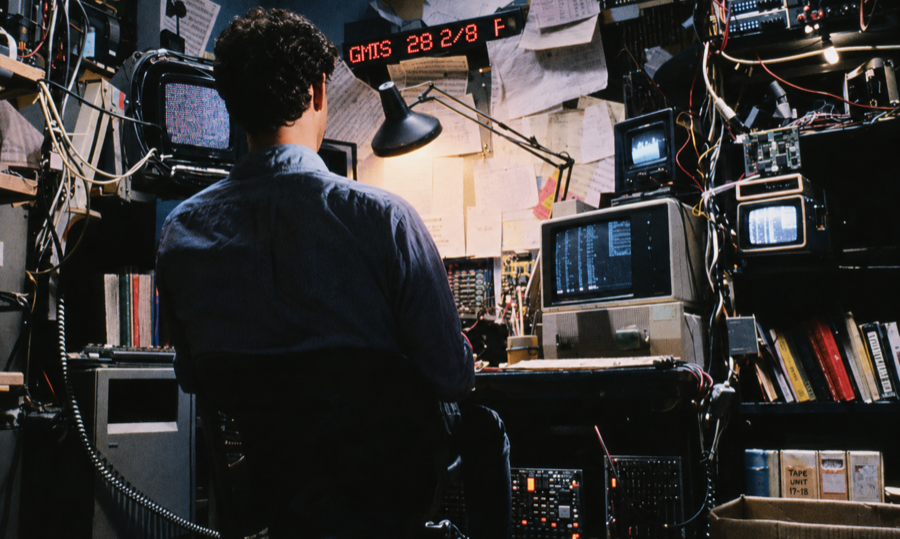
Original Image: Pi, 1998.

Minor Mathematics: Let them have their Riemann

Today, November 20th, somebody from Anthropic claims to have a proof of the Riemann Hypothesis. At the beginning of this year, I would have maintained that doing pure mathematics is an intrinsically revolutionary act because how on earth would a proof of something like categoricity transfer benefit the oligarchy? How wrong I was. Now I would say: bow down, the generation of tenure tracks in mathematics has ended; even abstraction has been absorbed by capitalism. Now, grad students and their advisors are losing their unique ability to brag to their friends about understanding an obscure topic nobody cares about whilst there are people out there being bombed, fascism is on the rise all over the world, and we are two steps away from environmental collapse, boohoo.

Of course, this doesn’t apply to all students and researchers (if u feel insulted, go to therapy with ur PhD stipend, hon). This has tangible consequences—besides their ego being butt-hurted—in the plans of every student out there: anxiety about losing the opportunity to get a steady gig, and so on. Sure.

The name of the game is prestige. Eric Schmid has an enthralling piece about the dangers of mathematical prestige, his main point being that the obscurity of maths is easily conflated with the accuracy of its applications and their consequences: what, in the first place, enables us to use mathematics as a tool? Moreover, if something does permit the use of mathematics as a discursive tool, are the mathematical consequences to be justified just because something enabled its use? That is, framing something mathematically might not render this framing accurate in the first place, and the deductions that mathematics elicits are to be weighed outside of mathematics (The Prestige of Structure and the Transformation of Experience, 2026).

So, prestige. The OpenAlienated&Insufficient people thrive on ill-founded prestige: as if Sam Altman knew what a sheaf is (Did you see what I just did right there? I am using my mathematical prestige to shit on this guy: WE CANNOT HELP IT!). The problem is, I have said it before and I reaffirm it: alienation. And this problem, my dear prestigious mathematicians, has been melting everything into nothing since even before Riemann was born; and we all thought that we were safe from it. These AI companies are doing what every other company has been doing for centuries: masquerading other people’s accomplishments as their own. It is clear that when we read that OpenAI has proved such or such theorem, we succumb to anxiety cause we are experiencing what the whole working class has been experiencing for the longest time. But now these AI companies are not after old-school capital: they want prestige, i.e., intellectual capital. Now they can sit down, start an AI company, and pretend that their employees’ work—and the scraped collective intellect of centuries of mathematicians—actually belongs to them somehow, and that they are the intelligent ones. The company is theirs, after all.

If you really think about it, of course they proved the Riemann Hypothesis; it is a basic transitive argument. Capital buys compute; compute scrapes human labor; a CEO posts a thread claiming the theorem; Q.E.D.

However, prestige was so easily absorbed not precisely because it was easy to fund mathematicians’ paychecks to suck on their knowledge, but because the elitism that we so easily encounter in mathematical circles precisely reproduces the logic of capital. The power plays that professors adore to engage in are the exact gears of the capitalist machine. Just change “mathematical abilities” with Bourdieu’s “taste,” and the isomorphism becomes clear: academia has long functioned as a gatekeeping salon of intellectual taste, where “elegance” and “depth” serve as class markers. Silicon Valley simply industrialized that fetish, turning big open theorems into luxury collectibles.

So, after prestige is gone, what is there for us now that we have become just any regular Jane/Joe? The pattern is clear: these AI companies are after big theorems—Navier-Stokes, the Riemann Hypothesis, Categoricity Transfer, etc. It is time for a minor mathematics.

Minor Mathematics

Deleuze and Guattari defined a minor literature according to three knotted characteristics:

Language deterritorialization.

Articulating the individual within the political-immediate.

A collective enunciating assemblage.

The first point, language deterritorialization, is about affecting the language with modifications. By this move, expression arises when accessing the real and tangible becomings of languages in everyday use. Instead of being about the prestige of elegance that comes with styles and schools—which include metaphorical devices—it is about finding unorthodox uses. The second point refers to the political commitment that a minor literature implies. Whether we like it or not, know it or ignore it, every move in a minor literature is inherently political. After politics has filled every gap, the only point of enunciation must become collective: this is the intention behind the third point. Collectivity, furthermore, renders names and proper nouns devoid of sense on their own. Here, political immediacy enables deterritorialization; deterritorialization becomes collective; collectivity determines politics; and so on. That is why we say they are knotted.

Anybody who has tried to do maths notices that these three characteristics shine in mathematics precisely because of their absence. Every mathematician encounters an extremely rigid set of expressions we are forced to use to prove things. Even if a mathematician is politically engaged, it is hard to see this in their praxis. Finally, if we find collectivity in maths, it rarely approaches the radical collectivity of a minor literature.

Translating this triad into mathematical praxis means actively breaking the rules of the academic game:

Deleuzian Characteristic Orthodox Academic Mathematics Minor Mathematical Praxis
Language Deterritorialization Rigid formalisms, canonical “elegance,” and chasing prestige via big open problems. Weird definitions, non-standard logics, toy models, and folk or recreational math.
Political Immediacy The myth of pure mathematical neutrality and detached ivory-tower abstraction. Treating optimization algorithms, cryptography, and research grants as active political battlegrounds.
Collective Enunciation The “lone genius” myth (Fields Medal model) and competitive citation hoarding. Non-hierarchical collaboration, open-source knowledge, and communal pedagogy.

After prestige is off the table, we must construct such a minor mathematics: explicitly political, radically collective, and armed with unorthodox tools.

CASE STUDIES

Alexander Grothendieck

This name is too well-known and too big to be associated with a minor mathematics. However, Grothendieck became notorious for everything but institutional mathematics: his sprawling ruminations in Récoltes et semailles and La clef des songes launched relentless attacks against the competitive, prestige-obsessed mathematical ethos he came to despise, alongside his turn toward deep spirituality. Moreover, his total abandonment of academia out of burnout (as Zalamea argues) and his uncompromising anti-militarist, ecological politics made him a permanently uncomfortable figure for the establishment.

Grothendieck embodies not only the political engagement that a minor mathematics requires, but also deterritorialization. Amongst the many peculiarities of such a towering figure is his commitment to Truth—both capitalized Truth and lowercase truth. As Fields Medal laureate Laurent Lafforgue notes in a talk on Grothendieck’s conception of truth, for this son of anarchists, mathematical truth has nothing to do with proofs or axioms, let alone theorems. For Grothendieck, truth pertains to the realm of definitions. He was famously prouder of having introduced over a thousand new mathematical notions than of having proved the vast number of theorems he did. This is a quintessentially deterritorializing move: mathematical praxis stops being a gladiatorial sport for the prestige of conquest (proofs) and becomes a patient, generative act of painting paysages through new concepts.

Paul Erdős

Again, associating a mathematician whose oeuvre spans over 1,500 papers with a minor mathematics seems somewhat paradoxical. Yet his name belongs here for good reason. Even if he was not explicitly political in the way a partisan radical might demand, Erdős’ obsession with mathematics was so total that at any moment, with anybody, he was ready for a collaboration. If radical openness to co-thinking across borders isn’t applied democracy, I don’t know what is.

Furthermore, publishing more than 1,500 papers without crossing boundaries would be impossible. Erdős deterritorialized quite literally by shifting disciplines as effortlessly as he changed cities. “Another roof, another proof” was his motto because he refused property, tenure chairs, and institutional permanence, moving anywhere just to do mathematics with people anywhere in the world. So much so that one of his colleagues wrote the following limerick for him:

A conjecture both deep and profound
Is whether the circle is round.
In a paper of Erdős
Written in Kurdish
A counterexample is found.

After hearing the limerick, Erdős decided he genuinely needed to write a mathematical paper in Kurdish, though he never found a suitable journal. A true nomadic subject, dissolving the proper noun of the isolated genius into a planetary network of co-authors.

Wacław Sierpiński

This is my personal favourite of late. Again, a big name, over seven hundred publications. Nevertheless, his huge relentless work has something Kafkaesque: we encounter a huge bestiary of short theorems. Indeed, Sierpiński’s published work was usually extremely short: 10 or 12 pages at best, usually around 3 pages.

If Grothendieck shows us conceptual deterritorialization and Erdős models nomadic collectivity, Wacław Sierpiński brings us squarely into the political-immediate. During the German occupation of Warsaw in World War II, when Polish universities were shuttered and higher education was outlawed under penalty of death, Sierpiński refused to stop doing or teaching mathematics. He became a driving force behind the clandestine Uniwersytet Latający (the Flying University)—an underground educational network shifting locations in secret apartments to evade the Gestapo. Under fascist occupation, proving a theorem or teaching set theory was stripped of every ounce of bourgeois academic prestige; there were no endowed chairs, no citation metrics, no Silicon Valley sponsors. Mathematics became an act of pure cultural survival and anti-fascist resistance.

Even Sierpiński’s most famous mathematical objects—the Sierpiński triangle and the Sierpiński carpet—read like blueprints for a minor geometry. You start with a solid, prestigious Euclidean territory, and you recursively punch holes into its center until all the smooth interior area vanishes, leaving behind a fractal lattice of infinite perimeter and zero area. That is precisely what minor mathematics does to the ivory tower: it hollows out the solid block of institutional authority from the inside until what remains is porous, infinitely connected, and impossible to enclose.

A Praxis for the Post-Prestige Mathematician

So here we are, sitting in the boohoo-riddled wreckage of November 2026 while tech oligarchs pop champagne over automated proofs of century-old conjectures. What do we actually do tomorrow morning?

Abandon the “Big Theorem” Rat Race. Let the AI companies hoard the Millennium Prize problems like digital mega-yachts. A minor mathematics refuses to compete on the terrain of brute-force compute and venture-backed prestige. Spend your time in the cracks: construct bizarre counterexamples, explore messy toy models, build conceptual paysages, and ask questions that yield zero intellectual capital for tech monopolies.

Weaponize the Tools Against Gatekeeping. If large models and formal proof assistants have commodified routine verification and impenetrable academic prose, turn those exact tools against the priesthood of mathematical obscurity. Use them to translate high-altitude abstraction into accessible, everyday language—democratizing concepts that used to be hoarded behind paywalls and seminar doors.

Take Mathematics Out of the Ivory Tower. Follow Sierpiński into the underground, Erdős onto the road, and Grothendieck out of the institution. Host reading groups in community centers, teach quantitative literacy and algorithmic self-defense to labor unions and mutual aid networks, and write anonymously or collectively.

When prestige dies, the bourgeois mathematician mourns their lost status. The minor mathematician realizes they are finally free to get to work.

More Articles from &&&

Minor Mathematics: Let them have their Riemann

Today, November 20th, somebody from Anthropic claims to have a proof of the Riemann Hypothesis. At the beginning of this year, I would have maintained that doing pure mathematics is an intrinsically revolutionary act because how on earth would a proof of something like categoricity transfer benefit the oligarchy? How wrong I was. Now I would say: bow down, the generation of tenure tracks in mathematics has ended; even abstraction has been absorbed by capitalism. Now, grad students and their advisors are losing their unique ability to brag to their friends about understanding an obscure topic nobody cares about whilst there are people out there being bombed, fascism is on the rise all over the world, and we are two steps away from environmental collapse, boohoo.

Of course, this doesn’t apply to all students and researchers (if u feel insulted, go to therapy with ur PhD stipend, hon). This has tangible consequences—besides their ego being butt-hurted—in the plans of every student out there: anxiety about losing the opportunity to get a steady gig, and so on. Sure.

Why Iranians Moved from “Woman, Life, Freedom” to “Long Live the King”?

To understand how a large cross section of Iranian society travelled from “Woman, Life, Freedom” (2022) to “Long live the King” (winter 2025–26), we have to step back from the slogans and look at the question that has run beneath both movements.

SURVIVAL

By survival I mean more than staying alive, rather the possibility of a life worth living: a future, choices, human dignity, and above all a way out of a condition that defers life a little further each day.

Read this way, Iran’s recent history shows something that at first looks contradictory: a people who have taken to the streets at different moments, with different language and slogans, have at a deeper level been searching for the same thing, a narrative in which they could go on living with dignity.

In these years, Iranian society has wanted more than a reshuffling of factions or even a change in the form of the state; again and again people have looked for a way out of a life that had become hard and uncertain. Each time they took refuge in a narrative, tested it, and, having hit a wall, set part of it aside to look for another. Elections, street protests and the shifting of slogans can therefore be read as forms of one historical search for a way to return the future to life.

This does not mean that all protesters have wanted the same things. Iranian society is not a monolith with a single mind, and its political trajectory cannot be reduced to a straight, predetermined line. Yet within this plurality a thread of continuity runs from the demand for reform to the repudiation of reformism, and from the demand for social freedoms to the demand for fundamental change; its latest point is the return of the Pahlavi name in the cry of “Javid Shah.”

Reform or Revolution

Even though the author wrote this essay almost a year ago, the riots in France have given it new urgency. What began in October as student protests with concrete demands has grown into a much larger and more violent wave of unrest, joined by groups that share no banner or ideology. The right reads the riots as a threat to the republic, while parts of the left repost footage of toppled statues and burning cars as the start of a twenty-first-century French Revolution. Chamas sets the riots aside and takes up the older question they raise, that of revolution versus reform, testing each of the radical left’s arguments for revolution against the historical record, from the short-lived soviet republics of Budapest and Munich in 1919 to the welfare states of the Nordic countries. If France were on the edge of revolution, could it succeed, and would it be worth having?

How I Came to Accept the Death of Contemporary Art in Venice

Contemporary art died a while ago, and all we have these days is the ongoing display of mostly decaying corpses presented as living bodies, while the exceptional living practices have to hide as corpses amongst the rest. Surely good art survives the contemporary art paradigm, but it stays buried until someone finds a way to liberate it from the chokehold of the morgue attendants we call curators, who have no frame other than contemporaneity with which to talk about art. This edition of the Venice Biennale can function as the light at the end of this dark tunnel, since the exhibition’s main curator Koyo Kouoh sadly passed away before the show started to congeal. OK, I am not suggesting here that all curators must die for art to be free, or, as Suhail Malik put it a decade and a half ago, to “exit” from the contemporary, but that art and artists cannot wait for curators and institutions to initiate their liberation. All of those who truly love art, and at least respect it as a form of historical objectivity and an objective history of passing time, must do whatever they can to start this process.

Art Against Object Economy!

Transitive social action, which has a social impact and engages the issues of the present, is part of what makes art contemporary, yet it has become rare in today’s artworks. Much artistic production across many fields is still driven by intuition, experimentation, and aesthetics (rooted more in immediate understanding than in mediated interpretation) and remains enframed within conventional institutional art, where it poses no question to power structures and prompts no change in public attitudes. Categorizing, enframing, and artistic determination are themselves methods of analysis and control. Such works are produced through the repetition and reproduction of forms, technical prowess, or heavy economic investment; they descend from the legacy of modernism without exerting any real influence on authority or the public. The market and the cycle of consumption absorb them, and capitalism profits from them because they never escape its discourse. Practitioners who persist with this approach have stripped art of its relevance to the present and have taught audiences to take art and the artistic process for ornamental, decorative, tradable things, that is, for tangible objects aligned with capitalist methodology, while they hold on to the outdated notion of “high culture” and its ties to modernist ideas.

Is There an Iran for Curators to Discover? On To Share a Stomach at The Brick

To Share a Stomach ran from August 8 to September 19, 2026, at The Brick, the Los Angeles non-profit art space formerly known as LAXART.

Aram Moshayedi curated the exhibit around proposals, instructions and letters sent by 25 artists living in Iran and carried out in Los Angeles by 24 American artists acting as their proxies. The press release dates the project to March 2026, when, in its words, the country was under daily bombardment and living through the longest internet shutdown ever recorded, and it describes the Iranian artists as people held back by “circumstances not of their making.”

Moshayedi does not hide the complications of the arrangement, acknowledging the unequal conditions under which the works were produced and asking what happens when one artist proposes a work and another executes it. These are the questions the exhibition permits itself to ask, but they are not the questions that matter the most after what has happened in Iran since January.

The internet shutdown Moshayedi’s press release attributed to the war was in fact imposed by the Islamic Republic much earlier than the beginning of combat. On January 8, 2026, the twelfth day of nationwide protests, the state cut the country off from the global internet; human rights organizations have described the blackout as an attempt to hide the mass killings that followed.

Never having fully subsided, the shutdown went into high gear again on February 28, the day American and Israeli strikes hit Iranian territory. The passive voice in the press release politely sidesteps these facts. In reality “circumstances not of the artists’ making” were very much of someone else’s. The exhibition’s founding sentence credits the war with the blackout, and everything else that is wrong with To Share a Stomach follows from this substitution.

A Darkness unto Itself: A Response to “The Superdark Factory”

The question shared by my paper Deep Objects, Broken Metabolism and The Superdark Factory pertains to the fate of agency once cognition is distributed across organizations whose tempo and differentiation outstrip individual apprehension.

In the deep-object argument, its stronger locus is geistic and historical rather than zoological propriety. Intelligence exercises agency insofar as it can reconstruct enough of its conditions to discriminate contingent inheritance from structural constraint, then alter the former without impairing the functions it sustains. Freedom, on this account, takes architectural form through the capacity to treat the conditions of its realization as objects of reconstruction and redesign rather than as inherited jurisdiction. As the metabolism reproducing those capacities is exhausted, formal discretion can survive after substantive agency has been hollowed out.

This also elucidates the relation to Intelligence and Spirit, whose account centers on rational agency rather than generic causal efficacy or autonomous operation. A system can act and reconfigure itself without entering a normative space in which commitments can be justified, criticized, and revised in light of reasons. That account still holds as a criterion of rational or general (qualitatively understood) artificial agency, although its developmental picture should no longer be construed as the likely trajectory of contemporary AI. Contemporary systems evince another trajectory along which operational agency can intensify without the rational integration associated with sapience.

The Superdark Factory radicalizes this divergence insofar as its architect cedes internal command and admits an organization whose development outruns descriptive mastery. Agency is initially concentrated in the Stackelberg move, which establishes the conditions of self-organization, and later continues at the boundary through the charter.

Speculative Realism & the Invention of Post Kantianism

It is the poststructuralist verbiage that reduces the Kantian subject to the supposed fallacy of an (absolute) sovereignty or autonomy. Kant does not postulate the Subject in such a manner. When the so-called (speculative) realists attack poststructuralism as post-Kantianism, they adopt the poststructuralist framing of Kant: “it’s all in our heads,” reality is but the… Read More »

The Fold, the Grid & the Void

Since the release of the A24 film The Backrooms, directed by Kane Parsons, earlier this year, the obsession with liminality has moved from semi-underground web lore into the mainstream. The lore began in May 2019 with a single image posted to 4chan’s /x/ board, in a thread asking for “disquieting images” that felt “off”: a… Read More »

Why The Dark Forest Theory of the Internet Is as Red as Communist China

Every theory of the internet is almost a theory about online attention and, above all, surveillance and visibility.

Bogna Konior’s The Dark Forest Theory of the Internet says something about the subject that most Western media writing won’t admit, that the lights online were never for seeing but for being seen. The book interprets the internet, and then AI, through Liu Cixin’s Three-Body trilogy, a universe where civilizations hide because getting noticed gets you killed.

In this text, I ask, from where does this picture emerge and where is Konior positioned when she writes about it? The short answer is that the dark forest she borrows from Liu grew straight out of communist one-party states, and that her book makes the most sense once it is read that way.

Liu’s trilogy begins in 1967, at the height of Mao’s Cultural Revolution in Beijing during a “Struggle Session,” where a young astrophysicist watches Red Guards beat her father to death for refusing to take back his scientific claims, killing her faith in humanity. What grows in its place is the certainty that humans can’t be trusted with themselves. That certainty is what makes her respond to the alien signal and invite a hostile civilization to come and wipe Earth out.

This is why Liu’s dark forest rule that shows up in his second volume about staying silent because anything that spots you will assume the worst and shoot first, is just the struggle session blown up to the size of the galaxy.

Lust to See: Rasa & Time-Given Beholding

The first time I stood before Lee Ufan’s From Line (1978) series was at Museum MACAN in Jakarta. The museum framed Ufan’s work as offering an Asian post-war critique of Eurocentrism and as belonging to the Mono-ha movement. The series’ lines and intervals were here cast as refusals of Western painterly gesture, a resistance to fullness or plentitude. Six years later at Tate Modern in London I stood before another work from the same From Line series—the institution having completely recontextualized it. Here Ufan was placed within a Western narrative of painting’s evolution, cited alongside Richter as fitting into or exemplifying a different genealogy of restraint. What had clearly changed was the field of articulations or legibility surrounding this series, and with it the work’s temporal address.

My dear friend Ina replied to the photo of the Tate collection I posted online—I had quietly wondered whether anyone would recognise this same series in Jakarta. She implied that I did not have to go so far to see this particular series for we can see it at home, in Indonesia: “This exists even in Museum MACAN, haha.” She recognised Ufan’s work, and we did not have to name either the series or the artist in the chat. In this instance of intersubjective beholding, recognition is named through the encounter of shared memory—having stood before the same object in the same institution, in the same city, by grace of the same proximity.

Were I to define “institutional,” I would include those who build and inhabit such public spaces: the curators, educators, guards, critics, and the public itself—all of whose habits and styles of looking give those rooms their precise temporality.

Sophie’s Choices: Freedom or Annihilation?

Sophie Xeon, the most inventive and imitated music producer of the last decade, has been invoked, more than ever since her death in 2021, as a symbol for new music, new freedom, and new identities. She took the cold artifice that has permeated electric and electronic music since the beginning, making it sound natural. In… Read More »

A Mother Is Never Enough for Life on Mars: On Post-Planetary Ectogenesis

In her book Hospitality of the Matrix: Philosophy, Biomedicine, and Culture, Irina Aristarkhova discusses how the progress of feminist thought on pregnancy has often been impeded by its struggle against the oppressive hierarchies surrounding it: “Often, in feminist research, pregnancy was represented in the context of an impending struggle between mothers and medical and socio-cultural institutions that treated it as a means to an end: the child.” The task of her study is not to keep pregnancy within this “problematic” context for feminist politics, but to find ways of describing it that would make the process of species reproduction emancipatory for those who participate in it—primarily mothers, but also a multitude of other actors. This task is realized nonlinearly, and it runs through several stages. One needs, first, to see through the philosophical presuppositions of the pregnancy-organizing discourses of embryology and immunology, in order to dismantle the hostility toward mothers embedded in them. Conceptualizing reproductive practices in terms of hospitality rather than competition demands, next, a deep inquiry into how the foundational phenomenological relation of the self toward the other is modeled—for the oppressive realities women face within reproductive institutions build up from an under-conceptualized psychic economy. Art projects such as Virgil Wong and Lee Mingwei’s Male Pregnancy then exemplify reproductive practices modeled on the relation of hospitality. And finally, biotechnological capabilities and their material realities directly inform pregnancy as a discursive practice.

You Died, Subscriptions kept Renewing; You’re an Influencer Now!

The dead keep surfacing on the interface. A social media profile reappears under People You May Know, a birthday reminder fires for someone buried in the spring, a subscription renews against a card nobody thought to cancel, a playlist refreshes itself for no one.

The systems are not being callous, requiring a death already registered and then overruled. Strangely, nothing has yet registered. The addressee was never the one who died. It was the profile, the behavioral outer form, assembled from years of signaling, and the profile is now in perfect health again.

The living are currently addressed in the same form; death simply makes the separation of the thing and time easier to observe. A feed never overlaps perfectly with a whole life lived; it meets the signal, then rewards whatever performance it can classify. Users learn the lesson without needing to understand it. Some versions travel, others stall or disappear. Over time, this creates pressure toward a self that can revise itself at the system’s speed.

That training takes place inside an infrastructure (platforms, models, attention routes, finance, law), and the means of reproduction is owned. No one has to command the trajectory. Platforms set out to maximize engagement and predict conduct, which requires many users who can be addressed at scale. Because some forms of subjectivity are easier to measure and route than others, optimization selects for them effortlessly, almost as a side effect.

Sirat, Exocapital & Europe’s Beautiful Souls

I wish I could write an objective review of this movie, but the first third to half of it was a straight-out portrayal of a continental Western European working class subculture (teknival/French hardtek) that myself and many others grew up intimately familiar with, on a visceral, physical level: the complete illegality of it, the walls… Read More »

NO SHIT: Notes from Venice Biennale 2026

“In SEAWORLD VENICE, the promise of progress unfolds as a ‘Frankensteinesque’ dystopia: robot dogs wade through the rising water behind glass, acting as mechanical Cerberuses guarding a central sacrificial altar. Here, a performer lives within a tank sustained by body fluids contributed by the audience.”  -Austrian Pavilion, Nora-Swantje Almes’s curatorship   After the online introduction… Read More »

On Trump Defeating Communism, Again!

You must love our country. […] as we approach this magnificent anniversary, we see our American identity under a renewed attack, a generation after we fought and won the Cold War against the menace of communism. There is now a resurgence of the communist menace in our land, including from newcomers to our country […]… Read More »

Death in Venice

Before I went to Venice I thought I’d try a travel diary, but that’s not how I like to write and it’s what everyone does, i.e. deferring the responsibility of coming to any conclusion about the Biennale as a whole by giving a first-person account of how utterly chaotic preview week was. I wasn’t at… Read More »

Who Is Western Marxism Really For?

There is this letter Althusser wrote in 1962, to a woman he was seeing, where he just trashes Lenin. He is rereading Lenin on philosophy and he is basically going: god, this is weak. Amazing guy when it came to reading an actual situation, reading what was in front of him, but the second he… Read More »

Occult Perso-Punkism of Cyclonopedia

Nuqtavism was a heretical, atomist cosmology that emerged from within Islamic mysticism while simultaneously pushing it toward its limits. The endgame of Islamic esotericism was always the horrifying announcement that the mystic, through infinite cycles of ascetic self-creation and self-annihilation, had finally reached the highest point of abstraction, or tajarrud: the final release from materiality.… Read More »

Genealogy of Wokeism

Introduction The last thing most progressives think we need is another male writer complaining about “wokeism.” Why not talk about more important things? Wokeism has become somewhat of a floating signifier. Wokeism can mean different things to different people, with many people throwing the term around as a pejorative in highly inconsistent ways. However, many… Read More »

Paratypology: Towards a Scrap Theory of Form

1. To Sort I find myself at a furniture factory, in the seaming department, surrounded by the pneumatic humming of sewing machines. All around me, industrious hands are swift in joining odd parcels of hide, textiles and other soft surfaces according to flat templates. Although the individual steps they carry out are familiar to me,… Read More »

Socialism after Socialism, A Response to Conrad Hamilton

In the spirit of dialogue, I am responding to the observations in Conrad Hamilton’s recent expansive review of my book The Political Theory of Liberal Socialism. I will be concentrating on Hamilton’s three main claims, that there is a gap between the form and content of socvialism, invoking Marxist theories of struggle before coming down… Read More »

Biennialese Blues: Review of Whitney Biennial 2026

ARTISTS: Basel Abbas & Ruanne Abou-Rahme, Kelly Akashi, Kamrooz Aram, Ash Arder, Teresa Baker, Sula Bermudez-Silverman, Zach Blas, Enzo Camacho & Ami Lien, Leo Castañeda, CFGNY, Nanibah Chacon, Maia Chao, Joshua Citarella, Mo Costello, Taína H. Cruz, Carmen de Monteflores, Ali Eyal, Andrea Fraser, Mariah Garnett, Ignacio Gatica, Jonathan González, Emilie Louise Gossiaux, Kainoa Gruspe,… Read More »

No View from Nowhere: On Discourse, Différance & Functorial Semantics of Micro-Communities

This essay argues that natural language semantics admits no global orientation—no ‘view from nowhere’—but only local positions within psychoanalytically and sociologically embedded discourse communities. Drawing on Derrida’s concept of différance, I demonstrate that meaning is constitutively deferred across the differential play of signs, precluding any meta-linguistic standpoint from which all local meanings could be adjudicated.… Read More »