January 31, 2026
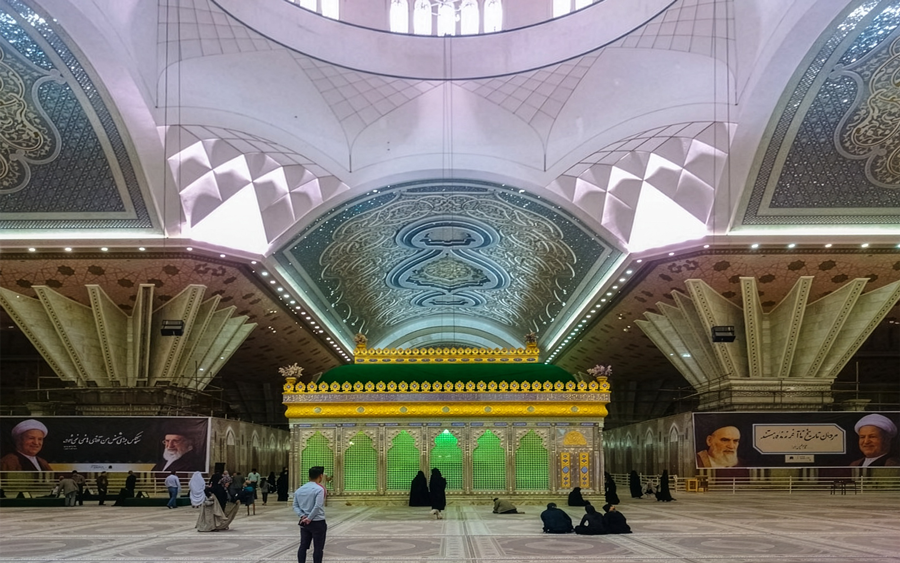
Khomeini's Mausoleum, Tehran, Iran

الغای زیر ساخت‌های شیعه اسلام در ایران 

ENGLISH VERSION

در لحظه‌ای که این سطور نوشته می‌شود، ایران با زخمی باز زنده است. جامعهٔ ایران یکی از تاریک‌ترین مقاطع تاریخ معاصر خود را از سر می‌گذراند. ده‌ها هزار نفر در خیابان‌ها کشتار شده‌اند؛ معترضانِ زخمی توسط نیروهای امنیتی از بیمارستان‌ها ربوده می‌شوند؛ و اعدام‌ها در زندان‌ها به شکلی صنعتی ادامه دارد. خانواده‌ها آیین‌های سوررئال سوگواری را به‌جا می‌آورند؛ در رقص و عزا فرزندان خود را به خاک می‌سپارند، فرزندانی که هرگز فرصت نیافته‌اند زندگی‌شان شکل بگیرد. تصاویر سردخانه‌ها بی‌وقفه دست‌به‌دست می‌شوند؛ پدران و مادران نام فرزندانِ جان‌باخته‌شان را فریاد می‌زنند، با امیدی نومیدانه به پاسخی که هرگز نخواهد آمد. این تصاویر چون گُرز ویرانگر فرود می‌آیند: بی‌پرده، بی‌امان و تاریک.

هم‌زمان، آرایش نظامی ایالات متحده پیرامون نزدیک به شش‌هزار کیلومتر مرز ایران در حال شکل‌گیری است. گمانه‌زنی‌ها شدت می‌گیرد: آیا ترامپ ماشه را خواهد کشید، چه زمانی، و چه کسی نخست سقوط خواهد کرد؟ آنچه قابلِ تأمل است، و در عین حال کاملاً قابل درک، این است که پس از این کشتار، تنها مسیر قابل تصور برای تغییر قاطع از ماشین نظامی آمریکا می‌گذرد. نجات برون‌سپاری شده است. عاملیت جابه‌جا شده است. این وضعیت تصادفی نیست، بلکه حاصل یک حلقهٔ بازخوردِ تاریخیِ طولانی است.

رضا نگارستانی در مقالهٔ اخیر خود که در نشریهٔ tripleampersand وابسته به The New Centre منتشر شده، از یک دیالکتیک ساسانی-صفوی سخن می‌گوید: واقعیتی سیاسی که در آن جامعهٔ ایران پیوسته میان ساختارهای اقتدارِ تقدیس‌شده در نوسان است، خواه در قالب خدا، ملت، انقلاب یا تقدیر. حاکمیت بارها و بارها در جایی بیرون از امکان مناقشه لنگر می‌اندازد. قانون به مرتبه‌ای فراتر از بازنگری انسانی ارتقا می‌یابد. مخالفت نه به‌مثابه اختلاف نظر، بلکه به‌عنوان کفر تلقی می‌شود. نگارستانی، با کمک محمد سالمی، «ترم سوم» را پیشنهاد می‌کند: پروژه‌ای تاریخی و سازمانی که این تداوم را نه به‌عنوان سرنوشت، بلکه به‌مثابه تکنولوژی سیاسی در نظر می‌گیرد؛ چیزی که می‌توان آن را تحلیل کرد، از هم گشود و بازطراحی نمود. وظیفهٔ این پروژه، بازپیکربندیِ حاکمیت، قانون، آموزش و خرد عمومی است؛ به‌گونه‌ای که اقتدار دیگر تقدیس نشود و مخالفت دیگر به‌عنوان ارتداد جرم‌انگاری نگردد.

برای فهم این‌که چرا این پروژه امروز دست‌نیافتنی مانده است، باید یکی از ساختارهای مادیِ محافظ نظم موجود را نام برد: ساختاری که به‌طور قاطع هرگونه خروج ساختاری را مسدود می‌کند.

آنچه بیش از دو قرن حیات سیاسی ایران را شکل داده، نه اسلام به‌مثابه باور، بلکه اسلام به‌مثابه زیرساخت بوده است. از اواخر قرن هجدهم، مکتب اصولیِ تشیع نه‌فقط از طریق آموزه، بلکه از طریق سازمان‌دهی بر جامعهٔ ایران مسلط شده است. این مکتب سلسله‌مراتب را در قالب مرجعیت، اقتدار روحانیت را از طریق مجتهد، و اطاعت را از رهگذر تفسیر و تقلید تولید کرد. برخلاف مکتب اخباری که هرگونه تفسیر فراتر از تعالیم دوازده امام را رد می‌کرد، تشیع اصولی یک نظام سراسری از مساجد، حوزه‌های علمیه، بنیادها، اوقاف خیریه و مراجع قضایی بنا نهاد. این‌ها مکان‌های صرفاً نمادین نبودند، بلکه گره‌گاه‌های مادیِ هماهنگی، تأمین مالی، مشروعیت و تداوم بودند.

جنبش‌های عمومی در ایران نه صرفاً به سببِ گستردگی یا خودجوشی‌شان، بلکه به این دلیل موفق شدند که فرم داشتند. از جنبش تنباکو در ۱۸۹۱ تا انقلاب مشروطهٔ ۱۹۰۵، و به‌طور تعیین‌کننده در انقلاب اسلامی ۱۹۷۹، مساجد نقش تالارهای اجتماع، مراکز ارتباطی و نقاط توزیع را ایفا کردند. پیام‌ها بدون رسانه منتقل می‌شدند، منابع مالی بیرون از نظارت دولت گردش می‌کرد، مناسک کنش را هماهنگ می‌کرد، و دین به تدارکات بدل شد. این زیرساخت امکان انقلاب را فراهم کرد.

آنچه پس از ۱۹۷۹ رخ داد نه تداوم بلکه وارونگی بود؛ همان نظام توسط دولت تئوکراتیک جذب شد و به درون چرخید. مساجد از پناه دادن به مخالفت دست کشیدند و به نظارت بر آن پرداختند؛ اقتدار روحانیت از میانجی‌گری به اِعمال زور تغییر شکل داد؛ تأمین مالیِ مستقل دینی به استخراجِ هم‌راستا با رژیم بدل شد. آنچه پیش‌تر در کنار دولت عمل می‌کرد، در آن ادغام شد، بی‌آن‌که استقلال درونی خود را از دست بدهد.

از همین‌رو نمی‌توان به‌طور معنادار از یک دولت واحد در ایران سخن گفت. جمهوری اسلامی از خلال یک صورت‌بندیِ ساختاریِ دوگانه حکومت می‌کند. در کنار وزارتخانه‌ها، قوانین و نهادهای اداری رسمی، یک زیرساخت اسلامیِ متراکم با جریان‌های مالی مستقل، سازوکارهای مالیاتی (همچون خمس و زکات)، نظام‌های رفاهی، مالکیت‌های املاک از طریق اوقاف و بنیادهای مذهبی، اقتدار قضایی موازی، و بازوهای قهریِ تعبیه‌شده که از طریق بسیج و شبکه‌های روحانیِ هم‌سو با سپاه پاسداران عمل می‌کنند، فعالیت دارد. این نهادها بیرون از پاسخ‌گویی عمومی و نظارت مدنی عمل می‌کنند. آن‌ها مکمل دولت نیستند؛ بلکه با آن رقابت می‌کنند، آن را منضبط می‌سازند و نهایتاً بر آن غلبه می‌یابند. به‌بیان دیگر، زیرساخت اسلامی به‌مثابه یک قطب مادیِ حاکمیت، موازی با خودِ دولت عمل می‌کند.

این دوگانگی تصادفی نیست، بلکه علت اصلیِ شکست تاریخیِ نهادهای مدنی در تثبیت قدرت در ایران است. اتحادیه‌های سکولار، انجمن‌های مستقل، آموزش خودمختار و سازمان‌های مدنی به‌طور سیستماتیک تضعیف شده‌اند، نه‌فقط از طریق سرکوب، بلکه به‌واسطهٔ یک نابرابریِ عمیقِ زیرساختی که طی قرن‌ها شکل گرفته است.

فرسودگی و استیصالِ مشهود امروز، بنابراین، صرفاً سیاسی یا روانی نیست؛ بلکه زیرساختی است. جامعهٔ ایران با دستگاهی روبه‌روست که نسل‌ها فرصت داشته خود را از نظر فضایی، مالی و نمادین تثبیت کند، در حالی‌که هم‌زمان بدیل‌های مدنی را به‌طور منظم از زمان، حفاظت و عمق مادیِ لازم برای بلوغ محروم کرده است.

در چنین شرایطی است که تخیلاتِ احیاگرایانه جذابیت می‌یابند، به‌ویژه عصر پهلوی، ایران پیش از انقلاب و شکوه پیشااسلامی. نوستالژیِ بی‌تردید حاضر در این تخیلات، نه غیرعقلانی است و نه از نظر سیاسی توخالی. این نوستالژی پاسخی است به خفگی ملی و عدم‌تقارن، به تجربهٔ مواجهه با یک ماشین تمامیت‌خواه بدون هیچ ضدساختار هم‌سنگ. اما ایرانیان همچنان در همان تداوم گرفتار مانده‌اند. موضوع پرستش تغییر می‌کند، اما خودِ تقدیس دست‌نخورده باقی می‌ماند.

درست همین‌جاست که بن‌بست اصلی قرار دارد. استراتژی خروجی که «ترم سوم» پیشنهاد می‌کند، یعنی کار کُند و دشوارِ بازطراحی نهادها و خرد عمومی، مستلزم ظرفیت سازمانی، صبر تاریخی و مازاد شناختی است. این‌ها فضیلت‌های فرهنگی‌ای نیستند که بتوان آن‌ها را به اراده فراخواند؛ بلکه شرایط زیرساختی‌اند. در رژیمی با حاکمیت دوگانه، که در آن زیرساخت اسلامی همچنان به‌عنوان دولتی موازی عمل می‌کند، چنین شرایطی نمی‌توانند پدید آیند.

در پیکربندی کنونی، تقدس‌زدایی نهادی نه‌فقط به تعویق افتاده یا دشوار است، بلکه از نظر ساختاری مسدود شده است. تا زمانی که زیرساخت اسلامی به‌مثابه حاکمیتی موازی عمل کند، هیچ بدیل مدنیِ پایداری نمی‌تواند تثبیت شود، و هیچ بازطراحی‌ای از قانون، آموزش یا خرد عمومی مجال ریشه‌دواندن نخواهد یافت.

به‌بیان دیگر، هر گذاری که در پی گشودن راه برای یک خروج سوم باشد، باید با پروژه‌ای از الغا، تخریب و اخته‌سازیِ اسلام سیاسی آغاز شود.

سکولاریسمِ اعمال‌شده توسط دولت، حتی زمانی که ریشه در نوستالژی ملی‌گرایانه دارد، در این‌جا یک کارکرد ساختاریِ حیاتی ایفا می‌کند. این سکولاریسم باور را آزاد نمی‌کند؛ بلکه در سطح زیرساخت مداخله می‌کند. دولت پنهانِ اسلامی را از طریق قطعِ تأمین مالیِ روحانیت از حیات عمومی، لغو مالیات‌های دینی و نظام‌های رفاهی موازی، انحلال اوقاف و رژیم‌های مالکیت مذهبی، خارج کردن مساجد از کارکردهای سیاسی، نظامی و نظارتی، و حذف اقتدار فراقضایی، برمی‌چیند. وظیفهٔ آن، تخریب پایه‌های مادی‌ای است که اسلام سیاسی از خلال آن‌ها خود را به‌عنوان نیرویی حاکم بازتولید می‌کند.

سکولاریته در این‌جا نه به‌مثابه افق اخلاقی، بلکه به‌عنوان ابزار باید فهمیده شود. میدان را پاک‌سازی می‌کند و سازوکاری را که پیوسته اقتدار قدسی را بازتولید می‌کند از میان برمی‌دارد. پس از برچیده شدن این زیرساخت، خلائی پدید خواهد آمد که در انتظار پُر شدن است. زیرساخت مدنی باید آگاهانه در جایی ساخته شود که پیش‌تر زیرساخت اسلامی ایستاده بود. آموزش، قانون، فضای عمومی و سازمان اجتماعی باید به‌عنوان حوزه‌هایی سکولار، رویه‌ای و قابل مناقشه بازسازی شوند. تنها تحت این شرایط است که پروژهٔ تاریخی و سازمانیِ پیشنهادیِ نگارستانی و سالمی می‌تواند به اجرا درآید.

خاکِ نظم سکولار بارورتر است، اما معصوم نیست. چنین گذاری تقریباً به‌طور حتمی مستلزم دستی سخت‌گیر است، و اقتدار در شکلی متمرکز و انضباطی بار دیگر ظاهر خواهد شد. شبحِ پادشاهی الهی بازخواهد گشت؛ بی‌خدا، اما نه بی‌فرمان. این یک خطر است، و به‌نظر می‌رسد گریزی از آن نیست.

آنچه تعیین‌کننده باقی می‌ماند، نه این است که آیا اراده‌ای برای تغییر وجود دارد، بلکه این است که آیا حافظهٔ جمعیِ جامعهٔ ایران می‌تواند به‌عنوان یک ارز سیاسیِ معتبر برای گذار عمل کند. حافظه‌ای انباشته از چرخه‌های مکررِ اقتدارِ تقدیس‌شده، سرکوب، خیانت و فروپاشی؛ حافظه‌ای که بهای آن با خون، تبعید، زندان و فرسودگی پرداخت شده است. دقیقاً همین حافظه است که شاید امکانِ نتیجه‌ای متفاوت را فراهم کند؛ نه از طریق ردِ کاملِ اقتدار، بلکه با جلوگیری از تقدیس آن. نظمی سکولار و مشروطه، متکی بر حاکمیت پارلمانی و رویه‌های قانونی، می‌تواند از این حافظهٔ جمعی به‌عنوان ارزی گران‌بها برای پوششِ هزینه‌های سیاسیِ الغای دولتِ موازیِ اسلامی بهره گیرد. تنها این حافظه، نه خوش‌بینی یا آرمان‌های انتزاعی، ممکن است بتواند چنین گذاری را به‌سوی یک دولتِ واحد و پایدار تضمین کند؛ گذاری که پیش‌شرط ریشه‌دواندن «ترم سوم» است.

ENGLISH VERSION

More Articles from &&&

A Mother Is Never Enough for Life on Mars: On Post-Planetary Ectogenesis

In her book Hospitality of the Matrix: Philosophy, Biomedicine, and Culture, Irina Aristarkhova discusses how the progress of feminist thought on pregnancy has often been impeded by its struggle against the oppressive hierarchies surrounding it: “Often, in feminist research, pregnancy was represented in the context of an impending struggle between mothers and medical and socio-cultural institutions that treated it as a means to an end: the child.” The task of her study is not to keep pregnancy within this “problematic” context for feminist politics, but to find ways of describing it that would make the process of species reproduction emancipatory for those who participate in it—primarily mothers, but also a multitude of other actors. This task is realized nonlinearly, and it runs through several stages. One needs, first, to see through the philosophical presuppositions of the pregnancy-organizing discourses of embryology and immunology, in order to dismantle the hostility toward mothers embedded in them. Conceptualizing reproductive practices in terms of hospitality rather than competition demands, next, a deep inquiry into how the foundational phenomenological relation of the self toward the other is modeled—for the oppressive realities women face within reproductive institutions build up from an under-conceptualized psychic economy. Art projects such as Virgil Wong and Lee Mingwei’s Male Pregnancy then exemplify reproductive practices modeled on the relation of hospitality. And finally, biotechnological capabilities and their material realities directly inform pregnancy as a discursive practice.

You Died, Subscriptions kept Renewing; You’re an Influencer Now!

The dead keep surfacing on the interface. A social media profile reappears under People You May Know, a birthday reminder fires for someone buried in the spring, a subscription renews against a card nobody thought to cancel, a playlist refreshes itself for no one.

The systems are not being callous, requiring a death already registered and then overruled. Strangely, nothing has yet registered. The addressee was never the one who died. It was the profile, the behavioral outer form, assembled from years of signaling, and the profile is now in perfect health again.

The living are currently addressed in the same form; death simply makes the separation of the thing and time easier to observe. A feed never overlaps perfectly with a whole life lived; it meets the signal, then rewards whatever performance it can classify. Users learn the lesson without needing to understand it. Some versions travel, others stall or disappear. Over time, this creates pressure toward a self that can revise itself at the system’s speed.

That training takes place inside an infrastructure (platforms, models, attention routes, finance, law), and the means of reproduction is owned. No one has to command the trajectory. Platforms set out to maximize engagement and predict conduct, which requires many users who can be addressed at scale. Because some forms of subjectivity are easier to measure and route than others, optimization selects for them effortlessly, almost as a side effect.

Sirat, Exocapital & Europe’s Beautiful Souls

I wish I could write an objective review of this movie, but the first third to half of it was a straight-out portrayal of a continental Western European working class subculture (teknival/French hardtek) that myself and many others grew up intimately familiar with, on a visceral, physical level: the complete illegality of it, the walls… Read More »

NO SHIT: Notes from Venice Biennale 2026

“In SEAWORLD VENICE, the promise of progress unfolds as a ‘Frankensteinesque’ dystopia: robot dogs wade through the rising water behind glass, acting as mechanical Cerberuses guarding a central sacrificial altar. Here, a performer lives within a tank sustained by body fluids contributed by the audience.”  -Austrian Pavilion, Nora-Swantje Almes’s curatorship   After the online introduction… Read More »

On Trump Defeating Communism, Again!

You must love our country. […] as we approach this magnificent anniversary, we see our American identity under a renewed attack, a generation after we fought and won the Cold War against the menace of communism. There is now a resurgence of the communist menace in our land, including from newcomers to our country […]… Read More »

Death in Venice

Before I went to Venice I thought I’d try a travel diary, but that’s not how I like to write and it’s what everyone does, i.e. deferring the responsibility of coming to any conclusion about the Biennale as a whole by giving a first-person account of how utterly chaotic preview week was. I wasn’t at… Read More »

Who Is Western Marxism Really For?

There is this letter Althusser wrote in 1962, to a woman he was seeing, where he just trashes Lenin. He is rereading Lenin on philosophy and he is basically going: god, this is weak. Amazing guy when it came to reading an actual situation, reading what was in front of him, but the second he… Read More »

Occult Perso-Punkism of Cyclonopedia

Nuqtavism was a heretical, atomist cosmology that emerged from within Islamic mysticism while simultaneously pushing it toward its limits. The endgame of Islamic esotericism was always the horrifying announcement that the mystic, through infinite cycles of ascetic self-creation and self-annihilation, had finally reached the highest point of abstraction, or tajarrud: the final release from materiality.… Read More »

Genealogy of Wokeism

Introduction The last thing most progressives think we need is another male writer complaining about “wokeism.” Why not talk about more important things? Wokeism has become somewhat of a floating signifier. Wokeism can mean different things to different people, with many people throwing the term around as a pejorative in highly inconsistent ways. However, many… Read More »

Paratypology: Towards a Scrap Theory of Form

1. To Sort I find myself at a furniture factory, in the seaming department, surrounded by the pneumatic humming of sewing machines. All around me, industrious hands are swift in joining odd parcels of hide, textiles and other soft surfaces according to flat templates. Although the individual steps they carry out are familiar to me,… Read More »

Socialism after Socialism, A Response to Conrad Hamilton

In the spirit of dialogue, I am responding to the observations in Conrad Hamilton’s recent expansive review of my book The Political Theory of Liberal Socialism. I will be concentrating on Hamilton’s three main claims, that there is a gap between the form and content of socvialism, invoking Marxist theories of struggle before coming down… Read More »

Biennialese Blues: Review of Whitney Biennial 2026

ARTISTS: Basel Abbas & Ruanne Abou-Rahme, Kelly Akashi, Kamrooz Aram, Ash Arder, Teresa Baker, Sula Bermudez-Silverman, Zach Blas, Enzo Camacho & Ami Lien, Leo Castañeda, CFGNY, Nanibah Chacon, Maia Chao, Joshua Citarella, Mo Costello, Taína H. Cruz, Carmen de Monteflores, Ali Eyal, Andrea Fraser, Mariah Garnett, Ignacio Gatica, Jonathan González, Emilie Louise Gossiaux, Kainoa Gruspe,… Read More »

No View from Nowhere: On Discourse, Différance & Functorial Semantics of Micro-Communities

This essay argues that natural language semantics admits no global orientation—no ‘view from nowhere’—but only local positions within psychoanalytically and sociologically embedded discourse communities. Drawing on Derrida’s concept of différance, I demonstrate that meaning is constitutively deferred across the differential play of signs, precluding any meta-linguistic standpoint from which all local meanings could be adjudicated.… Read More »

Liberalism Is Dead, Long Live Liberalism!

Matthew McManus’ The Political Theory of Liberal Socialism is a powerful attempt to merge two disparate traditions, parlaying reformist compromise into a coherent political program. It also rests on the assumption that socialism is inherently illiberal, an assumption that deserves to be questioned. While often hailed as the single-minded son of America, perhaps the best… Read More »

Luxury Activism: Art, Fashion & Capital

[This text was previously published by the author in Portuguese on Contemporânea Magazine — Ed.] I don’t want to work with fashion. Beauty must be preserved from capitalism. Fashion favours the escape into personal, private, selected, chosen space, as a form of false self-determination. Fashion reflects the fear of losing’ identity. — Thomas Hirschhorn The purposelessness… Read More »

The Questions Concerning the Ethics of AI

With recent articles in &&& concerning the status of what is or is not Marxism, I took it upon myself to write a piece that I consider firmly placed in that tradition. I am not being paid by the CIA, I promise. Furthermore, despite appearances, my article is not an article in the “ethics of… Read More »

The Best Ever Art Basel Review that Qatar Money Can Buy

During the Art Basel Qatar’s VIP preview of Sweat Variant’s durational performance My Tongue is a Blade on February 4, two special seats up in front of the stage stayed empty for a while.  Empty with intent.  People hovered, looked, and reconsidered occupying them in their head at the last minute like they were about… Read More »

SUPPORT THE IRANIAN REVOLUTION 2026!

SIGN THE STATEMENT HERE The past several weeks have borne witness to a bloodbath in Iran amidst images of systematic massacre and horrific abuses of power by the Iranian government against its own people. As a united front, we stand together to uphold the following convictions: 1- That the Islamic Republic of Iran must come… Read More »

Rhetoric vs Reality: Iranian Regime Is an Imperialist Project Preventing a Free Palestine!

Since its founding, the Islamic Republic of Iran has cultivated legitimacy by embedding itself within global progressive movements—particularly those oriented around anti-imperialism and racial justice. Rhetoric, repeated, obscures reality: the Islamic Republic of Iran (IRI) is an imperialist project that will not enable a free Palestine. The IRI is built on an expansionist doctrine resembling… Read More »

On State Collapse & Democide in Iran

1. Middle Eastern Islamisms and Islamists are reorganizing in a post-jihadi/takfiri Muslim/Arab world within their national boundaries. First of all, the Taliban’s path back to Afghanistan was facilitated by the USA. Afghan Islamists were swift in adopting a more Afghanistan-focused vision and dismantling any public state capacity, especially in social and women’s affairs, built under… Read More »

How Was This Monster Born? Contemplations on the Ontology of the Iranian Islamic Republic

By Asal Mansouri and Borna Dehghani, writing from Tehran How can survival turn into something shameful? How does breathing itself become a burden – one that a person no longer dares to carry, a weight that grows heavier by the moment, with no path of escape left open? What took place across Iran in January… Read More »

The Human Centipede II: Qatar & the Broker’s Cut

If my first The Human Centipede: A View From the Art World (2013) traced the art world as a closed alimentary circuit, this sequel begins where that circuit was sublimated into brokerage as a state-form with unmistakable political aspirations.[1] The same logic is now in the open for everyone to witness, wearing the grimace of… Read More »

الغای زیر ساخت‌های شیعه اسلام در ایران 

ENGLISH VERSION در لحظه‌ای که این سطور نوشته می‌شود، ایران با زخمی باز زنده است. جامعهٔ ایران یکی از تاریک‌ترین مقاطع تاریخ معاصر خود را از سر می‌گذراند. ده‌ها هزار نفر در خیابان‌ها کشتار شده‌اند؛ معترضانِ زخمی توسط نیروهای امنیتی از بیمارستان‌ها ربوده می‌شوند؛ و اعدام‌ها در زندان‌ها به شکلی صنعتی ادامه دارد. خانواده‌ها آیین‌های… Read More »

Abolition of Infrastructural Shia Islam in Iran

FARSI VERSION As I write this, Iran is an open wound. Iranians are living through one of the darkest moments of their country’s contemporary history. Thousands upon thousands upon thousands have been massacred in the streets; wounded protesters are being removed from hospitals by security forces, and executions are taking place on an industrial scale… Read More »

ایران، بزرگترین دردسر: دربارهٔ سکوتِ مزمنِ بخشی از چپِ معاصر

با چیزی آغاز می‌کنم که در نگاه اول شبیه یک حاشیه‌روی است، یک خاطرهٔ قدیمیِ تلویزیونی که زمانی لبخند روی صورتِ ما می‌آورد. اما همین خاطره، مدلِ فشرده‌ای از یک واکنشِ سیاسی است که مدام در ایران تکرار می‌شود. وقتی جوان‌تر بودم، سریالی بود به نام «روزی روزگاری». یک پدیده شد و واقعاً هم عالی… Read More »